Showing posts with label Sydney Van Scyoc. Show all posts

Jun 11, 2013

Decay

cover art by Gray Morrow
I've been thinking about science fiction stories that depict a culture with access to some advanced  scientific knowledge and technology, but nobody quite knows how to do new science and generate scientific progress or even keep in repair the existing high tech gizmos. This is on my mind because of the strange culture that develops on the Moon in The Foundations of Eternity.

There was a small population of humans living on the Moon thousands of years ago because aliens wanted to study the cognitive skills of our species. In the "wild" on Earth there was, at that time, no such thing as science, but in the artificial environment of Observer Base the humans developed an interest in mathematics and astronomy and physics...ultimately resulting in some startling advances in the strange technological field of positronics.

Life was quite comfortable for most residents of Observer Base. They were cared for by sophisticated robotic assistants (the orbho) and many daily conveniences were provided by swarms of invisible nanobots. In fact, life was so relaxed that most humans on the Moon had no interest in science: they took the available technological marvels that sustained their lives for granted.

The sheep look up
Yes, it was all too nice and comfy to last!
R. Gohrlay objected to the fact that the little colony of humans on the Moon were little more than a transient scientific experiment being performed by curious space aliens.

When she learns that humans are puppets for scheming aliens,   Gohrlay revolts and overnight all of the orbho and nanites are destroyed or in serious need of reprogramming and the humans are on their own, stranded on the Moon without a single spaceship and no way to reach Earth.

In The Foundations of Eternity the small cadre of scientists suddenly becomes the means by which the human population of the Moon can survive.

I've been wondering just how far and how hard that tiny island of human civilization would fall, to what extent the budding civilization at Observer Base would decay.

What would happen to the Observers who were on still on Earth?

Decay
As a young lad I fell in love with science fiction stories such as Asimov's Foundation trilogy (Galactic Empire collapses into barbarism, people slide from atomic power back to fossil fuels), Clarke's The City and the Stars (in the far future humans cower on Earth, afraid to return to the stars), Norton's Star Man's Son (post-apocalyptic Earth), Assignment Nor'Dyren by Sydney Van Scyoc (an alien culture throws away the means for progress and collapses into a dark age) and Brunner's Born Under Mars (Earth's first colony on another world has become a dingy backwater).

Swords and spaceships
source
I've never read Brunner's The Alter on Asconel. According to Jacob Haller, Brunner imagined a "swords and spaceships" Galactic Empire that reminds me of The Gods Must Be Crazy. If we can drop a Coke bottle on Africa, why can't the ancient remnants of a collapsed galactic civilization include a bunch of spaceships (or teleportation terminals) that bumbling humans can get their hands on? Oh, and throw in a telepath for good measure. Who is the "extra-galactic god", some space alien or just a huckster from the rim of the galaxy who can trick the gullible primitives of Asconel?

In The Foundations of Eternity, humans on the Moon are an alien's science experiment. The aliens have designed and created the human species and with time they will dispose of us, with little more concern than a human scientist might make a genetically engineered bacterium to amplify a spliced plasmid and then destroy it with bleach and flush it down the drain after isolating the desired gene from the recombinant plasmid.

Gino D'Achille cover art
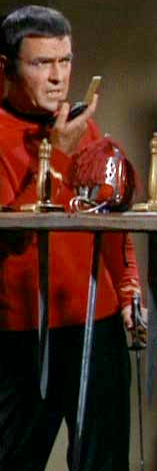
The only times I've ever been tempted to write a sword into a science fiction story is when the story takes place in the past during an era when a sword is high tech. I got my fill of swords in science fiction by watching Star Trek and reading The Faded Sun.

Okay, so Gohrlay does not hack Doltun down with a sword; she fries his brain with a burst of microwaves then conceals the murder by soaking him in liquid nitrogen. I can picture having a klystron and cryogenic fluids around a research lab, but not a sword.

Still, there seems to be a special law of nature within fictional universes...the bigger the sword that a heroine carries, the less clothing she wears.

Telepathy
In The Foundations of Eternity, R. Gohrlay is stranded on the Moon without a spaceship and without any ability to control or reverse engineer the remaining nanites.

R. Gohrlay is able to establish telepathic contact with the biological Gohrlay. I'm currently struggling with the issue of one-way versus bi-directional telepathy. For Gohrlay, telepathy works best between two brains that are similar in structure and function. When R. Nahan is provided with copies of the "Gohrlay brain circuits" telepathic communication automatically begins to occur between R. Gohrlay and R. Nahan.

R. Gohrlay learns about the "Huaoshy" by means of telepathic contact with the biological Gohrlay who is on Many Sails. I put "Huaoshy" in quotes because the word "Huaoshy" actually refers to the Kac'hin, but Gohrlay mistakenly begins the human practice of using "Huaoshy" to refer to the sedronic lifeform that created the Kac'hin. On board Many Sails, Gohrlay learns that she is going to live out the rest of her life on a distant planet of the "Huaoshy" (actually, the Kac'hin).

source
Should the biological Gohrlay have some sensation of being in telepathic contact with R. Gohrlay? If so, would Gohrlay be able to keep secret from the Kac'hin the existence of telepathy? I imagine that telepathy depends on the presence of a type of hierion in brains. In order for R. Gohrlay to receive meaningful information by telepathy there must be a resonance between "her" brain and the brain of the biological Gohrlay. Because of "her" positronic brain, R. Gohrlay has more hierions and better control over them, but the biological Gohrlay should have some change in her neural network activity when R. Gohrlay is looking through her mind. Would R. Gohrlay be able to send a specific message to the biological Gohrlay, such as: Don't let the aliens know that we are in telepathic communication?

When R. Gohrlay takes over Observer Base she uses her telepathic ability to send a destructive pulse of hierions into Orbho Anagro. Her positronic brain can alter the behavior of the hierions that are a key component of the Huaoshy nanite technology that is used in the orbho. Never having explored positronics themselves, the Huaoshy never developed a defense against Gohrlay's surprise attack.

Fun with google image search...
Searching for Gohrlay's descendants
In contrast, Many Sails uses even more advanced sedronic components, so the biological Gohrlay is carried away by Many Sails when the orbho lose control of Observer Base.

I've started thinking about the fate of Gohrlay when she is taken off to the galactic core by Many Sails. In Part II of The Foundations of Eternity when Many Sails finally returns to Earth, many thousands of years have passed. Still, it might be fun to assume that one of the humans on board Many Sails is a clone of Gohrlay or maybe a descendant.

The positronic robots such as R. Rycleu are programmed to protect Humanity, but they have been taking orders from R. Gohrlay for thousands of years. What would they do if confronted by a clone of the original Gohrlay who told them that it was a mistake for positronic robots to struggle against the Huaoshy? Would R. Gohrlay finally be willing to admit that a small gang of positronic robots can't compete against the god-like Huaoshy?

Related reading. The details of Gohrlay's telepathic powers are described in my next blog post.

May 25, 2013

200 - Blogging about Writing

The Olmec Intervention
This is my 200th post to this blog, so I'm going to take a look back and reflect on some of my experiences with collaborative fiction writing and blogging that have changed the way I write science fiction stories.

In 2005 I started exploring the use of wiki websites as a tool for collaborative fiction writing. Prior to that time, working by myself, I had created the first story set in the Exodemic Fictional Universe. Exodemic was written as a kind of alternative history story, but I was feeling dissatisfied and constrained by that format. It was valuable for my growth as a writer to go online and find other science fiction writers who I could collaborate with and by doing so gain writing experience that expanded my fiction writing repertoire.

Elsewhere, I've summarized some the important online collaborative writing projects that I've had the pleasure to explore by making use of wiki technology and in 2009 I started blogging about my fiction writing, both here and at other websites.

Looking back on what I've learned from these online experiences, I can identify a few types of activities that have been particularly fun and educational. The rest of this blog post provides a summary of those experiences.

Fan Fiction
The Start of Eternity
Back in 2005 I had recently discovered the joy of fan fiction. I've occasionally blogged about my condition: I now suffer from "fanfiction disease", the incurable desire to write stories that make use of famous characters created by others and it is my habit to do so by inserting those characters into stories that are set in the Exodemic Fictional Universe.

My first act of fan fiction sin involved the creation of an X-Files/Star Trek story in which I brought together Gene Roddenberry's characters from Assignment: Earth with some X-Files characters. I've also sinned by making fan fiction using characters from science fiction novels published by Isaac Asimov, Jack Vance, Carl Sagan and Sydney J. van Scyoc.

source
The most egregious example of my tendency to hijack famous characters is a fan fiction novel called The Start of Eternity. As described in a recent blog post, I'm very pleased with The Start of Eternity because it allowed me to make use of the Huaoshy to provide an amusing ending to Asimov's Foundation Series. At the same time, I was forced to develop my thinking about the technological prowess of the Huaoshy and define some limits on their seemingly god-like powers.

Right now I'm feeling very happy with my fan fiction experience because as a consequence of my dabbling in this sinful activity I was able to imagine a satisfying backstory for my current science fiction writing project: Exode. That backstory involves time travel, but Exode is not a time travel novel.

Time Travel
One of the first science fiction movies that I remember seeing was The Time Machine. Even when I was ten years old I was disappointed by the idea of a time machine looked like a sleigh. The only time travel story that captivated me was The End of Eternity.

For most of my life I was a space travel snob, convinced that the proper domain of science fiction is stories about spaceships and distant planets with alien beings. However, I was haunted by the thought of Noÿs Lambent living out her life in the 20th century after having been born ten million years in our future. When I finally decided to write a fan fiction sequel to Asimov's Foundation and Earth I could not resist the temptation to include Noÿs in the story.

When I translocated Noÿs into the Exodemic Fictional Universe I had no desire to write a time travel story, rather, I wanted to put an end to time travel. This was possible for the Huaoshy, who, it turns out, were responsible for the existence of time travel. When the Huaoshy altered the dimensional structure of the universe so as to make possible faster-than-light travel, they inadvertently also made time travel possible. As described in The Start of Eternity, time travel was not invented by the Huaoshy. In a strange twist of fate, time travel was discovered by positronic robots.

Having developed the technology for time travel, the positronic robots of Earth caused a big headache for the Huaoshy. Eventually, the Huaoshy decided that the had to undertake one final dimensional engineering project that would make time travel impossible. At the same time, that shift in the dimensional structure of the universe ended the ability of positronic robots to exercise the telepathic abilities that Asimov had depicted in his robot stories.

About a billion years ago, in a distant galaxy, a sapient biological lifeform developed the technology that is required to harness fusion energy and antimatter-based spaceship propulsion. They started slowly exploring their galaxy while looking for the means to travel through space at speeds faster than light. These beings were not yet Huaoshy, but I'll use that label for convenience since they eventually transformed themselves into the Huaoshy.

The Huaoshy discovered that they could alter the dimensional structure of the universe. By first switching the dimensional structure from the "ground state" to a "transitional state" they made possible faster-than-light communications using hierions. This was a great advance for the management of their growing interstellar civilization.

However, the Huaoshy really wanted to be able to travel through space at faster-than-light speeds. They completed another even more technologically challenging alteration in the dimensional structure of the universe that gave them mastery over sedronic matter and which allowed for faster-than-light travel through space.

The Huaoshy were satisfied with that new dimensional structure and they slowly transformed themselves into an artificial lifeform composed of sedronic mater.

However, when humans invented positronic robots the Huaoshy discovered that their dimensional engineering had also made time travel possible. Eventually the Huaoshy made one more change to the dimensional structure of the universe which made time travel impossible while continuing to allow travel through space at faster-than-light speeds....which, afterall, is an important technology to have around for space operas!

Space Opera
My personal introduction to space opera was similar to that described by Will Stackey. When I was 12 years old it was fun to imagine building a spaceship and heading off to the stars...meeting aliens, defeating the bad guy and ending up with the girl...at least, for as long as the innocence lasted. Unfortunately, the more I learned about science the less I was able to tag along with Dr. Smith and his cosmic adventures, particularly when they involved spacecraft that flew at the speed of thought

Smith can be blamed for starting my revolt against science fiction written by physical scientists. Given my interest in biology it should be no surprise that I have trouble when chemical engineer starts trying to get me to believe that thought "travels" faster than the speed of light.

By the time I was out of my teens I had developed a preference for "hard science fiction" that never seemed to violate the laws of physics or trot out biologically implausible plot elements.

For example, when I started writing Exodemic, I wanted to depict a future in which there was no faster-than-light travel, no time travel, and no telepathy or "mental powers"....and no religion, too.

I had reached the point in my thinking where I was more comfortable traveling slowly from star to star in generation ships than flashing across the universe in defiance of the laws of physics.

Writing The Search for Kalid
Then I was lucky enough to participate in the collaborative writing of The Search for Kalid. Left to myself, I never would have started writing a space opera. Three of the important things I learned from that collaboration were 1) that some characters can be crafted and developed in certain ways just because it is fun to do so (plot-driven science fiction can take itself too seriously), 2) it can be fun to include social elements like religion in a science fiction story even if the story is not directly about cultural elements like religion and 3) I was able to start making room in my science fiction for imaginary technologies like faster-than-light travel, teleportation and even forms of "weird biology" that would make possible "mental powers" and telepathy.

These changes in my science fiction writing "comfort zone" were very liberating. I've learned to live with "imaginary science".

Fictional Science
My science fiction writing has been powerfully shaped by three key ideas: 1) the Fermi Paradox, 2) Richard Feynman's realization that there is plenty of room at the bottom and 3) Clarke's suggestion that advanced technology can seem like magic.

The plot of Exodemic involves the realization by humans that small can be powerful and during the past year while creating Exode I've further refined my thinking about how to include the power of the very small in my fiction.

Nanotechnology
When I wrote Exodemic I used the term "nanodevice". At the Fiction Wikia I picked up the term "nanite" and started using it, for example to account for the ability of Isis to morph between human and cat forms.

Originally I conceptualize nanites as microscopic devices composed of conventional matter. However, I imagined that sophisticated nanorobotic devices could use fictional "hierions" to exchange information. Hierion-based communication between microscopically small symbionts inside people became a means of achieving telepathic communication.

Later, I developed the idea that there could be a type of matter formed by hierions where the bond lengths were zeptoscale. In Exode, the pek are composed vast numbers of nanorobotic devices that are made from of such matter.

Not satisfied with that level of miniaturization, the Huaoshy have taken their technology to an even smaller scale where intelligent artificial life exists in the form of sedronic matter in which bond lengths approach to within a few orders of magnitude of the Planck length.

Mental Powers
I never understood how Asimov imagined that telepathy would work in his stories. In Second Foundation he wrote about returning "the recording of his original brain-wave makeup" to Bail Channis in order to restore his erased memories, as if our memories are some kind of electronic software program to be loaded into a computer, or erased.

Asimov wrote that the Mule could sense the electric fields generated by a brain, thus allowing him to "read thoughts".  He could also alter personalities using "mentalics", impressing his pattern of brain activity on others.

First Foundationers who lacked the biological equipment needed for "mentalic abilities", were shown using sensitive brain wave recording technology to detect evidence that the function of brains (like that of Homir Munn) had been altered by "mantalic manipulation". So, electromagnetism was the basis of "mentalics", but the brilliant Dr. Darell had to invent an electromagnetic "mental static" device with hundreds of circuits in order to prevent mentalic mind control by the Second Foundationers. Eh?

While working on The Search for Kalid I took the time to seriously think about how it might be possible for telepathy to evolve and be present in a biological species like we humans. Thus, the telastid was invented and used as the fictional explanation for telepathy.

Having grown comfortable with such an imaginary mechanism for telepathy I no longer have qualms about endowing technologically advance artificial lifeforms with "mental powers" that can involve hypothetical hierions and be entirely independent of any physics as primitive as electromagnetism.

Illustration and Video
In my teens, when I first started writing stories, I had a dream about a science fiction book that I would one day write. In my dream, that book had an animated cover like a miniature television screen. When we finally rumbled into this millennium I was pleased that my science fiction stories no longer had to be restricted to text.

One of the joys of writing stories in electronic format is that images and videos can be easily added to the text.
In the first scene of Exode that I imagined, Hana saw a business card from Parthney with the provocative text: "Change your world" and images of some planets located far away towards the center of the galaxy.

Hemmal became the most important such planet in Exode, the world where Parthney was born. The nearby planet Oib was where the Pla developed their plans for how to bring a technological culture to the people of Earth.

The Koly star system has one other inhabited world, Clu'ten'ium. No human would think to live there, but it is a world with some appeal to the Fru'wu, so that becomes the secret location of Lendhalen.

Blogging about Writing
As described above, my online experiences have greatly modified and expanded my interests as a writer. While I greatly enjoy collaborative writing, I've also learned to make use of blogging as a way to explore and develop a story.

Of course, when I say "develop a story" I really mean the development of the imagined universe that I think of as the Exodemic Fictional Universe. For me, that development process is endless fun because there is a logic to the Huaoshy. As an artificial lifeform that designed itself, the Huaoshy have an identity that is hidden from we humans, but if we keep chipping away we can reveal the structure of that logic.

There is no escape from the recursive nature of that logic. The Huaoshy created we humans and we find ourselves struggling to understand our origins. To do so, we we must imagine the Huaoshy and what they must be like in order for them to have created us and kept us so ignorant of our origins.
_________________________
Exode is the story of a small group of people who are trying to discover the nature of the aliens who made we humans. The story is under development and collaborating authors are welcome.
______________________


Mar 3, 2012

Stellar Engineering


This is the third blog post in a series about a sequel for the science fiction novel Assignment Nor'Dyren by Sydney Van Scyoc. I previously mentioned the fact that the world Re^Ens was colonized by artificial life forms, but Re^Ens was not in orbit around a star. Maybe that depends on what the definition of "star" is.

There is a fuzzy boundary between "planet" and "star". Stars are "born" when a large volume of gravitationally-confined plasma is heated by nuclear fusion. Brown dwarfs are at the boundary between large planets and small stars.

In Arthur Clarke's novel 2010: Odyssey Two, space aliens with advanced technology are able to convert Jupiter into a star. How would that be possible? Clarke had the idea that: "any sufficiently advanced technology is indistinguishable from magic", but as far as we know, to make a star at the position of Jupiter would require one of two things. 1) Some kind of "magical" way to compress the hydrogen of Jupiter and maintain that compression against the expansive force of the fusion that would power the star, or 2) Some "magical" way to add enough mass to Jupiter so that gravitational confinement would sustain the fusion. Maybe Clarke imagined a combination of these two strategies or something else that would be a third kind of magic (advanced technology).

In my imagined sequel to Assignment Nor'Dyren, the world Pes^Cro is very similar to Earth and orbits a star that is similar to the Sun. Life on Pes^Cro is chemically very similar to life as we know it on Earth and the Huaoshy have engineered a form of intelligent humanoids on Pes^Cro and guided them towards space travel long before humans ever developed a technological civilization. Millions of years ago the tool-using humanoid inhabitants of Pes^Cro created artificial life forms and sent those ALFs out in spacecraft to colonize distant worlds. Unlike biologicals, the ALFs did not care if those newly colonized worlds were in orbit around a nice warm star. One such colony world is Re^Ens.

Brown dwarfs have some heat and some people have speculated about the habitable zones of brown dwarfs and the likelihood of planets in orbit around brown dwarfs (example). Astronomers keep developing better tools for observing low temperature objects, and it is not clear what the density within our galaxy is for brown dwarfs and "rogue planets" not in orbit around stars. We don't know the typical distance from a star like our Sun to the nearest brown dwarf, but we can imagine a Sun-like star for which there might be good reasons to send ALF colonists to a nearby brown dwarf rather than to a nearby star.

Star formation by collision of brown dwarfs is a theoretical possibility (example). I'm thinking that the Huaoshy might help create a star near Re^Ens for the biological "pets" of the ALFs who live on Re^Ens. There might be places in the galaxy with a high density of brown dwarfs and a technologically advanced spacefaring civilization might undertake the task of engineering the collision of two brown dwarfs to create a small star. Binary brown dwarfs that are gravitationally bound to each other are not rare and there should be other pairs of Brown dwarfs that might naturally be on trajectories that will bring them close together. Given planning and a long lead time, it might be possible to deflect the paths of two brown dwarfs so as to cause a collision. The world B^Ta is in orbit around such a "created star" and becomes a new central world from which Allegon, Berregon and Gonnegon colonists are sent out on slow, multigeneration colony ships.

I imagine that the Huaoshy might use our galaxy like a garden. Humanoid species could be guided towards technological maturation so as to have a large number of humanoid species from various star systems form a political unit such as Civilized Unity in Assignment Nor'Dyren. However, given the chance to "create a new star" by engineering the collision of two brown dwarfs, the Huaoshy might allow a nearby humanoid species to develop space travel technology at a time not synchronized with the development of other nearby humanoid species. Pes^Cro could be such a "special treatment" world, and technological developments there might ultimately lead to the "Galactic Empire" mentioned in Assignment Nor'Dyren.

A remaining question is, why did the "Galactic Empire" that originated from Pes^Cro ultimately fail and become defunct? I think it will work to assume that the basic problem with this "Empire" was that it never had faster-than-light space travel. It might be a basic theorem of technological civilizations that without cheap and efficient faster-than-light space travel, no stable "Galactic Empire" is possible. Technological cultures that start to spread from world to world using slower-than-light colony ships will be dominated by artificial life forms that have a high rate of cultural divergence. Each world in the "Empire" will develop along its own idiosyncratic path and there will be no real possibility of a sustainable, unified interstellar Empire.

It might also be the case that discovery of the technology that can support faster-than-light space travel is very difficult. If so, then the first technologically advanced species to obtain that technology might, by default, become the Huaoshy, the one species that successfully spreads through the stars, and in so doing, contaminates and "absorbs" all other humanoid species that it encounters. This solution to the Fermi Paradox runs counter to assumptions that are popular among those who try to resolve the Fermi Paradox. For example, in "Fermi’s Paradox – The Last Challenge for Copernicanism?", Milan Cirkovi assumes that it is "obvious" that Earth has not been colonized. This is "obvious" only if you adopt certain assumptions about what would happen during colonization of a world by a species like the Huaoshy. For humans embedded in Western culture, colonization usually means what happened when Europeans colonized the "New World" of the Americas. That style of colonization is biased by the fact that humans recently evolved on a small planet. For humans on Earth, there was never any chance for a millions-of-years-duration divergence in cultural development. There is the opportunity for such a divergence between humanoid species evolving on various planets scattered among the billions of galaxies in the universe. Intuitions and expectations about "colonization" and "first contact" that are built upon only our limited human experience are likely to be laughably inadequate for anticipating the behavior of technologically advanced civilizations that are hundreds of millions of years old.

While adopting some conventional assumptions, Cirkovi has also questioned other conventional assumptions about the "inevitable" features of "Galactic Empires" (see: "Against the Empire"). I wonder if there is a "theorem" along these lines: "If a solution to the Fermi Paradox does not seem magical and unexpected then then it is probably wrong." I think scientists have trouble stepping outside of the box of our conventional ways of thinking. Speculative fiction allows us to explore alternative solutions to the Fermi Paradox that are motivated mainly by the desire to create a fun story. Assignment Nor'Dyren is a fun story and it deserves a fun fan fiction sequel.

In Assignment Nor'Dyren Sydney Van Scyoc created an interesting puzzle about the origin of the Qattagon. Interesting beings like the Qattagon cry out for an interesting and unique history and it seems appropriate if the Huaoshy must bring into play all of their hundreds-of-millions-years-old technologies (including their stellar engineering skills) in order to account for the Qattagon.

Images. Top: star sizes by NASA and SeRgio. Twin brown dwarfs from NASA/JPL-Caltech by way of Astrobiology Magazine.

Related reading. Sometimes I wonder if science fiction novels are being replaced by internet conspiracy websites. Nibiru.
Science fact
.

Old review. I originally assumed that the Qattagon had been designed to be reproductively sterile. However, I now think it makes for a more interesting story if during the long and twisting history of the "under-races" they lost the ability to produce fertile Qattagon. This also means that it will be relatively easy to correct the genetic changes that prevent Qattagon from being fertile.
Even older and longer review.

Related: more fictional stellar engineering.

Feb 29, 2012

Kepler's New Worlds


The Kepler space telescope continues to collect data on planets around distant stars. The Kepler telescope detects small decreases in light from stars that happen when an orbiting planet passes between its star and the Kepler observatory (in heliocentric orbit). This method is biased towards large planets that are in short-duration orbits near to their star.

Kepler has found several planets that might be suitable for life. Unfortunately, it is hard for the Kepler telescope to detect planets that are the same size as Earth and that are likely to have liquid water. However, it can be estimated from the data collected so far that more than 3% of stars have a planet that is the correct distance from its star to have liquid water and, possibly, life. Most of the candidate potentially-habitable planets are larger than Earth, as shown in the image, above.

Gravitational microlensing can detect planets that are not bound to stars. It has been suggested that there are more such planets without stars than there are stars. The planet Re^Ens is a fictional world that is not in orbit around a star, but which provides a home base for artificial life forms.

I've previously discussed the fact that it is difficult for science fiction authors to avoid including in their stories imagined technologies that make possible faster-than-light space travel or time travel. However, it seems likely that the Fermi Paradox involves the fact that faster-than-light space travel is apparently impossible. It might be significantly easier for artificial life forms to travel between the stars than for biologicals like humans. In the novel Assignment Nor'Dyren, Sydney Van Scyoc made faster-than-light space travel a technological element of Civilized Unity, but I'm imagining that Nor'Dyren was a coloney world of an interstellar empire that did not have faster-than-light space travel.

The Fermi Paradox is often stated in terms of human-like organisms: why don't we see evidence for human-like organisms from other planets? It might be that only artificial life forms are capable of traveling between the stars. Human-like species might produce artificial life forms that go out and colonize distant worlds, and those worlds might mostly be planets that are not in the "habitable zone" near stars. Artificial life forms might actually avoid the deep gravity wells of stars. If our galaxy was swarming with artificial life forms, would they bother to visit a world like Earth?

What do I mean by "artificial life forms"? Ever since Alan Turing recognized the power of digital computing, there have been many optimists who anticipate that it will "soon" be possible to make machines with human-like brains. A popular plot element in science fiction stories is the "mind upload", the transfer of a person's mind into an artificial brain. Asimov also imagined going the other way, moving the mind of the robot Daneel into the brain of a human in his story "Foundation and Earth".

At our level of technological development and (lack of)understanding of how a brain makes a mind, "mind uploading" is just as impossible as time travel or faster-than-light space travel. I doubt if it will ever be easy to make a copy of a human mind and transfer the copy into the brain of an artificial life form or robot. In The Start of Eternity I imagine that with the help of advanced technology from the Huaoshy it might be possible to make an artificial life form that has a human mind inside a robotic body.

If humans can eventually make artificial life forms with human-like minds, might we humans become little more than pets for our A.L. creations? I'm imagining that the artificial life forms of Re^Ens had biological "pets". Maybe when the artificial life forms make the long journey from their home star to the distant world Re^Ens they packed away some frozen embryos of their favorite "pet" species. These "pets" were biologically related to the inhabitants of the world Nor'Dyren. At some point, those "pets" revolted and claimed the right to leave Re^Ens and go find a world of their own, a planet in the habitable zone of a nearby star.

Note: This (above) is the second of a three part series of blog posts about my proposed fan fiction sequel to Assignment Nor'Dyren. The other two posts are Departure from Nor'Dyren and Stellar Engineering.

Images. Top, from The Habitable Exoplanets Catalog. Lower: making an artificial life form in The Start of Eternity, a fan fiction sequel to Asimov's "Foundation and Earth".

Feb 26, 2012

Departure from Nor'Dyren

I previously mentioned the book Assignment Nor'Dyren in a blog post about Hollywood science fiction movies and the fact that good science fiction stories are seldom made into movies.

Assignment Nor'Dyren is the only novel by Sydney Van Scyoc that I have read. When I was searching the internet for an image of the cover from my 1973 copy of Assignment Nor'Dyren I came across a review of the book by Althea Ann who has read other stories by Van Scyoc and found Assignment Nor'Dyren to be relatively weak compared to Van Scyoc's later work. Althea was disturbed by the bad temper of Tollan Bailey, the main character in the novel. Van Scyoc imagined a future Earth where there was not enough work for everyone, a world where mechanization satisfied humanity's material needs and Earth was part of an interstellar network of worlds called Civilized Unity. I can remember reading some futuristic projections that were published in the 1970s in which it was assumed that in coming decades the work week would shrink and the main preoccupation of people would be leisure activities.

CalMega Industrials
Unfortunately, Tollan Bailey wants to work, so he is very unhappy with his life on Earth. He takes out his frustrations on Director Hazen, head of the Personnel Department at CalMega Industrials, the company that "employs" Tollan but has no actual work for him to do. Hazen decides to remove this major thorn from his side (Tollan) by sending him to the world Nor'Dyren, a planet where there is plenty of work that needs to be done. In the end, Tollan decides to spend the rest of his life on Nor'Dyren, content that he has found a world that suits his temperament.

Of course, as Althea notes, Tollan is "crazily, horribly sexist" and, at first, he is the only human on Nor'Dyren, a world populated by three humanoid "species": Allegon, Berregon and Gonnegon. I've previously described the regimented social roles of the Allegon, Berregon and Gonnegon. The inhabitants of Nor'Dyren do not use personal pronouns (he, she) and it is hard to even tell if any particular Allegon, Berregon or Gonnegon is male or female. Conventional opportunities for Tollan to express his "crazy sexism" are few and far between on Nor'Dyren, but he makes some comical assumptions about the sex of the aliens that he meets.

In Science Fiction Digest, 1981
Lucky for Tollan, soon after arriving on Nor'Dyren he manages to get sick (here I have to assume that a Nor'Dyrenese virus is able to infect humans) and while in a state of delirium he manages to have a traffic accident in which an Allegon is killed. However, this is really Tollan's lucky day because the accident leads to Director Hazen sending another human to Nor'Dyren in an effort to save Tollan from having to serve as a member of the broken family that the Allegon's death has created.

Tollan's savior is anthropologist Laarica Johns, who not only has visited Nor'Dyren previously but also, as a professional woman of the 2070s, never notices that Tollan is "always about to assault someone" and is "horribly sexist". In fact, Laarica casually moves in with Tollan and they are soon sharing long hot baths and Tollan's bed. For Tollan, his existence on Nor'Dyren is charmed and even while Nor'Dyrenese culture crumbles, the innocent Allegon dies (leaving a shattered family) and Laarica must struggle with her own personal family problems, everything works out just great for Tollan...he even gets the girl (happy ending).

One of the conventional approaches to producing a happy ending in stories is for a "flawed" character to change. After great struggle, such a character finally changes and then can happily function within society. If Althea had written this story it might have been called: Assignment Nor'Dyren Cancelled. Tollan would have attended anger management lessons and Diversity Training until reaching the point where he realized that his antagonism towards Director Hazen was subconsciously due to latent sexual attraction. The story would end with Tollan happily married to Hazen and Tollan never again lifting a wrench. The world Nor'Dyren would never have been visited and its civilization would have continued to crumble into oblivion.

In science fiction, authors can instead imagine characters who avoid tragic endings by traveling to a distant world where they can be happy without ever having to correct their personal "flaws". In fact, in a new cultural environment the "flaws" might be strengths that ensure success and a happy ending (as is the case for Tollan in Assignment Nor'Dyren).

In my view, one of the most disturbing features of the human condition is our ability to create and tolerate horrible cultural practices. I enjoy science fiction stories where outer space becomes an expanded dimensional outlet by which people can escape from one culture and reach a new world where they can flourish. I like to think of interstellar empires like Civilized Unity as a "Diverse Society" where individuals can freely move from world to world and find a culture that is a good match to personal preferences.

Sometimes I wonder if there were different versions of Assignment Nor'Dyren that got published. I can imagine an altered version of the novel that might have been read by Joachim Boaz. In his review of Assignment Nor'Dyren, Joachim wrote that, "Nor’Dyren is populated by an alien species with three genders." A story about three genders would be an entirely different story; it sounds like Asimov's novel, The Gods Themselves. In many human cultures, social roles have been limited or restricted by gender. On Nor’Dyren the Allegon, Berregon and Gonnegon do have rigidly-defined social roles, but these three "species" do not represent three genders. The Allegon, Berregon and Gonnegon populations each have males and females. It turns out that the Allegon, Berregon and Gonnegon are "different species" only in the sense that the offspring of inter-species mating (Allegon-Berregon, Allegon-Gonnegon, Berregon-Gonnegon) are not fertile. It is only by social custom that they do not interbreed outside of their own "species".

Joachim says that after Tollan accidentally kills the Allegon, "The local court orders him to take the position of the Allegon in the family unit". This is not true. In fact, the case is not settled until the top Gonnegon administrator of Nor’Dyren ultimately rules in the case and declares that the family can reconstitute itself by bringing in a new Allegon family member; Tollan is explicitly freed of any obligation in the case and he decides to continue his work on Nor’Dyren. Tollan knows it is crazy to even suggest that he join the shattered family and try to replace the dead Allegon and he "refuses to abide by their laws". In his review of the book, Joachim expressed dissatisfaction with how Van Scyoc handles this "cultural impasse".

I'm not sure how Van Scyoc could have satisfied Joachim. Maybe rather than bring Laarica to Nor’Dyren there could have been an alternative character, Naarica, with an advanced degree in Cross Cultural Sensitivity and Civilized Unity certification in Alien Political Correctness. Naarica arrives on Nor’Dyren and chastises Gennegon Tux for calling Gonnegon Neg "insufferable". Naarica refuses to defend Tollan in the law suit brought by Gonnegon Neg and instead provides him with training in how to function as an Allegon, even giving him court-ordered hormone injections so that he can breastfeed Neg's baby and court-ordered chemical castration to make him adjust to his role has the surrogate "mother" in Neg's family. In the end, Tollan would be happily married to Neg, Naarica would return to Earth to be with her helicopter parents and Nor’Dyren culture would have continued to slide back into the pre-technological Dark Ages. The book's title could have been changed to The Left Hand of the Tript. In his review, Joachim would have noted a satisfying similarity between The Left Hand of the Tript and The Left Hand of Darkness.

Major spoiler: Interbreeding on Nor’Dyren (Allegon-Berregon, Allegon-Gonnegon, Berregon-Gonnegon) results in the birth a fourth type of alien called Qattagon. When Tollan arrives on Nor’Dyren, it is 200 years after the Gonnegon have forcibly written Qattagon out of existence by creating laws that prevent even accidental reproductive activity between Allegon-Berregon, Allegon-Gonnegon and Berregon-Gonnegon. In the end, the entire point of the story is to resolve the "cultural impasse" by making the people of Nor’Dyren realize that they need no longer fear Qattagon. Now that Nor’Dyren is part of Civilized Unity, some of the awesome creative power of the Qattagon can be absorbed by other worlds. In other words, the point of the story is not that Earthlings should respect other cultures and even let them destroy themselves, but rather, by working together the various cultures that are part of Civilized Unity can synergize and improve themselves.

One of the amusing parts of Assignment Nor'Dyren is how Laarica and Tollan interact with Patt, the main alien character. Patt is a Berregon, but we never learn if Patt is male or female. Tollan always refers to Patt as "she" and Laarica always calls Patt a "he". As humans, we try to fit new observations into our previously established patterns of thought, sometimes to comical effect. Eventually Laarica and Tollan agree that it does not matter if Patt is a male or a female, a revelation which is a challenge to Tollan's thought patterns since in his life he has found it convenient to adopt and never question a set of conventional human beliefs about male and female gender roles. As an anthropologist, Laarica finds it easier to be flexible in her thinking but she still naturally categorizes Patt according to her own gender expectations. At the end of the novel we finally learn the reason for the strange practice of not using personal pronouns on Nor'Dyren.

I recently blogged about my preference for stories that leave us wondering what will happen next. Towards the end of Assignment Nor'Dyren Laarica says that the Nor'Dyrenese are now at the start of a "whole new era" and that "the next few decades should be very absorbing". She is speaking as an anthropologist, but there are many issues raised by Assignment Nor'Dyren that cry out for a sequel.

How is it that Civilized Unity is suddenly forming and bringing together dozens of humanoid species from different worlds who all just happen to have roughly the same level of technological development? What is the origin of the Allegon, Berregon and Gonnegon who, we are told, arrived at Nor'Dyren as a fragment of a shattered galactic empire? If Tollan can catch a viral illness on Nor'Dyren, then just how closely related are humans and the other humanoids within Civilized Unity?

Imagine 25 years after the end of Assignment Nor'Dyren. The daughter of Laarica and Tollan (named Lato) and Patt's Qattagon son (named Purn) must leave Nor'Dyren in search of a true understanding of the forces that have forged Civilized Unity. I think there is a fun sequel to Assignment Nor'Dyren waiting to be constructed. Of course, I'll want to involve the Huaoshy.

I'm imagining that the Huaoshy long ago arrived in our galaxy. On worlds like Earth, the Huaoshy could not resist the temptation to genetically modify the life forms that already most closely resembled the original biological form of the Huaoshy. There are a few different types of genetic molecules and several alternative genetic codes for organisms with DNA that have evolved on various planets. The goal of the Huaoshy is to nurture those forms of life that most closely resemble themselves and eventually merge a large number of technology-using species from our galaxy into the existing intergalactic Huaoshy civilization.

Given this background information, what can we conclude about the origin of the aliens who Tollan and Laarica find living on the world Nor'Dyren? I've decided to use the name "Pes^Cro" for the original planet of the Allegon, Berregon, Gonnegon and Qattagon. The original biological inhabitants of Pes^Cro have long ago been replaced. First there was a period of genetic engineering during which the Allegon, Berregon and Gonnegon were derived from an original humanoid species similar to the Qattagon but known as the Ka^Erb. The goal of the Ka^Erb was to create Allegon, Berregon and Gonnegon as colonists for the development of new worlds reached from Pes^Cro by space travel. The Ka^Erb did not have faster-than-light travel, so the Allegon, Berregon and Gonnegon colonists were sent out as crew on multi-generational colony ships. Upon reaching the destination planet, the Allegon, Berregon and Gonnegon would be allowed to interbreed and produce Qattagon, but during the thousands-of-years-duration trips through space, only a small population of Allegon, Berregon and Gonnegon would be present on the space ships, doing routine tasks and living in a very regimented social group.

Nor'Dyren was one of the last planets colonized by Allegon, Berregon and Gonnegon. During the long, convoluted historical path leading to colonization of Nor'Dyren the Allegon, Berregon and Gonnegon mutated and lost the ability to produce fertile Qattagon. After arriving on Nor'Dyren, Huaoshy Observers helped stabilize the colonist population, but the non-fertile Qattagon turned out to be a destabilizing force and eventually the Gonnegon had to perform social engineering designed to eliminate the Qattagon from Nor'Dyren. This state of affairs leads to the story told in Assignment Nor'Dyren.

Twenty five years later, Lato and Purn are caught up in the task of trying to understand the origins of the Qattagon and their amazing biological similarity to humans. By this time, Laarica has published several articles about "Shadow of God", what she interprets to have been a Qattagon-inspired religion on Nor'Dyren. According to the "Shadow of God" mythology, the first Qattagon (Larr) was killed by his parents. The "Shadow of God" intervened and established a Nor'Dyrenese culture that included Allegon, Berregon, Gonnegon and Qattagon.

Arriving on Nor'Dyren in the year 2107 are Laites and Salguo, two aliens from the planet Roivah (a member world of Civilized Unity). Laites and Salguo visit Laarica and report that explorers from Roivah have found the Ka^Erb homeworld, Pes^Cro, located over 50 lightyears spinward around the galaxy from Roivah, which is located on the outer boundary of Civilized Unity. The planet Pes^Cro is now inhabited by artificial life forms, but there is another world (B^Ta) that is inhabited by the Slibili who are biologically similar to the Qattagon.

Laites and Salguo tell Laarica that when the inhabitants of Pes^Cro gained access to the records onboard the Roivah scout ship, they recognized Nor'Dyren as being an ancient colony world of Pes^Cro. After Pes^Cro became dominated by artificial life forms, there was another period of planetary colonization. The Roivah scouts were told of one colony world, Re^Ens, that has an ancient myth about a world (B^Ta) that is inhabited by biological life forms who have "alien protectors". The myth of the Slibili has similarities to the "Shadow of God" mythology. Laites and Salguo suggest that in the ancient past there might have been another alien species from an unknown planet that had interactions with the biological life forms that originated on Pes^Cro. Might the "Shadow of God mythology" represent garbled history?

Laites and Salguo are on a Civilized Unity diplomatic mission to find B^Ta and they want to take along some Qattagon as ambassadors from Nor'Dyren. Lato and Purn leave Nor'Dyren and travel with Laites and Salguo to the planet B^Ta, but first they must stop at the world Re^Ens for clues about the location of B^Ta. If you are interested in collaborating on this proposed sequel to Assignment Nor'Dyren, let me know!

Note: This (above) is the first of a three part series of blog posts about my proposed fan fiction sequel to Assignment Nor'Dyren. The other two posts are Kepler's New Worlds and Stellar Engineering.

Images: Top; cover art from an Avon edition of Assignment Nor'Dyren. The translation image is from "What recent ribosome structures have revealed about the mechanism of translation".

Related: 2023 update.

visit the Gallery of Book and Magazine Covers

Dec 23, 2009

From Star Wars to Race Wars

While developing The Start of Eternity, I've been thinking about how Isaac Asimov might have written aliens into his stories about a fictional universe where humans colonize the galaxy. I think we can make some educated guesses based on the way he wrote robots into the Foundation Saga, but that is a topic for another blog post.

Racism in Science Fiction. Asimov rather famously wrote about his disgust with John W. Campbell, who apparently preferred science fiction stories in which white Europeans always came out on top. Apparently Campbell's racism was a major motivation that led Asimov to imagine and write about an "all human galaxy". Asimov did not want to argue with Campbell about the absurdity of imagining that no alien could get the better of a human.

I was stimulated to write this blog post by When Will White People Stop Making Movies Like "Avatar"? Annalee Newitz discusses stories like the one in the movie Avatar for which critics don't enjoy seeing some "white guy" help people from a technologically weaker culture resist the encroachment of a stronger culture. So, is Avatar just an example of a racist genre where, "The main mythic story is going to a foreign culture and colonizing it"? Newitz seems to be asking: if authors like Nalo Hopkinson can provide us with different types of stories, then why must big $$$ science fiction remain contaminated (or dominated?) by tired old themes like "white guilt"?

I have not seen this movie, but I've felt for a while now that one of the strongest forces behind the commercialization of science fiction is that by crafting stories about aliens it remains possible to continue to explore (and profit from) certain themes that would be branded "politically incorrect" (or otherwise diverted from the goal of making $$$) if presented in more conventional (non-SciFi) ways. I don't buy the argument that "everything is about race". Just because you can draw parallels between conflicting species from different planets (or political conflicts, tribal conflicts, national conflicts, etc) and conflicts between human groups with different racial identities, that does not mean that Avatar is about "white guilt" or that it will make big $$$$ because of "white guilt".

It's the $$$, stupid. I've never really understood Hollywood nor do my tastes in science fiction match up well with the types of movies that make big money. I think there is a real division between movies that mindlessly milk a science fiction setting for cash and movies that try to tell a new and imaginative science fiction story. The people who invest large amounts of money to make a movie can be expected to care more about what will sell tickets than about selecting a "good" science fiction story.

My personal interest in what I like to call the Exodemic Fictional Universe is a major influence on what I consider to be good and interesting in science fiction. Some people and some science fiction stories seem to cling to the idea that humans are the center of the universe. If you want a paying audience to fork over their money after seeing a 30 second trailer, then it makes sense to not wander far from familiar day-to-day experience where humans are the center of most people's experiences. However, if you accept the idea that good science fiction can make people think outside the box of conventional experiences then I think you can agree with Annalee Newitz and her dream of moving commercial science fiction beyond producing "the same old story again and again".

I think both Arthur Clarke's 2001: A Space Odyssey and the Star Trek franchise provide good examples of commercially successful science fiction that can constructively move people away from their comfortable "humans are the center of the universe" perspective. I'd love to see film versions of little-known science fiction stories such as Assignment Nor'Dyren, but I can well imagine how folks in Hollywood might respond to what I view as "good" science fiction. I think the story of Assignment Nor'Dyren would be of interest to critics of Avatar. Assignment Nor'Dyren has a "white guy" going to live with (and help) an alien species, but there is no hint of colonialism lurking in the story. Of course, there are no battles or wars, either, so the chances of a Hollywood movie treatment of Assignment Nor'Dyren is next to nothing. I'm not sure that you can make a 30 second trailer for Assignment Nor'Dyren that would motivate enough paying customers to spend their money on movie tickets or a DVD. And that is why Annalee Newitz is "doomed to see the same old story again and again".

However, for science fiction fans who still read, there are wider horizons than what Hollywood will ever explore. In The Start of Eternity, I've been trying to provide an example of an "alien contact" story that does not fit into any conventional mold. Asimov was motivated to create his newfangled robot stories when he grew tired of the conventional robot stories that he grew up reading. I hope Asimov would have enjoyed the approach taken to including aliens that is found in The Start of Eternity.

Ideas for a fan fiction sequel to Assignment Nor'Dyren

Image. This is used in the spirit of fair use for discussing the movie Avatar.