|
| Time Technician Andrew Harlan |
I've
previously blogged about Isaac Asimov's time travel novel,
The End of Eternity. Here, I examine a few of the most intriguing elements that Asimov put into this science fiction story. I also comment on the kinds of problems that readers here in 2015 can face when reading and interpreting science fiction novels that were written 60 years ago.
I was amused to recently see
The End of Eternity described as a "sci-fi romance" (
here). And judged as a romance story ("
it’s mostly just a boring romance"). Asimov had a huge ego and he liked to point out the fact that he was a prolific writer who wrote in many genres and published books across almost the the entire range of the Dewey Decimal System. However, if anything, Asimov was an anti-romance writer (sort of like anti-matter!).
 |
| Click image to enlarge. |
After Asimov got married and he had discovered sex, he tried writing a romantic short story. He thought he might be able to take that route towards getting published in the higher-reputation "slick" magazines rather than just publishing his stories in the science fiction pulp magazines. However, he could not find a buyer for his romance story. This early rebuff (1945) did not prevent Asimov from continuing to include female characters and lovers and sex in some of his stories, but it would be absurd to describe Asimov as "a writer of romance stories". I've previously described
The End of Eternity as
an unconventional love story.
Asimov grew up as a science nerd, a book worm who
started writing and published science fiction before he knew anything about women or had even dated one. As a young science fiction fan, he wrote letters of protest to science fiction magazines if they allowed "girl stuff" to appear on their pages. Later, he married (twice), became a father and only half jokingly constructed a public image of himself as a dirty old man (see
The Sensuous Dirty Old Man).
Asimov is typically described as a writer of
science fiction, but for many years during the middle part of his writing career he wrote almost no fiction, instead writing other things including many books and articles that explained scientific and historical subjects to an audience of general readers. Asimov became very interested in mystery stories. Asimov is famous for writing some of his positronic robot stories in a format that involves a fairly conventional "
police detective" who investigates crimes.
People who regard
The End of Eternity as one of Asimov's best novels are usually impressed by the twists and turns of the story. We can admire the way Asimov constructed
The End of Eternity as a mystery and how the story unfolds and keeps us guessing and wondering until the very end how things will turn out. Until two pages from the end, readers don't know if Harlan is going to kill his lover or live with her happily ever after.
And, I believe, most science fiction fans who read
The End of Eternity are not really very interested in the "girl stuff" that Asimov wrote into his story. I suspect that most readers are much more interested in the geeky science fiction issues (time travel, space travel, human evolution and human extinction) that Asimov wove into
The End of Eternity. Don't look for
The End of Eternity in the romance section.
Asimov's Rules for Reviewers
1) "Reviewers must read the book carefully, every word."
2) "Reviewers must read with attention so that they avoid errors and unreasonable criticisms."
3) "Reviewers must concentrate on the book and only on the book."
4) "Reviewers must have a wide knowledge of the field."
5) "Reviewers must be competent writers themselves."
6) "Reviewers must not turn reviews into a showcase for the reviewers and their own agendas."
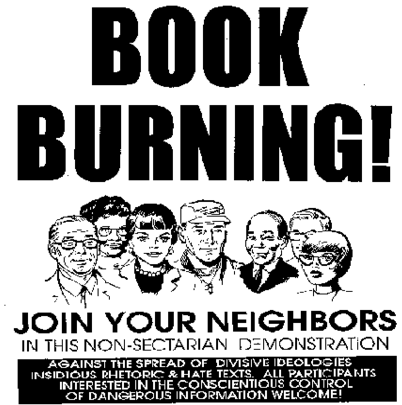
These days, most so-called "reviews" on the internet are either not reviews or they are crappy reviews.
However, reader comments about books can provide interesting data about reader reactions to books.
"Books are like mirrors: if a fool looks in, you cannot expect a genius to look out."
-J.K. Rowling
Data: views of the readers
Look at the "reviews" of
The End of Eternity on
amazon.com and compare the five star reviews to the critical reviews.
Critical (two star) reviews:
Mr. Amazon Customer: "
I still had a lot of trouble buying into the main character in this story. The problem I have with him and
the story in general is that emotional situations seem to be taken to
extremes going from dry clinical detachment to wildly-in-love,
blackmailing, murderous, and suicidal without any sort of in-between."
Genella V. Bakas: "
I could not care less about the characters: plain, weird and superficial."
Ms. Amazon Customer: "
the writing and characters seem sophomoric"
 |
| 3 of Asimov's characters |
Peter Franek: "
The characters are lifeless,
except the main character Harlan who suffers all kinds of disorders, is
hating everybody and women and sex in particular. His girlfriend, on the
contrary, is a devoted beauty who came from a different world only out
of love to Harlan (whom she never had met before), reminding me of 19th
century romantic operas."
Morphie: "
The plot is jumbled, the characters undeveloped, the premise is almost incoherent"
George halligan: "Poor plot, insubstantial characters and a lapse into the jargon that amateur sci-fi authors"
Helpful positive reviews:
David Rasquinha: "At the heart of the book is the love story of Andrew Harlan and Noyes
Lambent, but this tale is just a framework for Asimov to build on. In
the final analysis, Asimov is making the point that just as a child
learns to walk by repeated falls, humanity's ultimate characteristic is
the Schumpeterian desire and ability to innovate through risks. If we
are protected from ever making mistakes, we may avoid tragedies, but the
human race itself will vegetate and die. As with many of his earlier
works, the dialog can be jarring and characters often one-dimensional.
For all that however, The End of Eternity ranks among Asimov's finest"
A customer: "there is a romantic component to
the story, which makes the characters more palpably human and draws you
in, tugging you along by your heart. However, the story goes much
deeper than that and only as you turn more and more pages, the fact
that this is an extremely well thought out book will become more
evident. More than just inviting you to explore a universe
where reality moves along a controlled path to maximize the good of the
many, he shows you the dangers of allowing that to happen. Read this
if you like good science fiction. Read this if you like a good mystery
that slaps you in the face with the unexpected."
Justin Aleo: "This novel is unique among
Asimov's in at least two respects: it explores (and questions) the
morality of the "future" he presents (although Asimov deals a lot with
morality in one form or other in most of his novels - this is one of the
things I like most about reading him); and his characters are unusually
human. Actually, for much of the book they are almost too human: they
are often irrational and, well, dumb - as are some aspects of the world
he creates. But persevere. As always, there is a reason for
everything. It all comes together in an ending which will bend your
mind."
John Domby: " Critics blow nonsense about lack
of character depth and so on and other such maunderings, but the power
behind this novel comes from the plot, the science fictional ideas, and
the love story."

What do I conclude from these data (above)? First, Asimov was writing way over the head of some 21st century readers. Some people just get confused by
The End of Eternity and complain about a poor and jumbled plot. Other readers enjoy the story and describe it as "
an extremely well thought out book" and note: "
the power
behind this novel comes from the plot". If your idea of science fiction comes from watching mindless Hollywood dreck, then you probably can't even understand the time-twisted plot that Asimov presents to you in
The End of Eternity.
I like the order in which
John Domby listed the key elements of The End of Eternity: "the plot, the science fictional ideas, and
the love story." Ya, there is a love story, but anyone who places a focus on that aspect of The End of Eternity is really missing the point of the novel.
People should not read Asimov's science fiction because they are looking for well-developed or substantial characters. Asimov admitted that he put an emphasis on the plot of his stories while just creating talkative characters who strongly advocate one of two competing ideas: "I am so intent on presenting my opposing ideas that I make no serious attempt characterize. As a result, much is made of my 'cardboard characters'. But these accusations usually come from critics who don't see what I'm trying to do."
Noÿs Lambent
Noÿs functions as an M.N.C. -a Minumum Necessary Change. In the technical jargon of Eternity, a M.N.C. is the desired means of changing the flow of Time and initiating a
Reality Change. What change does Noÿs cause? Nothing less than the end of
Eternity.
"
Eternity was too finely balanced an arrangement to endure modification."
Eternity is the time travel "device" that Asimov imagined. Eternity is both a time travel machine and a place that exists outside of the normal flow of Time. Asimov tells the story from the perspective of Andrew Harlan, one of the Eternals, the residents of Eternity who work (using time travel) to guide humanity safely through the centuries.
Asimov wrote
The End of Eternity in the 1950s, so he makes the explicit point that Eternity and time travel are used to prevent dangerous technologies (such as those for exploiting nuclear energy) from being developed and used on Earth. The result? Human society remains technologically constrained, changing little for the 10,000,000 years of human existence -before Humanity finally dies out, sadly, never having spread outward from Earth to other planets in the galaxy.
Harlan was born in the 95th century. We never learn many details about life in the 95th, but apparently Andrew grew up in a society where women were expected to be "true, pure-hearted mothers". For the sake of argument, let's imagine that the society of the 95th century is similar to that of the United States in say, 1895.
Thus, it is a challenge for Harlan to be an objective observer when he is made an Eternal and he must travel through time and Observe the 482nd century. The 482nd is at the extreme opposite end of many social axes compared to the conditions that Harlan grew up with in the 95th. In the 482nd ("
more than a little matriarchical"), women are free to lead independent lives and have sexual partners just for pleasure. Children can be produced artificially when women hand their egg cells off to "
the ovaria". "
In a hundred ways Harlan though the society sick".
What about the meta-society that exists within Eternity itself? The
Eternals can observe the ebb and flow of social extremes across millions of years of human history, but the social system within Eternity is highly constrained and rigid. The greatest constraint arises from the fact that for (unexplained) genetic reasons, it is almost impossible to remove women from the flow of Time and place them into Eternity as full-time working Eternals -doing so is too disruptive to the history of Earth. Thus, the Eternals are almost exclusively males. The shortage of females in Eternity makes for some unhappy Eternals, but these lonely men are supposed to be like monks and work hard and ignore the deficiencies and hardships of their own existence. The Eternals view themselves as the Guardians of Humanity!
Noÿs Lambent is the only female character in
The End of Eternity. And this is not because Asimov
is sexist and hates women
. Here is a plot summary of
The End of Eternity: A smart and daring woman infiltrates a male-dominated society, locates its weaknesses, trips-up the clueless and bumbling males and deftly causes that society to collapse. She survives that collapse and lives to lead Humanity on towards a future of infinite possibilities among the stars. In her spare time she woos and wins the love of her life.
With a powerful and competent woman like
Noÿs on the job, Asimov had no need to insert any other female characters into the story.
"
it’s another 'he barely met her, but now he desperately loves her' kind of book."
Not too long ago there was
an article in
The Wall Street Journal about "
love at first sight". Many human males experience the phenomenon of quickly falling in love with their mate. Asimov "fell in love at first sight" at the age of 22.
Jack Vance was apparently working at a construction site, saw his future wife in an adjacent house and thought she looked great. He got a bag of doughnuts, went to her door and asked her to make a pot of coffee. They got married, had a family and lived together for the rest of their long lives. Apparently some people (about 50% of women) don't believe in "love at first sight". Some of them make it their business to patrol the science fiction genre and mock male authors who include "love at first sight" in their stories.
Spoilers Abound!
If you have never read
The End of Eternity, this is a good time to do so. I'm going to assume that everyone reading past this point has read the story.
In
The End of Eternity, Noÿs is a secret agent from the far future. She places herself in Harlan's life because she has a mission to accomplish, a mission that depends on Harlan falling in love with Noÿs. Before she ever meets Harlan, Noÿs has viewed the future and seen that if she plays her cards correctly, she and Harlan will end up living together happily in the future.
I understand that some people find this aspect of
The End of Eternity to be objectionable. Fine. If it does not float your boat then move on. I recommend that you exit the science fiction section of the universe and head on over to the romance section where you can find thousands of novels that involve other kinds of love stories.
Really, it is petty and absurd to complain about Asimov's decision to show Harlan as being unable to resist Noÿs. My interpretation of the story is that Noÿs had advanced technology from the far future that she could use to make sure that Harlan fell in love with her. Asimov was cagey about this, but I like to think that Noÿs had the power to shape her physical features so as to exactly match Harlan's preferences, she probably used pheromones and possibly drugs to influence his behavior and I think Asimov wrote his account of their first night together so as to suggest that Noÿs used some kind of telepathic contact to "put ideas into his head" and make sure that Harlan fell madly in love with her.
Given the background as described above, we should ask: what options were available to a woman such as Noÿs Lambent, what were the possible MNCs that she had available to her to select from, MNCs that would allow her to accomplish her mission to destroy Eternity?
But first, why bother putting an end to Eternity? The idea is, that by destroying Eternity, Earthlings will not put effort into developing time travel -instead they will develop nuclear energy and space travel and spread to the stars, creating an infinite future for Humanity. Ta Da!
Noÿs is from the far future, from within the "Hidden Centuries", a part of human history that has been cut off from Eternity. Noÿs and her people can
View possible alternative Realities, so they know that Eternity must be destroyed if Humanity is to survive. Noÿs, as the secret agent from the Hidden Centuries, must travel back in Time and destroy Eternity.
Having Viewed her own future, Noÿs knows that the M.N.C. that will cause the destruction of Eternity involves Andrew Harlan. He has the ability to destroy Eternity. Somehow Noÿs must convert Harlan from a loyal Eternal into a man who is willing to destroy Eternity. She must shift Harlan away from his devotion to Eternity by making him fall in love with her. She has seen the future and she knows that she can use Harlan's emotions to "get the better of him". Having seen the future, she knows that Harlan can not only fall in love with her, but act in a desperate fashion to protect her and even reach the point where he is willing to help her destroy Eternity so that they can live happily together and save Humanity.
In addition to destroying Eternity and putting an end to time travel, Noÿs must accomplish one more task. She must go back into ancient history and give the secret of nuclear physics to Earthlings in the early 20th century (without her intervention, nuclear energy is not discovered until several centuries later).
Thus, Noÿs knows that if her mission is a success, she will destroy Eternity, obliterate her own society in the Hidden Centuries, and end up trapped in the primitive 20th century.
Knowing all this, she selects a specific M.N.C. that will allow her to live out the remainder of her life happily in the 20th century. Specifically, she arranges things so that she and Harlan will fall in love and they will be together in a shared future. All the other MNCs available to Noÿs do not have such a happy ending for her.
This is a very romantic notion. While busily destroying the world as she knows it and risking nuclear war on Earth in the 20th century, Noÿs engineers a new Reality in which her love affair with Harlan will come to be.
So how does Noÿs destroy Eternity and make Harlan fall in love with her? She travels back in time to the 482nd century and poses as a (very sexy) woman of that time. Why the 482nd? And from among all Eternals, why use Harlan (specifically) as the tool to destroy Eternity?
Time Loop
One of the intriguing features that Asimov wrote into
The End of Eternity is a
time loop. We must imagine that originally time travel was discovered at some point in Earth's history, say in the year X. Then, someone from the future arranged to send back into time the required information to allow time travel technology to be developed several centuries earlier than the year X.
We are never told exactly how or why that was done. By the time Harlan gets caught up in the web that Noÿs is weaving, he is already an integral part of the time loop that created Eternity. Harlan's critical role is that he is an expert on primitive Earth history, which is critical for the existence of Eternity because he can train the secret agent (
Brinsley Sheridan Cooper) who will be sent back in time to the primitive period of Earth's history (before Eternity exists) in order to invent time travel and allow Eternity to come into existence. Thus, the existence of Eternity depends in a time-loopy way on the existence of Eternity.
So, we must conclude that if Noÿs never came into Harlan's life, he would have remained a loyal Eternal and he would have played out his role in helping Eternity come into existence. In that
Reality, Harlan would have gone to the 482nd century and made Observations to confirm that women of that century had developed a dangerous belief: the belief that having sex with an Eternal could give them immortality. That unusual belief would have been corrected (perhaps by Harlan himself imposing a M.N.C. to eliminate that belief) and nothing else of much interest would have happened...Eternity would have continued to exist.
Instead, with Noÿs disguised and playing the role of a woman from the 482nd, Harlan is sent careening down a new trajectory of life. Asimov has considerable fun showing how the uptight and sexually repressed Harlan flips his lid when he encounters Noÿs.
Telepathy?
Noÿs is from millions of years in our future. What advanced technologies and powers might be at her disposal? It might be that Noÿs has been specifically selected by the people of the Hidden Centuries to be perfect bait for Harlan. It also might be that Noÿs drugs Harlan and/or uses telepathy to control his behavior and thought patterns.
Noÿs certainly has the power to put ideas into Harlan's head. Harlan starts having dreams in which Noÿs is naked and he is (initially) ashamed. Later, when he is completely smitten, he becomes incapable of feeling shame for anything he does with Noÿs. Harlan is completely transformed... he changes from a loyal Eternal who never thinks about having a relationship with a woman to a man who will do anything -even destroy Eternity- to preserve his relationship with Noÿs.
"
Throughout the novel, Harlan’s notions toward Noÿs are alarmingly sexist."
Did Asimov depict Harlan as being "sexist"? Asimov did depict Harlan as being from a society where women have a defined role in society as mothers. Asimov did depict Harlan as being repulsed by the society of the 482nd. Asimov did depict Harlan as objecting to the way that Computer Finge had brought the distracting and provocative Noÿs into Eternity. And Asimov depicted Harlan as being a creature of his homewhen and training as an Eternal and being unable resit being emotionally manipulated by both Finge and Noÿs. At no point in
The End of Eternity does anyone mention the idea that men are naturally superior to women or that women should be discriminated against.

Harlan is a 32-year-old virgin. Readers should think of him as being like a monk who has taken a vow of celibacy. Still, he does like women. He does not want to be distracted by women. When Noÿs starts "coming on" to him, Harlan has no idea what to do and how to defend his ideals. While playing the role of a rich and pampered woman from the 482nd, she is acting out the behavior of someone who lives only for fun, leisure and pleasure. When Harlan gets mad at Noÿs (actually, he's mad at himself for being so fully distracted by her beauty and charms) he lashes out and tries to dismiss her as a "stupid girl". Even though he tries to dismiss Noÿs as a "stupid girl" in his thoughts, does Harlan really think she is stupid? Nobody is buying it, not even Harlan. He's desperately trying to not let himself like Noÿs, desperately trying to push her away so that he's not further distracted by her, desperately trying to do his work so that he won't be tricked into doing what he thinks Computer Finge wants him to do.

Is Harlan alarmingly sexist? "
He criticizes her scanty, but time-relevant clothing". Harlan points out the fact that when women are brought into Eternity (often to provide sexual partners for Eternals), it is done discretely. When Harlan arrives in the section of Eternity for the 482nd (for what he thinks is a standard Observation mission) he can't imagine why Finge is parading a sexually provocative woman in front of him. Following his training and the rules and conventions of Eternity, Harlan get angry and assumes that Finge is flaunting his authority as a Computer to bend the rules of Eternity. Harlan does not actually criticize the clothing that Noÿs wears, he objects to Finge allowing Noÿs to parade around wearing sexually provocative clothing in front of men who are trying to remain celibate and not be distracted by women.
 |
| "I brought you another drink." |
Does Harlan criticize the "
possibly numerous sexual liaisons" of Noÿs? Given his upbringing in the 95th, Harlan certainly is uncomfortable with a society in which women are free to have many casual sexual partners just for pleasure while leaving childbirth to automated ovaria. Harlan probably dislikes even thinking about a society where women will usually "say yes" if a man casually asks for sex. Harlan does not want that kind of distraction on his mind. Knowing himself, he probably knows all too well how easy it would be to give into temptation in such an environment. To protect himself and defend his commitment to being celibate, he tells himself that the society of the 482nd is sick. Does this make Harlan alarmingly sexist?
 |
| Temptation |
In
The End of Eternity Asimov has carefully depicted Harlan as a creature of the 95th century, indoctrinated into the lifestyle of an Eternal. Asimov carefully depicts Noÿs as playing the role of a woman from the 482nd. Harlan behaves exactly as we expect him to behave when he is placed into contact with the 482nd. In what sense is his behavior "alarming"? Asimov carefully constructed Harlan to illustrate a guy who could be easily unhinged by the sexually-charged predicament that Finge and Noÿs place him in.

Harlan's sexism is apparently alarming for some people who feel threatened by the idea of a fictional character who grew up in a fictional culture where women are "true, pure-hearted mothers". Harlan's sexism is apparently alarming for some people who feel threatened by the idea of a fictional man who is trying to remain celibate and who is trying to not be distracted by a beautiful woman who is trying to have sex with him. Harlan's sexism is apparently alarming for some people who are going out of their way to raise the call of: "Alarm! Sexism!".
"
it’s easy to dump this book for its dull, old-fashioned tone and predictable sexist relationship patterns."
 |
| light my fire |
If it is easy for some readers of
The End of Eternity, here in the year 2015, to feel this way, then that is more of an indictment of the dumper than the dumpee. Asimov was a great admirer of women. He praised professional women (and married one) and publicly promoted and supported the careers of women in the publishing industry. Harlan was specifically designed as a character who would predictably and reliably act out "sexist relationship patterns". Of course, in 1955 the term "sexist relationship pattern" did not yet exist, nor did the connotations of condemnation that now accompany such language.
 |
| All the President's Wives by Bob Woodward |
In 2015, I suppose Harlan meets most people's definition of being "sexist". Is there some rule that says that when readers find a science fiction book with a sexist character then the reader's response should be to "
throw it across the room and then walk over to it and stomp on it and spit on it and then contact the local waste disposal authorities for a special pick up because you’re not touching that thing again"?
I suppose there are some people who feel that way about meat eating. There are probably some vegetarians who don't want to touch a book that includes a character who enjoys eating meat.
It is clear that here in 2015 there is a cadre of people who feel obliged to patrol the science fiction literature and "call out" old white guys who included "sexist" characters in their stories. Fine, if it is your mission in life to be offended by Harlan's "sexism" then indulge yourself. Let yourself be distracted from enjoying one of the great stories of the science fiction genre. Revel in your obsession. My advice is, if you love science fiction, then keep an open mind and observe what Asimov was trying to do in
The End of Eternity. He certainly was not endorsing sexism.
 |
| We all have swords! |
The free thinkers who created science fiction as a new literary genre had their own sexual revolution long before the 1960s. Yes, all of Western Civilization was male-dominated when the science fiction genre came into existence, so there is plenty of cringe-worthy stuff in the archives of science fiction. However, nobody in 2015 should be unable to understand what Asimov was doing when he wrote
The End of Eternity. If you don't like talky and thoughtful science fiction then don't even try to read
The End of Eternity. If you like to think and play the science fiction "what if?" game, then
The End of Eternity is as much a treat for readers today as it was 60 years ago.
Sex Change
 |
| Will The End of Eternity ever come to the big screen? |
What if Asimov had reversed the sex of every character in
The End of Eternity? Would that have made any difference to the story he told?
"
it’s jarring to see such an old-fashioned depiction of a female character in EoE"
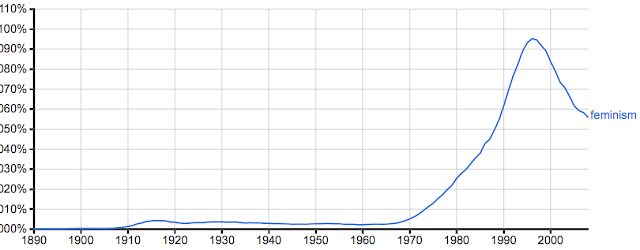
I think Asimov's depiction of Noÿs is almost as fresh today as it was 60 years ago. The main change for readers in 2015 is that there is a tribe of women today who were trained ("sexism" became a popular term the 1960s and peaked about 1995) to have a knee-jerk emotional reaction to male sexism, even if they are reading entertainment literature with a carefully constructed depiction of imaginary sexism being acted out by a character in science fiction story. These indoctrinated anti-sexists are at risk of self-censoring and not reading some of the great literature from the 20th century just because certain books include a "sexist" character. Thus, here in our "modern" age, we now (60 years after
The End of Eternity was first published) have blog posts warning readers not to let their knee-jerk reactions keep them from reading Asimov's novel. I imagine poor Asimov turning in his grave and shaking his head.
"...
the 21st century will be a kind of women's lib world. And as a matter of fact, it will be a kind of people's lib world because, you know, sexism works bad both ways." -Isaac Asimov, 1974
Asimov was a student of history and a deep thinker. He could imagine the impact of technologies on human societies. In
The End of Eternity Asimov played the science fiction game of creating a thought experiment, a playground for readers. He invited readers: imagine Eternity... a device that can allow us to see the extremes of social conventions from across 7,000,000 years of history. Imagine the people of the 95th century and those of the 482nd, at the two extremes with respect to the roles of women in human society. That is the science fiction game. It is sad that there are people in 2015 who can't stand to read a book in which Asimov depicts people acting out the conventions of the imaginary cultures of 95th and 482nd centuries and the imaginary society of Eternity. I'm saddened that there are people who don't understand why Asimov wrote Harlan as a "sexist" character and who don't understand the point of
The End of Eternity.
One of the points Asimov made in
The End of Eternity is that humans can be caught up in their own narrow view of reality. When we allow ourselves to be that way, we are at risk of being duped, tricked, manipulated, blind-sided and ultimately, becoming extinct. It is ironic that we now have a cadre of narrow-minded people who (because of their narrow-minded views) can't even stand to read Asimov's book and listen to his warning about the dangers of being narrow-minded.
Jack Vance, another wise observer of human culture and societies, noted that extreme social structures seem to paradoxically provoke the creation of new cultural trends that can swing a society over towards the opposite extreme. In the
Cadwal Chronicles, Vance depicted a tribe of radical feminists who tried to artificially construct a human society where men and women were indistinguishable, but the resulting society was not viable. In his
Demon Princes saga, he depicted a future society of vegetarians that devolved into four footed grazers.
"
Extremes are never healthy" -Andrew Harlan
 |
| The 482nd century: male supremacy is eliminated! |
But, of course, Harlan himself was born into a society at one extreme of the social spectrum that Asimov chose to explore in
The End of Eternity. Harlan is easy to manipulate because of his biases: he is the perfect target for a MNC.
Yes, there was a time when some men thought that no woman should be a doctor. Asimov was not such a man. He married a doctor. Yes, even today some people struggle to have the freedom to live their life as they choose, sometimes having to struggle against gender stereotypes. These on-going struggles to deal with the consequences of sexism do not mean that it makes sense to avoid reading
The End of Eternity.
"
Asimov was being a snarky bastard with this silly time travel novel"
That's not right. Its not even wrong. The Eternals had unwittingly made it impossible for Humanity to develop interstellar space travel technology. Asimov depicted the total cluelessness of the Eternals with respect to what they had done and the devastating implications for Humanity. The Eternals had remorse and guilt every time they helped quash the human impulse to expand and explore, always doing so in the name of safety and their misguided attempts to help Humanity. With their advanced Reality Viewing technology, the people of the Hidden Centuries could figure out that Eternity was what caused the extinction of the human species and they took action to end Eternity.
Is
The End of Eternity silly? In some sense, all time travel stories are silly. However, in my view,
The End of Eternity is one of the least silly time travel stories. I think Asimov probably did have fun creating his story and I have fun every time I read it. Some of the elements of the story like the smoking and griping Eternals and Harlan's "sexism" and the sexiness of Noÿs were lovingly exaggerated to comic levels by Asimov. Still, I'd call the novel fun and entertaining, not silly. I don't detect a tone of snarkiness coming from Asimov.
Bad Reviews
Asimov had much to say about people who review stories. One bit of advice that Asimov gave to reviewers was that they should not make a review be about themselves. This is the reason why I seldom write reviews. When I want to write about a novel such as
The End of Eternity, I almost always want to explore my personal reactions to the story and, often, how I'd like to see the story be modified or extended. I have no interest in writing a review. Sadly, the internet is full of commentary and blog posts that are called "reviews", but the author has either not written a review or has written a crappy review.
 |
| Maximum Desired Response? |
One way that you can create a crappy review is to not understand a book and not understand what the author was trying to accomplish. Another way to create a crappy review is to not understand and respect the intended audience of a book.
I'm fascinated by reader's reactions to science fiction stories from the previous millennium. In 2015, many readers who stumble upon books such as
The End of Eternity have no idea what they have gotten themselves into. In 1955, the people who read
The End of Eternity would have almost all been willing to play Asimov's imaginative and entertaining "what if?" game and get to know Harlan and Noÿs. Nobody had to be told to keep reading the book to the end and nobody had to be told not to throw the book away after reading 30 pages because of Harlan's sexism. In the 1950s, nobody reviewed
The End of Eternity and dismissed it as "another sci-fi romance" or a "boring romance with some pseudo-jargon". Is creating a generation of pseudo-science fiction fans who can't read the science fiction literature really the Maximum Desired Response of feminism?
 |
| The social pendulum continues to swing. |
Observing 2015
If Asimov had access to time travel in 1955 and if he had known about the sexual revolution of the 1960s, would he have changed
The End of Eternity? If Asimov were alive now, would he have any regrets over the content of
The End of Eternity? I suspect not. I also suspect that
The End of Eternity will stand the test of time and come to be even more widely recognized as one of the great science fiction stories of the 20th century.
There are hundreds of "reviews" of
The End of Eternity on the internet and many "reviewers" who just don't understand
the book. For example:
"
women generally do no have the aptitudes deemed crucial to deal with the psychological rigors of time travel"
That is
NOT in the book. It is sad that so many readers of science fiction here in this century 'do no have' the ability to keep up with Asimov and understand what's going on in
The End of Eternity.
One more example:
"
not one of these centuries develops a society that produces enough technically and scientifically-minded women to become Eternals"
That is
NOT in the book. From the same "review": "
a science fiction author who literally can't imagine women as anything other than conniving seductresses who will destroy everything if allowed into the treehouse". Now I can detect the snarkiness -and it does not come from Asimov. This comment about Asimov is demonstrably false, but, of course, truth is not important when a sexist old guy is being denounced.
My advice is that you not trust book "reviewers" to understand
The End of Eternity. In the interwebs of 2015, do not trust book "reviewers" to tell the truth. If you are a thoughtful person who enjoys science fiction then you should read Asimov's stories yourself. Oh, and try to keep up.
Next: time for some Jack Vance fanfiction!
Disclaimers for the modern era: