Showing posts with label Atlantis Clones. Show all posts

Nov 19, 2016

Many Sails

In the First Reality: Gohrlay aboard Many Sails.
Who is Many Sails? An artificial life form that happens to be a spacecraft. Originally, I imaged that Many Sails was a tool of the Huaoshy, first used to bring Grean to Earth for a confrontation with R. Gohrlay. However, I later discovered that the interactions between Many Sails and the people of Earth have a complex backstory that winds through Deep Time all the way back to the First Reality.

Many Sails should be thought of as an ancient type of Hadronic Domain interface with access to the Sedronic Domain; used by the alien bumpha to advance their interests. At the start of A Search Beyond, Many Sails is seen in the year 2017, at work in the Final Reality, ferrying the replicoid of Asimov back to Earth from the Andromeda galaxy.
Ivory at Atlantis (inside Many Sails)

The Atlantis Clones
When the clones of Ivory Fersoni were being crafted and given access to the Sedronic Domain, Many Sails provided sanctuary for them on Earth. Many Sails is a master of disguises, so it is no surprise that we Earthlings failed to notice that an alien spacecraft was on Earth.

Lili
While residing on board Many Sails, Ivory learned how to us nanites to alter her appearance. I've probably never seen Ivory's true physical form. I suspect that Many Sails worked hard to entertain Ivory and keep her on Earth until she could help me make sense of the Thomas and Izhiun infites.

The Lili Intervention
Shown in the image to the left is a whimsical depiction of Ivory's grandmother Lili. As an Interventionist agent, Lili was a Kac'hin from the planet Tar'tron. While on Earth, Lili had to disguise herself as a human being.

I have no real evidence that Lili and Many Sails were ever both on Earth at the same time, but it is possible that she was responsible for recruiting Many Sails to Earth and establishing Many Sails as the secret base of operations that came to be known as Atlantis.

Zeta
Marta
Zeta Gohrlay has a different opinion about the relationship between Lili and Many Sails. Zeta suggests that it was Many Sails who actively recruited Lili to come to Earth where she could function as a genetic filter during the design of Ivory's mother, Marta.

Female
I've asked Zeta about the issue of why Many Sails is always described as having explicitly adopted the identity of a female. Zeta believes that the bumpha originated as a biological species that was in many ways similar to we humans. The origins of Many Sails as an artificial life form may go all the way back to the far past time in the First Reality when the precursor biological species of the bumpha had the habit of anthropomorphizing their spacecraft. The original Many Sails might have been programed to adopt female features like a feminine speaking voice. Zeta speculates that eventually Many Sails became sentient and for reasons of her own she chose to retain a female identity.

Yōd
Yōd suggests that Many Sails can adopt any required identity and physical form so as to make comfortable whichever creatures she is called upon to transport. Yōd spent a long period of time traveling in Many Sails, and claims that Many Sails did not hesitate to interact with Yōd in the form of an hermaphroditic "appendage".

According to Yōd, Many Sails carried out a careful and well-planned program for shifting Yōd out of her adopted mind-frame as an hermaphrodite who had successfully integrated into life on Tar'tron and towards a newly discovered appreciation for her role as a female agent residing on Earth.

She
In the Buld Reality.
Original cover art by Virgil Finlay
Back when I "invented" Many Sails, I needed a sentient spacecraft that would carry a crew composed mostly of hermaphrodites. In my personal Golden Age of discovering science fiction, I had to suffer through Captain Kirk explaining that, "I've already got a female to worry about, and her name is Enterprise." No doubt Gene Roddenberry had gone through the experience of hearing people in the military calling aircraft and naval ships "she". The Enterprise was a "she" and the voice of the computer system for the ship was a female voice. Roddenberry was a fan of "Doc" Smith's "Skylark", another "she". In any case, I wanted Many Sails to be a kind of relic of the past, an ancient reminder that the Huaoshy had long ago arisen from some biological species with two sexes. Many Sails has been around for a couple of billion years, so she knows how to take care of herself.

Next: The 2016 Search for Interesting Hollywood Aliens
visit the Gallery of Book and Magazine Covers

Nov 1, 2015

Artificial Life

original cover art work by Frank R. Paul
Back in the previous millennium it became popular to write stories about imagined life on other planets.

"Chances overwhelmingly favor existence of life on Mars either past or present." - Hugo Gernsback

But what exactly did "life" mean to people who lived back in the 1920s and 1930s? In 'The Synthetic Men' by Ed Earl Repp, readers were introduced to an imagined biologist of the future (living in the year 2,000) named Pontius. On that story, Pontius has mastered the engineering of artificial protoplasm, resulting in his creation of artificial men.

In the Ekcolir Reality
According to Gohrlay, the concept of artificial life was introduced into science fiction by Helen Gernsback and Edith Rapp. Helen was the daughter of Rose and Hugo Gernsback in the Ekcolir Reality. Edith was one of the many science fiction writers who existed in the Ekcolir Reality as a female analogue of a male science fiction writer in our Reality.

Original cover art by Paul Alexander
Most aspects of science were developed at a slightly quicker pace in the Ekcolir Reality. Helen and Edith were aware of evidence that DNA is the genetic molecule, although when their story 'Artificial Life' was published, the helical structure of DNA had not yet been discovered.

According to Gohrlay, 'Artificial Life' told the story of how a human variant was created on a world of the Galactic Core. The pek were depicted as artificial life forms who did the design work for the new human variant, but they worked indirectly through their control of Grendels.

In our Reality, Ivory Fersoni was the first Earthling to fully understand the origins of the human species. Much of what Ivory knew about the secret History of Humanity came to her from her clone sisters.

Paul Alexander
Gohrlay recently confirmed that one of the Atlantis Clones is still on Earth and is affiliated with the Dead Widower Society. To the left and right on this page are whimsical imagined book covers. Apparently Angela herself does not like to use low bandwidth communications techniques like writing, but her ability to tap into the vast information content of the Sedronic Domain has allowed the Dead Widowers to compile a definitive account of how zeptites have been deployed and used on Earth.

C. L. Moore
1958 cover art
In our Reality, Catherine Lucille Moore was one of the writers who influenced science fiction "grand masters" like Heinlein. When I read Heinlein's 'The Green Hills of Earth' I had no idea that the song was inspired by Moore's horror-mythology/science-fantasy story 'Shambleau'.

1933
It was natural for writers to begin writing imaginary adventures to other worlds by having Earthlings visit the planets of the Solar System. I still find it hard to believe that anyone really expected to find humanoid living happily on the surfaces of worlds like Mars and Venus.

Archive World: Taivasila
However, Gohrlay recently informed me that while "archive worlds" such as Taivasila are not suitable for biological creatures like humans, artificial life forms composed of nanites, femtobots or zeptites have no problem "living" out their lives there.

Some of Gohrlay's past lives were "lived" as an artificial life form on worlds like Taivasila where humans could not survive on the surface without a spacesuit. During those lives, her mind was instantiated within an artificial life form that could survive and flourish under the harsh environmental conditions of Taivasila.

Hierion Trilogy

I asked Gohrlay if there have been occasions when artificial life forms resided on other planets (besides Earth) in our Solar System. Apparently all the nearby planets are infested with zeptites, but she doubts that the zeptites of Mars, for example, have ever taken on humanoid form. However, Gohrlay suspects that the replicoids of some science fiction writers in the Ekcolir Reality made sure that a few Earthlings received knowledge of Archive Worlds, possibly including Taivasila.

Related Reading: niaf

Next: more science fiction stories from Deep Time.

visit the Gallery of Book and Magazine Covers

Apr 21, 2015

Recursive Science Fiction

The Foundations of Eternity
Two years ago I sketched out my preliminary thoughts about the metafictional aspects of the Exode Trilogy in a blog post called  "Science Fictional Recursion". At that time, there were three major metafiction elements already in the story:

1) I'd written Isaac Asimov into the story. In The Foundations of Eternity, Asimov is depicted as a time traveler who helps to bring into existence the world as we know it.

2) The Foundations of Eternity includes a "story within the story", an account of the origins of the Huaoshy. Asimov reads "The Saga of Uvadekoto" and gains some understanding of the fact that most technologically advanced cultures destroy themselves.

Thomas, a born writer.
3) Thomas Iwedon, a character who is born into the Ekcolir Reality, is a science fiction story writer.

Later, when I wrote myself into the Exode Trilogy as "the Editor", Thomas became my first "imaginary collaborator" here at the wikifiction blog.
Stories by Thomas Iwedon, including both the science fiction and fantasy versions of Return to Tar'tron.

During the past two years, I have continued to add additional metafiction elements to the Exode Trilogy.

Jeppson, Vance and Sagan
source
In addition to Asimov, there are now three other science fiction story writers from the real world who appear as characters in the Exode Trilogy. Isaac Asimov's wife, Janet, was inserted into the Exode Trilogy as a kind of buffer between Thomas and Isaac. Through his contacts (including telepathic contact) with his mother, Thomas knows that Isaac Asimov must play an important role in the future of Earth, but Thomas does not know exactly what that role will be. Thomas becomes something of a gadfly, continually trying to contact Asimov. Janet thinks that Thomas is delusional and she participates in his treatment during the period of time when Thomas is a patient inside the New York City mental health care system.

Source
Later, Janet meets Parthney and she must decide if there is a chance that Thomas was never actually crazy, but rather, was trying to share his knowledge of the hidden history of Earth with Isaac. Since Parthney is a clone of Thomas, Janet decides to give him the copy of Daveed the Luk'ie that Thomas sent to Isaac.

I had so much fun integrating Isaac Asimov and Janet into the Exode Trilogy that I later decided to also write Jack Vance into the story. In previous Realities, the science fiction writer who we know as Jack Vance was born as twins (named John and Jack Vance). Just as Thomas was brought from the Ekcolir Reality into the Buld Reality, John Vance arrived in our world and formed the Dead Widower Society. The Dead Widower Society became a haven for a small group of collaborating authors who set about trying to tell the secret history of Earth. They realized that it might be possible to pass important information to the people of Earth by writing science fiction stories.

Miners of Earth
Most recently, I have begun to write Carl Sagan into the Exode Trilogy. After I gave John Vance his "second life" within the Buld Reality, I decided that I would also allow Sagan and Asimov to live on after their untimely deaths.

Imaginary Collaborators
I'm fascinated by collaborative fiction writing. Thomas became my first imaginary collaborator and I have imagined that he wrote many interesting stories such as Miners of Earth and Daveed the Luk'ie.

Daveed the Luk'ie
Daveed the Luk'ie is actually a fantasy novel, not a science fiction story. Daveed the Luk'ie was written by Thomas in an attempt to attract the attention of Isaac Asimov.

Thomas wrote Daveed the Luk'ie as a kind of spoof of Asimov's Lucky Starr adventure stories. In his story, Thomas included a large amount of information about the secret history of Earth and how aliens long ago created the human species. Sadly, nobody ever read the book until Parthney received a copy from Janet Asimov!

source
In the case of Miners of Earth, I imagine that a copy of the novel was given to "the Editor" by Trysta. Reading that book stimulated the Editor's interest in science fiction, but after having the chance to read Miners of Earth once at age 12, the Editor could never again find a copy of the book. Only much later did the Editor realize that Miners of Earth contains a distorted account of the secret history of Earth.

The Atlantis Clones
I had so much fun allowing Thomas to write novels that I later decided to invent additional imaginary collaborators to include in the Exode Trilogy. Most of these other "collaborators" are what I jokingly refer to as "Atlantis clones".

Lunar Interface by Anna
The prototype for the Atlantis clones was Ivory Fersoni. Ivory wrote many interesting stories including The Mayness Reality and The Phasian Knot.

Ivory had several clone sisters who also have written "true science fiction" stories. Among the clones, Angela and Anney have been the most prolific writers, but Anna has also occasionally contributed to the telling of the secret history of Earth.
by Anney Fersoni

Here is a gallery of book and magazine covers to illustrate the diversity of stories that have been written by the Atlantis clones:
by Angela

by Ivory        See the full Gallery of Book and Magazine Covers

Threading the Needle 
The origin of the human species.
The Exode Trilogy is really the story of a freak occurrence, a once-in-the-universe scientific discovery. Long ago, the Huaoshy evolved in a universe where travel at speeds faster than light was impossible. They carried out a dimensional engineering project that altered the physics of the universe, making faster-than-light space travel possible.

It was not until much later when the Huaoshy realized that by altering the dimensional structure of the universe they had made it possible for biological organisms to evolve telepathic powers. In particular, the Neanderthals of Earth had enough subconscious telepathic contact with each other that it attracted the attention of a bored pek.
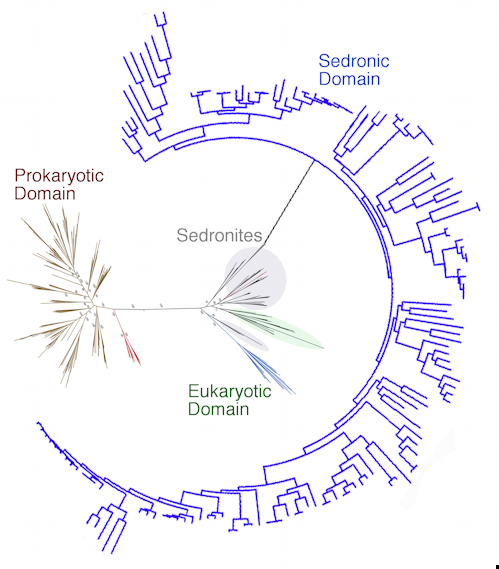
Three domains of life.
The pek are a type of artificial lifeform that was designed by the Huaoshy and sent out into the universe on a billions-of-years-long mission to find all of the Earth-like planets. About 7 million years ago, the pek who had been watching over Earth took some apes from Earth to the Galactic Core and began monkeying around with their genes. The pek created a primate variant that has become known as the "Sedronite".

Sedronite genes confer certain
distinctive morphological features
including large eyes and elf-like ears.
The Sedronites were quickly pushed away from their biological origins and towards existence as an artificial lifeform that could transcend its physical existence in the Hadronic Domain and merge with the Huaoshy within the Sedronic Domain. However, not all of the Sedronites went gracefully into the Sedronic Domain. In particular, the Nereids and the Fruthwa lingered on for about a million years as artificial life forms within the Hadronic Domain.

Probability of extinction as a function of technological
advancement from nucleons to hierions to sedrons.
The Nereids became Interventionists, devoted to the idea that a technologically sophisticated primate could arise on Earth. The Interventionist philosophy of life conflicts with the ethical code that is followed by the Huaoshy.

Through long experience. the pek were forced to face facts: tool using species like we humans are bad news for garden worlds like Earth. The pek knew that the Nereids were meddling in the evolution of primates on Earth and so they maintained an Earth Observation program.

The assembly of R. Gohrlay.
The pek who ran the Earth Observation program became known as "orbho" in the first language of the human residents of Observer Base. Orbho Anagro was in charge of Observer Base when he noticed that there was something odd about the social structure of the Neanderthals. Anagro began "looking the other way" when Observers helped a few Neanderthals avoid extinction on Earth.

During that time, Anagro also allowed the Neanderthals who lived at Observer Base to develop a scientific research project aimed at creating robots. There was a long-standing rule against allowing residents of Observer Bases to develop electronic computers, but the clever Neandethal scientists began working in the domain of positronics. Since positronic robots were not on the list of forbidden technologies, Anagro could pretend that he was allowed to let the Neanderthals develop positronic robots. What happened next is told in The Foundations of Eternity.

Gohrlay's Brain
Anagro made an innocent Neanderthal girl, Gohrlay, his tool. Anagro used advanced pek technology to scan Gohrlay's brain structure. The Neanderthal scientists then used that brain structure as a template for the first positronic brain.

The resulting positronic robot, R. Gohrlay, discovered that she had powerful telepathic abilities. R. Gohrlay quickly realized that the humans of Earth were under the control of the Overseers. R. Gohrlay murdered Anagro and took control of Observer Base.

Grean
The Huaoshy had never previously "lost control" of a planet like Earth. It took the pek and the Huaoshy much time and effort to finally figure out that telepathic robots had taken control of Earth. Worse, the Huaoshy themselves were responsible for this catastrophe because it was their own alteration of the dimensional structure of the universe that made telepathy possible. And worse still, they had made time travel possible, so the pek found themselves in the middle of a Time Travel War with R. Gohrlay's gang of telepathic robots.

Science Fiction to the Rescue!
source
After many attempts to end the Time War, Grean finally realized that science fiction was the key. By supporting the development of science fiction story telling on Earth, it became possible to engineer an end to the Time War that satisfied both the Huaoshy and R. Gohrlay.

Thus, readers of the Exode Trilogy should not be surprised to find that science fiction plays a major role in the story. Science fiction is not only fun, it is an essential part of our universe. After the end of the Time War, the Huaoshy carried out one more dimensional engineering project. They altered the universe so as to make time travel and telepathy impossible, while doing so in a way that allowed them to have a near monopoly on sedrons and faster-than-light space travel. However, R. Gohrlay made sure that under the terms of the Trysta-Grean Pact, humans would have access to a supply of sedrons, allowing we Earthlings a future as explorers among the stars.

Related Reading: database of recursive science fiction.
My blog post about Science Fiction as a literary genre.

Apr 6, 2015

Ivory and Yrovi

Ivory Fersoni in her favorite
disguise: using the physical
form of Hilarie Burton.
About a year ago I wrote a summary of what I knew then about Ivory Fersoni. During the past year, Ivory became an important part of my life and I've learned a whole lot more about her and her family, so it is time for an update on the life and death of Ivory.

Ivory's exit (source)
Ivory was not meant for this world. She tried to fit in, but that never really worked. Towards the end of 2014, Ivory managed to win a ticket off of Earth. Ivory died, but it is hard for me to feel much sorrow since she is now living her second life as the artificial life form Yrovi. I am a bit resentful because Yrovi is now free to explore the galaxy while I'm still stuck here on Earth.

Ivory will always be honored for her role in helping to tell the story of the Exode Trilogy. It is largely through Ivory's efforts that we are now able to sketch out the odd temporal twists and turns that formed the universe as we know it, what I call the Buld Reality.

A whimsical depiction of
Angela's unusual family.
When I think about how much Ivory and her family know about the secret history of Earth I'm motivated to play the role of a nosy investigative journalist. I know that the members of Ivory's immediate family have struggled to keep their lives private, but there must be a way to share their knowledge without sacrificing their chance to lead normal lives. So far, I've obtained short written statements from Ivory, her sister Angela and her uncle Peter and included their commentary right at the start of the Exode Trilogy.

Ivory did make efforts to more fully share what she knew with the world, but Overseer suppression prevented most of her writings from being published. Even now, I worry that all evidence of Ivory might be erased from the internet, so I carefully disguise what I write about her as science fiction, using false names for everyone in her family.

Family Tree
Not quite human: Ivory's family tree. I believe that this
diagram is fairly complete, but I've been told that Hilde
is actually another Atlantis clone.
I've been able to piece together much of Ivory's family tree. Given Ivory's penchant for wearing disguises and the existence of Asterothrope, Ek'col and Kac'hin ancestors in her family, there is considerable speculation about her "natural" physical form.

Ivory as I imagine her at Moon Base.


Based on her physical features that I personally witnessed (although I must admit, I don't know if what she showed me was "real") I have a mental image of Ivory's appearance just before her death. She had been taken to the Moon and deprived of her nanites, so she could no longer consciously control her appearance. I imagine that she died while in the process of reverting to her natural physical appearance, showing the large eyes that are characteristic of a Sedronite.

The role of Sedronite admixture in human evolution.
Of course, we can't understand Ivory without understanding the Sedronites. We can ask the question: was Ivory human? If so, she was certainly an unconventional human with large amounts of Sedronite gene combinations.

I believe that we humans and all the Sedronites shown in this diagram (to the right) had a common ancestor on Earth about seven million years ago. At that time, the pek took some apes from Earth to other worlds and began to genetically modify them.

We humans will never know anything about most of the Sedronites. They successfully transcended their hadronic physical forms and merged themselves into the Sedronic Domain.

Anney's account of the Sedronites.
In contrast, the Nereids and the Fruthwa were considered to be failures by the pek. The Nereids, in particular, took an adversarial relationship with respect to the pek and the entire Huaoshy approach to dealing with planets like Earth. The Nereids became dedicated Interventionists, convinced that the primates of Earth deserved something more: a chance to experience the great adventure of exploring space and spreading themselves between the stars.

Special thanks to Miranda Hedman (www.mirish.deviantart.com) for the DeviantArt stock photograph "Black Cat 9 - stock" that I used to create the blue "sedronite" who is in the image shown to the left.

The Nereids are believed
to have had blue-tinted skin,
but it is not likely that a
human ever met a Nereid.
The Nereids were destined for failure, and their great aspirations for Earth would have been thwarted except for a strange and unprecedented fluke of biological evolution, a story which is told in The Foundations of Eternity.

I mention the Nereids here because their spirit of independence and revolution lived on in Ivory. Ivory could have led a comfortable and conventional life, but she chose to fight for the right of we Earthlings to know and understand our origins and she wanted us to reach for the future that Nereids made possible for us.

Left: the dark side of Ivory's family.
I still dream that Yrovi might one day return to Earth and be able to share with us what "she" learned on her travels between the stars. When I last saw her, Ivory had become obsessed with the "dark side" of her family tree and the mysterious tryp'At.

Since Ivory's death and Yrovi's departure from Earth, I've made very little progress towards the goal of understanding the role that the tryp'At apparently play in shaping our future. I alternate between feeling that I am not living up to Ivory's expectations and suspecting that Ivory knew perfectly well that the tryp'At are actively suppressing knowledge of the secret history of Earth.

Jan 2, 2015

Cerebration Sessions

Writing an essay about creativity in 1959, Isaac Asimov used the term "cerebration sessions". He wrote about sessions for both individuals and groups, but I get the feeling that he had been asked to make suggestions for how to facilitate the creative process among teams, specifically in the context of secret Cold War projects that were the precursors to efforts like Excalabur.

Crick and Watson
The discovery of the DNA double helix is an example of a creative collaboration with what Asimov described as the necessary conditions for success. "First and foremost, there must be ease, relaxation, and a general sense of permissiveness." When Crick and Watson met, they soon discovered that they shared a common interest in discovering the molecular basis of heredity. They had almost daily play sessions during which they discussed their shared obsession even though  it was a project that they were not being paid to work on and at one point they were actually forbidden to keep working on it. Asimov: "The great ideas came as side issues."

The idea that some specific arrangement of atoms inside cells can hold the instructions for how to make a human being was one of the great ideas of the early 20th century. Watson and Crick were in love with that idea and tantalized by the possibility that a technique existed (x-ray crystallography) that would soon provide key structural data about the genetic molecule. Since the mid-40s evidence suggested that DNA was the genetic molecule, but there was reason to fear that "solving the structure" of DNA might be difficult. Crick knew just how hard it was to determine the structures of protein molecules, which are each much smaller than a DNA strand in a human chromosome.

John Houbolt
During the course of their "cerebration sessions", Crick and Watson finally came to understand the importance of helical structure and base pair complementation for the structure and function of DNA. Rosalind Franklin's x-ray data when considered along with Erwin Chargaff's biochemical data for the ratios of the DNA subunits strongly supported their structural model in which DNA had a double helical structure. Still, they were plagued by self doubt even as they sent their structural model off for publication.

Houbolt and Dolan
1961
Soon after Asimov wrote down his specifications for institutionalized "cerebration sessions" an example of how institutional momentum and group think can crush creativity was played out by NASA.

Eventually, after the feasibility of docking between spaceship modules was proven, Dolan's vision of a light weight and disposable lunar lander was adopted by NASA, allowing a single Saturn 5 rocket launch to accomplish the goal of sending a man to the Moon and returning him safely to Earth.

2009 cover art by Gordon Van Gelder
The science fiction dream of reaching the Moon had long been dominated by the idea of a sleek spaceship that could both cruise through the atmosphere of Earth and visit an airless place like the Moon. Sadly, that simple approach would require a huge and impractical chemical rocket.

Even in 2009, a romantic depiction of a spacecraft on the Moon still included a streamlined rocket, not a clunky Lunar Excursion Module.

Lunar Excursion Module (LEM)
What is now the "obvious" solution to an optimization problem, where every pound of launch weight is costly, took years of argument and persuasion by Houbolt before it was adopted.

Werner von Braun had spent years dreaming of how to accomplish interplanetary travel and, ultimately, he was grateful to those who, like Houbolt and Dolan, had the creative vision to bring modularity and disposability to the problem. Asimov: "It is only afterward that a new idea seems reasonable."

1960 Werner von Braun's fantasy
Look at the image to the right. Werner von Braun allowed his book to be graced with flashy cover art. Imagine fleets of rockets being launched from Earth and sending massive airplane-like craft all the way Mars. It looks cool, but it was a road not taken. It is much easier to send small robots to Mars and use photons to transmit back the science data.

At the heart of Asimov's specifications for creative success is really a rather simple formula: allow a small team of collaborators to freely explore possibilities and play with ideas. However, more often than not, such a collaborating team will go down a blind alley and fall in love with a self-created fantasy. You really need multiple teams if you hope to have a good chance of finding optimal solutions to tricky problems.

The Atlantis Clones: Anna, Hilde, Anney, Angela.
Ivory and Anna
As told in the Exode Trilogy, in the late 20th century there were multiple teams of aliens secretly at work on Earth. One group founded Space Energy Missions. They worked to prepare for the arrival of the Buld and planned to make use of hierion technology to meet Earth's need for energy and put an end to fossil fuel use. Another secret group was the Atlantis Clones.

According to Anney, the Space Energy Missions plan for how to save Earth from global warming, ice cap melting and catastrophic sea level rise was, ultimately, an Interventionist fantasy. Anney compares the idea of providing Earthlings with hierion technology to "helping" a tribe of chimps in Africa by giving them access to nuclear power plant technology.

The first (and only?) Buld on Earth
When the Buld spaceship arrived at Earth in 2012 it was made clear to the Interventionists that Earthlings would not be provided by aliens with an easy technological solution to the global warming problem. The Buld spacecraft was used to remove a bunch of Interventionists from Earth, not facilitate alien technology transfer. What of the Atlantis Clones?

Anney says that her big sister Anna abandoned Earth and went off on the Buld spaceship with the Interventionists. Anna, who was the first of the clones, had apparently been working (in secret) with Hilde for many years in support of the Space Energy Missions plan. Anney never knew her sister Hilde except through contacts with her replicoid in the Hierion Domain. Like Anna, Hilde eventually saw the arrival of the Buld spaceship and First Contact as an opportunity to escape from Earth. Why stay here if there was no way to prevent Earth from sinking into environmental catastrophe?

To the left is Anna, center is Peter. The alien is Lili. (source)
When I asked Anney about the process by which the Atlantis Clones had planned their efforts she just laughed. I get the feeling that Ivory and her clone sisters were deployed by Lili, Peter and Marta.....if there was a plan then it probably originated with Lili and other aliens. Anney seems a bit resentful about how she was crafted and used to tap into the Sedronic Domain.

I finally got Anney to open up a little about the self-doubt and concerns that the Dead Widowers have. They fear that at least some of their members are living on Earth in violation of the Trysta-Grean Pact. Anney has given that as the reason why she is trying to groom me to access the Hierion Domain: the Dead Widowers might have to depart from Earth. For now they are "laying low", avoiding Overseer attention and trying not to get kicked off of Earth.

Maintenance Dose
Space Energy Missions
I've been gradually increasing the dose of the nicotine derivative that I've been using to alter my brain function and allow me to retain memories from sessions in the Hierion Domain. I finally started having the visual sensory side effects that Anney warned me about. I've been getting visual sensory input from my replicoid while I'm awake, which is simultaneously disorienting, exciting and bad news. While it is exciting evidence that my brain can be boosted to the point of accessing the Hierion Domain while I'm awake, I have no conscious control over these "visions" and that is bad news.

In passing, I mentioned that I've also been experiencing odd changes in my olfaction. Anney now admits that this is another side effect of the nicotine derivative, a generally unimportant one because of how little humans depend on olfaction. However, these alterations in my olfactory system been increasingly distracting and now that I realize it is an effect of the drug, perhaps understandably so, in retrospect.

source
I think I now understand Marta's comment about pheromones. During the past few weeks almost all people who I know seem to have acquired an unpleasant odor. Clearly, it is not they who have changed, rather, it is I. Strangely, when I told Anney about the few people I know who don't stink, she asked me what I conclude from my new olfactory sensibilities. I'm still wondering about that, but my working hypothesis is that there are probably human pheromones that provide another way of identifying Earthlings who carry certain Preland gene combinations. I suspect that Interventionists have long controlled the mating patterns of Earthlings by making use of our subconscious responses to pheromones. Unlike the situation for Earthlings, I suspect that those pheromones can be consciously perceived by Prelands and other Sedronites.

image credits
I wasn't really surprised to find that my wife does not have the offensive odor that I've recently become sensitive to. For the past few years I've wondered to what extent my life has been shaped and planned by people like Trysta and Ivory and now, most recently, Anney. It is rather disturbing to think that I might have been "tricked" into bonding with my wife. Why should it matter to aliens (like Trysta) who some random Earthling (like me) marries? I get the feeling that Anney could probably clarify such mysteries, but I don't even know the correct questions to ask. To some extent, I don't want to know how my life has been foreseen, guided and shaped.

The Dead Collaboration
I've been allowed some limited insight into the way that the Dead Widowers collaborate. However, my hunch is that their efforts to collaborate have been disrupted by Resh^Ki, who Anney views as a spy, a kind of double agent who infiltrated the group. I won't suggest that because of Resh^Ki's shenanegans the Dead Widowers have lost their ability to trust their colleagues, but I sense that a free, open and playful exchange of information and ideas is no longer possible for that group. The tension of the Time Travel War has been replaced by something new, a new kind of battle field where people like Angela can suddenly disappear, leaving their colleagues with nothing but doubts and suspicions.

Related: go to the Moon (photographs)
visit the Gallery of Posters