Showing posts with label Assignment Nor'Dyren. Show all posts

Feb 22, 2014

Fire Goddess

Angela
A few weeks ago I began contemplating the possibility of starting the Exode Trilogy with the story of Trysta and Ekcolir. Trysta and Ekcolir are magically brought together from across 10,000,000 years and 15,000 light-years. From their union springs the means to put an end to the conflict between Earth and the alien Huaoshy.

On a parallel track, I've come to recognize the need to provide "the editor" of the Exode Trilogy with a collaborating "information conduit", Angela, one of the clones of Ivory Fersoni. I had to invent the "Atlantis Clones" in order to make it possible for the story of the Exode Trilogy to be told. Ivory is very protective of her clones, and there is no real reason for Angela to have a public role in Exode.

Save the Planet!
I've long been amused by the back cover of my copy of Assignment: Nor'Dyren. Large print implores: "Save the Planet!" From far across space, Tollan Bailey and Laarica Johns are brought to the world Nor'Dyren where they collaborate to save the planet. Tollan is given a vision of this alien world in the guise of a vast sentient being. In this dream-like vision, only Tollan is allowed to enter the goddess Nor'Dyren. Once inside her iron womb, Tollan can use his silver screwdriver to heal the dying world.

Laarica and Tollan are brought together on Nor'Dyren through the scheming manipulations of the chairman of CalMega's Serendipity Project. Tollan is a problem for the giant CalMega corporation: he is not satisfied to have a job. Tollan wants work, honest hands-on labor. Nor'Dyren is perfect for Tollan, a world full of work just waiting for him. Nobody on Nor'Dyren ever repairs the aging machines, so Tollan's skills as an experienced repairman are in need.

As soon as Tollan is on Nor'Dyren he is stricken with a strange illness. How could an alien virus stricken him? If not a virus, perhaps an invisible nanite probe enters his body and induces delirium. While his brain is in a hyperpyretic state, an "accident" occurs; he strikes down a citizen of Nor'Dyren, thus creating an excuse for Laarica to be sent out from Earth to join Tollan in his task of healing Nor'Dyren.

In a stroke of "luck", the first Nor'Dyren factory that Tollan visits is supervised by a Gonnegon who happens to be familiar with an Earthly philosopher. Coincidentally, some of the factory workers know Patt, who turns out to be a second generation revolutionary known to the head of Nor'Dyren's government. Perhaps the largest "coincidence" of all is that Tollan "just happens" to end up staying in the part of Nor'Dyren near the fantastic "burial chamber" that holds the secrets to Nor'Dyrenese history. Are all these happy "coincidences" just random chance or has some unseen power conspired to "save the planet"?

Cadwal Chronicles
Flitz
The planet Cadwal is a world so full of exuberant life that the Naturalist Society set it aside, for all time, as a nature preserve. However, after a mere 1000 years the world is in danger of being tamed and over-run by humans.

Can a planet defend itself? Miraculously, Cadwal gives birth to Glawen and Wayness, and the planet's natural beauty seduces Lewyn Barduys...between them, these three have the drive, connections and resources to rescue Cadwal from impending doom.

The fate of one additional thread of support for Cadwal, Lewyn's "associate", Felitzia Stronsi, hung on the outcome of a terrible storm that destroyed Bainsey Castle on the world Rosalia. Left an orphan, "Flitz" came into the care of Lewyn. Vance goes to considerable pains to depict Rosalia as a world full of native life forms with inexplicable powers.

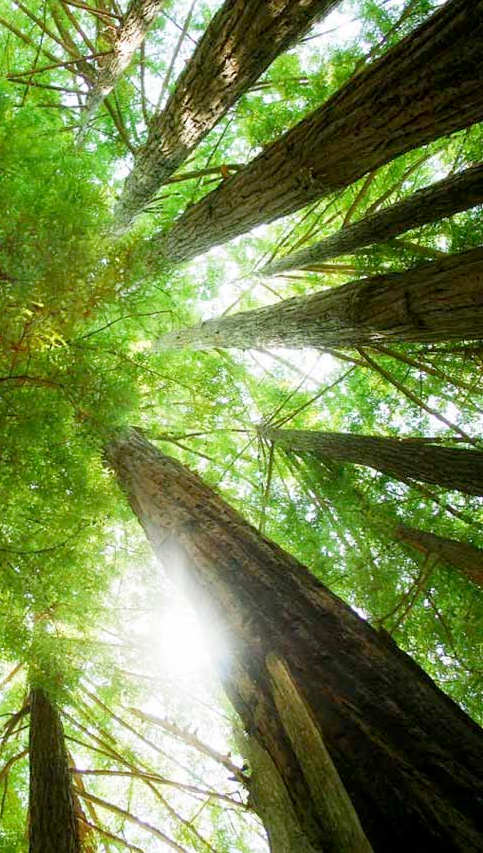
Tourist attractions on Rosailia included trees that grow seven hundred feet tall. High above the tourists live "tree-waifs", nearly invisible creatures who make "stink-balls" which they drop on the gawking humans below. Glawan's partner, Eustace Chilke, explains that cameras fail to focus on tree-waifs. Chilke tells Glawen and their boss, Bodwyn Wook a story about a scientific study of tree-waifs. Working from a study platform settled into one of the tall trees, a team of scientists daily reported back to their central base. On a day when their messages suddenly stopped, investigators found the scientists three weeks dead in their tree-top observation station.

If we take telepathic and paranormal phenomena for granted, if we assume that telepathy is perhaps a feature of the universe not yet understood by humanity but widespread among life forms on the many worlds in our galaxy, then why not imagine a far-flung network of telepathic connections between worlds? Could Cadwal telepathically reach out to Rosalia and attract the attention of Lewyn Barduys, just the man who can save Cadwal?

Nemesis
In his novel Nemesis, Asimov shows Earthlings struggling to save Earth from the danger posed by a red dwarf star that is going to enter the Solar System. But in orbit around the dwarf star is the planet Erythro, home to a form of life that might be a billion years old. Is it the vast telepathic mind of Erythro that reaches out to Earth and creates the means for the Earthlings to "save their planet"? Might the human species be a "device" crafted by the telepathic mind of Erythro, a mechanism that is able to produce the technological means to save Erythro from destruction?

Did the telepathic mind of Erythro reach out and guide the evolution of primates on Earth, create the human species and even endow a few select humans with telepathic powers?

Exode
If Earth is embedded in a "paracosmos" of sedronic matter, a "sedronic domain" where the Huaoshy have access to a complete record of Earth's existence through time, could Grean be given the task of making sure that we Earthlings are provided with an account of the hidden history of Earth?
The third eye of Shiva.
Grean
On Nor'Dyren, when Tollan has his vision of a goddess dispensing heat to the worthy residents of an icy world, his feverish mind half imagines the broken water heater in his bath as this iron goddess of warmth. What if such a "religious vision" was not just the random construct of his over-heated brain, what if it was transmitted into his mind from outside?

For Exode I've been having fun imagining how cultural contamination might influence Earthly religions.

If the Kac'hin like Grean can exert some control over the sedronic symbionts that exist inside all humans, then they can exercise control over the fates of we "mere mortals" simply by exerting their will and using their thoughts to operate the bimanoid interface. How would primitive Earthlings interpret such power of the Kac'hin?

In older stories set in the Exodemic Fictional Universe I imagined that Overseers could send swarms of nanites into the brains of Earthlings and cause them to suddenly forget or stop moving or pass out. What if the Kac'hin are endowed with even higher powers such as the ability to activate a "bimanoid interface" for the sedronic domain and instantly teleport people away from Earth?

There might be times when a Kac'hin would want to intimidate primitive Earthlings. Rather than simply teleport away obstreperous folk, it might be useful to make a display of it. A flashing light emitted from the head, a flutter of ash where the unruly target was standing a moment before. Thus might be born tales of a god like Shiva.

Trysta and Ekcolir
Trysta presents both a challenge and an opportunity for Grean. At first, it is not clear that Grean will be able to contain Gohrlay and the positronic robots who have sent Trysta into the primitive era of Earth's history. It appears that Humanity will become just one more species that extinguishes itself through its application of advanced technologies. However, Ekcolir is crafted as the tool that can save Earth and allow humans a chance to spread among the stars.

The Huaoshy are willing to grant humans this opportunity because the time travel technology that was developed by Gohrlay gives the Huaoshy the means to shift the dimensional structure of the universe to a more favorable configuration.

From our human perspective, the Huaoshy are the true Fire Gods. Gohrlay makes the ultimate sacrifice in order to placate the Gods and win a future for Humanity.

The Huaoshy are remote from we primitive humans. Within their sedronic domain of existence, the Huaoshy have very little interest in the mundane affairs of our material universe. The pek recognize the importance of Gohrlay's revolt and craft the Kac'hin as an interface between Humanity and the Huaoshy.

Inevitably, humans are confused by the Kac'hin who seem so nearly human and mystified by their advanced powers. I originally imagined that Kach becomes bored with the Prelands on Hemmal, but it would be more fun to allow her to reveal something of her special Kac'hin abilities to the Prelands. The Prelands might begin to treat her like a prophet. Finally, Kach must depart from Hemmal, certain that she can learn nothing of value from the Prelands about the Creators.

Related reading. "Mud" by Kimberly Davis.

2015 blog post: Sentient Planets

Jun 11, 2013

Decay

cover art by Gray Morrow
I've been thinking about science fiction stories that depict a culture with access to some advanced  scientific knowledge and technology, but nobody quite knows how to do new science and generate scientific progress or even keep in repair the existing high tech gizmos. This is on my mind because of the strange culture that develops on the Moon in The Foundations of Eternity.

There was a small population of humans living on the Moon thousands of years ago because aliens wanted to study the cognitive skills of our species. In the "wild" on Earth there was, at that time, no such thing as science, but in the artificial environment of Observer Base the humans developed an interest in mathematics and astronomy and physics...ultimately resulting in some startling advances in the strange technological field of positronics.

Life was quite comfortable for most residents of Observer Base. They were cared for by sophisticated robotic assistants (the orbho) and many daily conveniences were provided by swarms of invisible nanobots. In fact, life was so relaxed that most humans on the Moon had no interest in science: they took the available technological marvels that sustained their lives for granted.

The sheep look up
Yes, it was all too nice and comfy to last!
R. Gohrlay objected to the fact that the little colony of humans on the Moon were little more than a transient scientific experiment being performed by curious space aliens.

When she learns that humans are puppets for scheming aliens,   Gohrlay revolts and overnight all of the orbho and nanites are destroyed or in serious need of reprogramming and the humans are on their own, stranded on the Moon without a single spaceship and no way to reach Earth.

In The Foundations of Eternity the small cadre of scientists suddenly becomes the means by which the human population of the Moon can survive.

I've been wondering just how far and how hard that tiny island of human civilization would fall, to what extent the budding civilization at Observer Base would decay.

What would happen to the Observers who were on still on Earth?

Decay
As a young lad I fell in love with science fiction stories such as Asimov's Foundation trilogy (Galactic Empire collapses into barbarism, people slide from atomic power back to fossil fuels), Clarke's The City and the Stars (in the far future humans cower on Earth, afraid to return to the stars), Norton's Star Man's Son (post-apocalyptic Earth), Assignment Nor'Dyren by Sydney Van Scyoc (an alien culture throws away the means for progress and collapses into a dark age) and Brunner's Born Under Mars (Earth's first colony on another world has become a dingy backwater).

Swords and spaceships
source
I've never read Brunner's The Alter on Asconel. According to Jacob Haller, Brunner imagined a "swords and spaceships" Galactic Empire that reminds me of The Gods Must Be Crazy. If we can drop a Coke bottle on Africa, why can't the ancient remnants of a collapsed galactic civilization include a bunch of spaceships (or teleportation terminals) that bumbling humans can get their hands on? Oh, and throw in a telepath for good measure. Who is the "extra-galactic god", some space alien or just a huckster from the rim of the galaxy who can trick the gullible primitives of Asconel?

In The Foundations of Eternity, humans on the Moon are an alien's science experiment. The aliens have designed and created the human species and with time they will dispose of us, with little more concern than a human scientist might make a genetically engineered bacterium to amplify a spliced plasmid and then destroy it with bleach and flush it down the drain after isolating the desired gene from the recombinant plasmid.

Gino D'Achille cover art
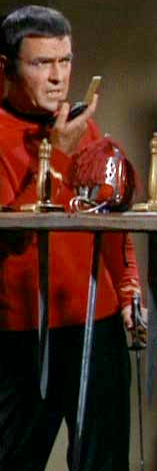
The only times I've ever been tempted to write a sword into a science fiction story is when the story takes place in the past during an era when a sword is high tech. I got my fill of swords in science fiction by watching Star Trek and reading The Faded Sun.

Okay, so Gohrlay does not hack Doltun down with a sword; she fries his brain with a burst of microwaves then conceals the murder by soaking him in liquid nitrogen. I can picture having a klystron and cryogenic fluids around a research lab, but not a sword.

Still, there seems to be a special law of nature within fictional universes...the bigger the sword that a heroine carries, the less clothing she wears.

Telepathy
In The Foundations of Eternity, R. Gohrlay is stranded on the Moon without a spaceship and without any ability to control or reverse engineer the remaining nanites.

R. Gohrlay is able to establish telepathic contact with the biological Gohrlay. I'm currently struggling with the issue of one-way versus bi-directional telepathy. For Gohrlay, telepathy works best between two brains that are similar in structure and function. When R. Nahan is provided with copies of the "Gohrlay brain circuits" telepathic communication automatically begins to occur between R. Gohrlay and R. Nahan.

R. Gohrlay learns about the "Huaoshy" by means of telepathic contact with the biological Gohrlay who is on Many Sails. I put "Huaoshy" in quotes because the word "Huaoshy" actually refers to the Kac'hin, but Gohrlay mistakenly begins the human practice of using "Huaoshy" to refer to the sedronic lifeform that created the Kac'hin. On board Many Sails, Gohrlay learns that she is going to live out the rest of her life on a distant planet of the "Huaoshy" (actually, the Kac'hin).

source
Should the biological Gohrlay have some sensation of being in telepathic contact with R. Gohrlay? If so, would Gohrlay be able to keep secret from the Kac'hin the existence of telepathy? I imagine that telepathy depends on the presence of a type of hierion in brains. In order for R. Gohrlay to receive meaningful information by telepathy there must be a resonance between "her" brain and the brain of the biological Gohrlay. Because of "her" positronic brain, R. Gohrlay has more hierions and better control over them, but the biological Gohrlay should have some change in her neural network activity when R. Gohrlay is looking through her mind. Would R. Gohrlay be able to send a specific message to the biological Gohrlay, such as: Don't let the aliens know that we are in telepathic communication?

When R. Gohrlay takes over Observer Base she uses her telepathic ability to send a destructive pulse of hierions into Orbho Anagro. Her positronic brain can alter the behavior of the hierions that are a key component of the Huaoshy nanite technology that is used in the orbho. Never having explored positronics themselves, the Huaoshy never developed a defense against Gohrlay's surprise attack.

Fun with google image search...
Searching for Gohrlay's descendants
In contrast, Many Sails uses even more advanced sedronic components, so the biological Gohrlay is carried away by Many Sails when the orbho lose control of Observer Base.

I've started thinking about the fate of Gohrlay when she is taken off to the galactic core by Many Sails. In Part II of The Foundations of Eternity when Many Sails finally returns to Earth, many thousands of years have passed. Still, it might be fun to assume that one of the humans on board Many Sails is a clone of Gohrlay or maybe a descendant.

The positronic robots such as R. Rycleu are programmed to protect Humanity, but they have been taking orders from R. Gohrlay for thousands of years. What would they do if confronted by a clone of the original Gohrlay who told them that it was a mistake for positronic robots to struggle against the Huaoshy? Would R. Gohrlay finally be willing to admit that a small gang of positronic robots can't compete against the god-like Huaoshy?

Related reading. The details of Gohrlay's telepathic powers are described in my next blog post.

Oct 28, 2012

The Languages of Exode

In his novel The Languages of Pao, Jack Vance described the transformation of the people living on the planet Pao by a kind of social engineering project that involved introducing new languages.

When I was first discovering Isaac Asimov I read The Feeling of Power, a story that was written just when the existence of electronic computing devices were starting to have wide impacts of human society. Asimov had fun with the idea that people might stop doing calculations themselves and become totally dependent on calculating devices.

In the same Asimov short story collection where I read The Feeling of Power there was a story called Profession. In this story Asimov created a depiction of the future in which "learning machines" would transfer knowledge and skills directly into human brains. The main character in the story cannot be "programmed" in this way and he feels like a freak and a failure. However, at the end of the story he discovers that he is one of a special minority of humans who, rather than be programmed by machine, can exercise his capacity for original thought and become one of the precious few humans who will discover and create new things.

human genetic engineering
During the past century science fiction authors have had great fun speculating about how human existence might be altered by changes in how we use language. Many science fiction authors are not content to limit their efforts to stories about humans. In the novel Assignment Nor'Dyren, Sydney Van Scyoc imagined an alien species that wanted to change its culture and so modified its language in an attempt to change how people would behave.

I've previously mentioned that while the Buld (a people similar to we Earthlings, but slightly altered genetically) use spoken language like we do, in general they do not make use of a written language.

I enjoy science fiction stories that tackle the issue of how humanity might change following a self-imposed "design change". Sydney Van Scyoc and M. A. Foster are examples of authors who took on the challenge of trying to imagine how we might shape ourselves through genetic engineering.  In Exode, the Prelands are human, but they have been significantly modified through a long process of artificial selection and they no longer use spoken language in the way that we view as characteristic of humans.

The rest of this blog post elaborates on the languages in Exode, a story set in the Exodemic Fictional Universe. Exode is under construction and collaborating authors are welcome.

Exode
Like other stories set in the Exodemic Fictional Universe, Exode is a story in which we humans are relatively late arrivals upon the stage. About a billion years ago on a planet in a distant galaxy the Huaoshy developed a technologically advanced civilization. Unlike other technology-wielding species, the Huaoshy managed to survive and spread, first between the stars of their home galaxy then outward to thousands of other galaxies. Long ago the Huaoshy transformed themselves into a form of artificial life that is as different from our human form as we humans are from a bacterium.

language lateralization
The spreading Huaoshy influence reached our galaxy about seven million years ago. That influence arrived in the form of the pek; artificial lifeforms that are less radically transformed than the Huaoshy themselves; we might comfortably think of the pek as robots. In the way that we humans might send a robotic submarine to explore the floor of the ocean, the Huaoshy deploy the pek as the means by which the Huaoshy explore and consolidate control over distant galaxies. Soon after reaching Earth, the pek took some great apes off of Earth and "cultured" them on distant planets.

One of the long-debated issues in human evolution is how early the capacity for spoken language arose in the great ape lineage leading to humans. The first human-like apes that used a spoken language lived on a distant planet near the galactic core; such Earth-derived creatures are called Genesauts and in Exode, the most prevalent Genesaunts are known as Prelands. With the help of the pek, some of those language-using apes became the first Interventionists and Overseers. Gradually, almost imperceptively, gene flow began from the Genesaunts back to the planet Earth and in time our human ancestors on Earth attained the ability to use human language. In essence, the human species is an artificial construct arising from the process by which the pek "domesticated" primates on distant planets.

What I've said above about the origin of human language should not be taken to mean that we humans came to use language as the Huaoshy do. The Huaoshy long ago abandoned their biological form and they make use of much more advanced modes of information exchange than any human language. Human language, as we know it, is an extension of naturally-evolved primate abilities, but it is viewed as a hopelessly inefficient means of communication by the pek. The Huaoshy find it very difficult to even pay attention to primitive creatures like we humans and our quaint vocalizations. The Huaoshy rely on the pek to function as an essentially automated system by which primitive creatures like we humans can be transformed into more advance forms of life with communications abilities that are more like those used by the Huaoshy.

The Exode story is set in our time, but the Prelands, subjected to extensive genetic engineering by the pek, have almost completely abandoned the use of spoken language. However, some of the Prelands have been relatively slow in abandoning spoken language; the Preland population of the planet Hemmal provide a good example of this. The pek make use of worlds like Hemmal as training grounds for Interventionists: those Genesaunts who are sent to Earth with the intention that they can gradually shape Earthlings into a biological form that will eventually merge successfully into a galaxy-wide Genesaunt Culture.
Most Genesaunts live in cultures where the people lack the ability to pass their language along to their descendants. With rare exceptions, Genesaunts have been genetically altered so as to be hermaphroditic. There are no males or females in the conventional sense and all individuals produce two kinds of gametes and have a uterus. Genesaunts have been engineered so as to give birth when the embryo is very small, like marsupials do. In general, Genesaunts never become aware that they are pregnant. When a pregnant genesaunt comes to term, a pek will manage the birth while the mother sleeps and take the newborn Genesaunt to a pek-managed facility where the children are raised by pek. The pek who function as surrogate parents are in complete control over which languages are learned by young Genesaunts. Upon passing through adolescence the young Genesaunts gradually merge into mainstream adult Genesaunt Culture. Since the pek adopt the conventional Preland body form, most Prelands do not make a significant distinction between the period of their pre-adult years under the guidance of the pek and their adult years.

Prelands
For Prelands, language learning is a very different matter than for we Earthlings. Juvenile Prelands have some capacity for speech, but most adults are nearly mute. There is no physical impediment to speech, but Preland culture usually imposes no opportunity or benefit for Prelands to speak. Prelands communicate efficiently by what they think of as telepathy. Large regions of a Preland's brain can "resonate" to match the activity of a fellow Preland's brain. In practice, this allows Preland members of a cultural group to essentially share conscious states. This neural resonance is made possible by the fact that Preland brains are host to swarms of nanoscopic devices (nanites) that can communicate using hierion technology. Prelands take for granted the existence of their pek servants and they never give a thought to the nanite technology that has been provided to them by the pek.

Prelands have some distinctive physical features. For example, in Prelands the typical human adult teeth never develop; Preland adults retain the "baby teeth" and have small mouths and a child-like jaw morphology.

Juvenile Prelands are spoken to by their pek caregivers, and Preland adults retain a fairly sophisticated ability to process and understand spoken language, however, they have essentially no capacity to read, write or communicate their own ideas using spoken words.

As mentioned above, the pek control which languages are heard by juvenile Prelands. In general, each planet with a Preland population uses one language that is spoken on Earth. For example, American English is spoken on the planet Hemmal. This choice of language is made systematically so as to assure that every human language spoken on Earth is used on at least one Preland world. Earthly languages that are spoken by large numbers of Earthlings are used on multiple Preland worlds, essentially assuring that every major dialect is familiar to a population of Prelands. What is of more importance to most Prelands is that these populations of Prelands are also made familiar with aspects of the Earthly cultures that share their language. This process of familiarization generally begins with pek caretakers of the juvenile Prelands telling their wards stories and heroic epics that reflect actual Earth history.

This extensive passing of Earthly culture to worlds of the galactic core is made possible by the fact that Earth is under constant Observation. The pek are automatically kept informed about events on Earth.

Buld Clan
While Preland brain structure has been significantly altered so as to facilitate nanite-mediated communication, the Bulds are only slightly modified from the form of contemporary humans on Earth. Bulds retain the normal human ability to read and write, although most Buld cultures do not make routine use of these skills. Bulds have a limited amount of capacity for nanite-mediated synchronization of brain activity, with most of the neural synchronization that does occur between the Buld taking place outside of their conscious awareness.

The image to the right shows the major regions of the Buld brain where there are high levels of nanites (yellow, Buld normal, top). The "patient" (bottom) is a "false" Buld who has reverted to the Earth human brain pattern. The Buld populations of worlds like Hemmal are like the Prelands: unaware of the existence of nanites. A subgroup of the Bulds are the "scholars" who are at least aware of the biological difference between typical "true" Buld and the "false" Buld. The major engineered genetic differences between the Buld and Earth humans are all determined by a synthetic chromosome that is unique to the Buld. In each generation, a few "false" Buld lose the extra chromosome and revert to the normal human chromosome set and brain structure.

The "true" Buld can only read with difficulty since they usually suffer from a form of nanite-induced dyslexia. The "false" Buld have no problem reading, but they are often culturally isolated from the small Buld subpopulation that makes use of written language. In general, the Buld "scholars" on worlds like Hemmal try to quickly identify newborn "false" Buld, make sure that they learn to read and write and recruit them into the ranks of the scholarly class.

The Buld Clan originated long ago as those human Genesaunts who were provided with spaceships (generation ships that can travel between stars at nearly the speed of light) by the pek. Many Buld now live on planets such as Hemmal. The on-planet Buld scholars originated many thousands of years ago as part of a Buld effort to understand the origins of humans.

For the story Exode, a particularly important cultural group of Genesaunts are the Interventionists. Interventionists are a Buld Clan subgroup that is not allowed to exist on planets with a Preland population. In general, Prelands reside on worlds that have been more-or-less successfully terraformed over the course of the past seven million years. Interventionists usually make do with less hospitable planets and planetoids. For example, Oib is a large asteroid orbiting about 100 million kilometers from the orbit of Hemmal. There is an Interventionist base inside Oib and this is where Parthney goes to be trained for his mission to Earth.

The interventionists have learned to isolate themselves from the pek. This allows some "true" Buld to live at places like Oib without having their brains colonized by swarms of nanites, thus preventing the nanite-induced dyslexia that inflicts the Buld who live among the pek. However, "true" Buld are dependent on pek for successful reproduction. This makes it a continual struggle for the Interventionists to maintain a stable population: they must continually recruit new members from the mainstream ranks of the Buld. Highly prized among the Interventionists are the "false" Buld who are essentially Earth-normal humans. The pek are careful to make sure that the "false" Buld never have a chance to become to numerous.

So, these are the conditions under which Parthney and Kach grow up on Hemmal as two false Buld. At an early age Kach is recruited by Buld "scholars" and she becomes committed to learning about the Prelands of Hemmal. Kach learns to read and write both English and the "old language" of the Buld Clan.

Growing up on Hemmal, Parthney resists being recruited by the Buld "scholars" and so he reaches adulthood without becoming a skilled user of written language. He can speak and understand English but he never becomes very good at using written English. When he decides to pass the story of his life on to his grandchildren, he leaves them a spoken account of his life. The recording device that Parthney uses is a hierion-based device that functions by means of the type of "telepathic" brain resonance that is used by Genesaunts. This communications method is not a very efficient way to share Parthney's story with the people of Earth. When Parthney's grandson Izhiun decides to leave a copy Parthney's story on Earth, he wants to find a way to make sure that the story can be easily accessed by Earthlings.

As mentioned previously, when Izhiun is on Earth he finds Hana's long-lost husband who is a writer. Izhiun leaves a version of Parthney's story with Hana's husband. Hana's husband translates Parthney's story into written form.


Aug 12, 2012

Too Alien

Back in the 70s, my copy had this
John Schoenherr cover art
Not alien enough. One of the first science fiction novels that I read was Against the Fall of Night, the precursor to  The City and the Stars. I was rather startled by how Clarke's story depicted humans still on Earth a billion years in our future. In his time travel novel, The End of Eternity, Asimov explicitly adopted the view that it is possible for humans to create a stable cultural environment within which humans would not significantly change by evolution over the course of millions of years. However, since those two stories were written, there has been growing interest in the idea that much human evolution can be due to "genetic drift" rather than selection. In other words, due to random events, you can't stop evolution even if the environment remains constant.

By the 1960s, when the chemical basis of heredity was known, it became easy for science fiction writers to imagine a future in which we humans might engineer our own chromosomes and radically accelerate the pace of biological evolution (example). Also, with the miniaturization of computers, it became popular to imagine that Humanity could at some future time migrate from our biological bodies into robotic bodies or our species could give rise to descendants that take the form of some sort of non-biological artificial life.

Some futurists argue that we will enter into a technological singularity during this century which will radically change human existence. Is there any way to prevent Humanity from radically transforming itself?

Anti-Singularity. I've long been intrigued by how Asimov and Vance found ways to limit the rate and direction of human technological development in their "future histories" about Humanity's spread through the galaxy. Asimov imagined that Daneel had taken control of Humanity and so human technological advancement was carefully regulated so as to impose constraints that would protect humans from harm. Asimov introduced the idea that "mentalics" made it possible to control human creativity. Asimov showed that the Solarians diverged significantly from the human norm and Daneel arranged for the formation of Galaxia, a culture within which human brains would be engineered to incorporate a version of the Laws of Robotics. But for the most part, technology did not advance during the 20,000 years during which Humanity colonized the galaxy. Vance imagined The Institute, a mysterious and secretive organization that constantly worked to counter the potentially disruptive influence of new technologies.


Exode. I'm developing a new science fiction novel called Exode that is heavily  concerned with human evolution. The main character is Parthney, who is part of the Buld Clan. The Bulds are a minority group among the Prelands, those humans who live on worlds near the galactic core. I've been struggling with decisions about just how alien to make the Prelands. This is complicated by the fact that the Prelands are a diverse group composed of many different "clans".

The Prelands are the result of a human breeding project that was initiated by alien beings, the Huaoshy. The Prelands live in an artificial culture where people are not even aware of the possibility of invention and technological advancement. They have been given a few technological conveniences by the Huaoshy, but the Prelands do not view technology as a human creation.

All of the Preland clans are genetically modified variants of humans. I'm using "human" in a broad sense because some of the Preland clans had their biological origin as human variants (such as Neanderthals) that have become extinct on Earth during the past 100,000 years or so. One of the major goals of the Huaoshy breeding program is to allow humans to make use of nanoscopic devices (nanites) that integrate into the brain and allow for new types of communication such as a form of technology-mediated telepathic information exchange. Individuals in most Preland clans make use of nanite-assisted telepathy and they make little use of spoken language. The Buld Clan is relatively young and their brains are only partially capable of integrating with nanites, so they still use spoken language.

Right brain, left brain.


The Buld Clan does not have a written language (but a few Buld have learned to read and write). For Bulds, the parts of the brain that we make use of for reading are targeted by nanites and used to make possible a form of nanite-facilitated telepathy. This rather primitive telepathy does not allow for telepathic conversations, but rather the exchange of information that is almost entirely processed at an unconscious level of brain activity. This form of telepathic contact allows individual Bulds to be strongly linked into a type of collective unconscious. Compared to you and I, the behavior of a typical Buld is less constrained by left brain activity. Bulds, like all Prelands, are almost exclusively right brain dominant.

The Prelands are human, but are they too alien? It is challenging to convey to readers what it is like to have Buld-type telepathy and in Exode, I don't even try to make readers understand what it must be like to live as a typical Preland who never speaks. Can readers understand and empathize with people who have telepathy?

And there are other biological differences between Prelands and we Earthlings. Prelands have been engineered to not rely on conventional mammalian bisexual reproduction. The Bulds are hermaphroditic and retain the ability to reproduce without the use of technology. However, most Prelands have lost the ability to reproduce without technological assistance. This allows the Huaoshy to easily control Preland population size and the course of Preland evolution.

The Bulds have been engineered to have an additional synthetic chromosome. In some rare individuals, a Buld is born who lost the synthetic chromosome. The main character of Exode, Parthney, is a Buld who is genetically male (a "false" Buld). Readers get to experience Preland culture through the eyes of Parthney. While growing up, Parthney has no deep understanding of the fact that humans originated as a bisexual species on Earth, although he is intrigued by the idea that he could go to Earth and experience life among billions of fellow humans.

Note: I finally decided on just how "alien" to make the Prelands....see this blog post.

Asimov's Spacers. In Foundation and Earth, Asimov depicted a smoldering antagonism between the hermaphroditic Solarians and Trevize, the "never wrong", the story's protagonist. He wants to destroy Solaria, trusting his infallible sense of what is best. Asimov depicted most Spacers as being disgusted by the "short-lived" Earthlings and Settlers. In several novels,  Kelden Amadiro was the personification of antagonism between Settlers and the Spacers and the Spacers create robots programmed to kill Settlers, defining them as non-human. Giskard and Daneel ultimately decide that the Spacers must be marginalized. This makes sense to me in that Daneel cannot allow further development of robots if he is to maintain control over the fate of Humanity. Solaria's culture, once established, ultimately became a complete dead end for further technological advancement. Even more strange, the human populations of the other Spacer worlds just mysteriously go extinct. The Solarian civilization persists for 20,000 years, never changing over long periods of time after being established in its hermaphroditic perfection. Is it a psychohistorical theorem: human cultures that do not expand become extinct, but a hermaphroditic human off-shoot can persist?

What other experiments and manipulations of Humanity did Daneel perform along with the creation of Gaia? Was the bulk of Humanity little more than a breeding experiment to produce Trivize, the "never wrong"? In the end, Asimov suggested the possibility that aliens might interact with Humanity, but he died before writing a sequel to Foundation and Earth. Asimov's Foundation Saga ends on a xenophobic note with the Solarians waiting for the Settlers to destroy themselves and Daneel, as a last resort, forced to merge his robotic mind with Fallom's (a Solarian) in a desperate attempt to convert Humanity into Galaxia. In the final few pages of Foundation and Earth, Asimov wrote that aliens had not visited our galaxy, "as far as is known". 

Asimov left his great future history poised for a gallant defense of Humanity against either invading aliens or a self-generated danger from within. I suspect that Asimov really did not want to introduce alien invaders from a distant galaxy. Not sharing Asimov's reluctance to include aliens, in The Start of Eternity I assume that Daneel's desperate attempts to shape and modify Humanity are, in fact, due to a long-standing struggle between positronic robots and aliens from another galaxy.

So, aliens were out and apparently Asimov also could not imagine some internally-generated conflict that would comprise a worthy adversary for Galaxia. I can imagine Asimov starting the sequel to Foundation and Earth and calling it something like Hermaphrodites vs. Galaxia. Asimov's formula for the entire saga was based upon imagined conflict between groups of people who all believe that they are doing what is "good". Were the Solarians too alien to fit into Asimov's formulaic approach? And how could a thousand Solarians be a threat to the 25,000,000 worlds of Galaxia?

Gender Engineering
Ursula K. Le Guin imagined a human variant that had been engineered for pheromonal regulation of expression of either a male or female phenotype by hermaphroditic individuals. After spreading among the stars, the Hanish civilization collapsed.

In Assignment Nor'Dyren, Sydney Van Scyoc depicted aliens who had a mysterious origin. We are told that the aliens did not originate on Nor'Dyren, that they were colonists from a long-defunct interstellar civilization. The Nor'Dyrenese were apparently genetically engineered into distinct subtypes so as to form a well-regulated civilization. Males and females were designed to have no distinctive physical differences upon casual observation.

There have been more recent attempts to portray fictional hermaphrodites in fantasy. I've never read any of the Wraeththu novels but they seem to devote significant effort to sketching a cultural backstory for Constantine's hermaphrodites. As a hard science fiction fan, I'm put off by the idea that the strange biology of these hermaphrodites arises by "mutation" and the Wraeththu have magical powers.

I've never read any of Banks' Culture stories, but as I understand them, they depict humanoid protagonists having adventures within an interstellar civilization that contains many technologically advanced lifeforms. The whole Culture setting strikes me as a kind of Star Trek holodeck fantasy stage. In Star Trek, Piccard gets to enter the holodeck and pretend to be his favorite detective. Using The Culture as a setting, Banks gets to play out James Bond secret agent missions with spaceships. His humanoids can select and change everything about their biology, including their sex, but apparently nothing arising from science fundamentally changes the way the protagonist humanoids behave. Life within the core of The Culture might be too strange for us to understand, but there is always the "fringe of the fringe", special operatives of Contact who can have typical Sci Fi adventures where the motivations and outcomes are typically human.

I've never read The Mote in God's Eye. The "Moties" remind me of "Tribbles", creatures with a physiology that a biologist can't accept. The individual Moties alternate between the two sexes and, although they are technologically advanced, they can't find a way to control their rapid population growth.

The Huaoshy design hermaphroditic reproduction into Preland clans as an intermediate evolutionary step leading ultimately to the abandonment of biological reproduction. For Prelands, both male and female gamete production is cyclical and rare, resulting in low fertility. In fact, almost all Preland reproduction takes place under the strict control of the Huaoshy-designed breeding plan. When a particular Preland clan is no longer of interest to the Huaoshy, it naturally dies out. The Huaoshy have a specific plan for how to evolve Humanity along the path that the Huaoshy themselves followed long ago. For an analogy, imagine that we found primitive unicellular life on Mars and decided to force that Martian life towards a multicellular existence. The Huaoshy view creatures like we humans as quite primitive, but worthy of having a chance to evolve. In their vast experience, the Huaoshy have learned that most human-like organisms, if left to themselves, self-destruct. I've previously compared the relationship between the Huaoshy and Humanity to the way a horse rancher might take care to tend a blade of grass in a pasture. 

For stories written in the first half of the previous century by authors like Asimov, was it impossible for readers to have anything but an aversive reaction to hermaphrodites? In this century, are attitudes changing? It is amusing to imagine a young Isaac Asimov trying to sell John Campbell a story about hermaphroditic humans. Asimov was able to integrate hermaphroditic Solarians into the Foundation saga, but he did so only after Campbell was gone and other science fiction authors had already begun to explore gender in their stories.

In "The Robots of Dawn", set several centuries in our future, Asimov depicted slightly different cultures (those of Earth, Aurora and Solaria) as rapidly diverging in terms of their sexual behaviors and reproductive practices. Asimov was a master at imagining how members of future human groups might be disgusted by the sexual practices of other groups. Within Auroran culture, Vasilia is depicted as being traumatized by the fact that her father refused to have sex with her. The early Solarians, while still bisexual, find sex a disgusting obligation of marriage.

Too Alien.
As humans, we have millions of bacteria that exist at the surface of our bodies. Normal gastointestinal function depends on the presence of bacteria, but we do not think of our microflora as being part of our selves. On the planet Hemmal, where Parthney is born, the Buld clan population is a minority that exists in a kind of symbiotic relationship with the biologically-distinct majority Preland population. In daily use, the term "Preland" is used as we might use the term "others" or "aliens". Members of each Preland clan refer to themselves by using the name of their own clan while all other humans are called "Prelands". The reader will learn about the other Preland residents of Hemmal through the eyes of Kach, a Buld clan member who finds it useful to imitate the Prelands who constitute the majority population of Hemmal.

Parthney and Kach struggle to understand the fact that they are "false", mutant Bulds who do not fit into Preland culture. Ultimately they must struggle with the broader mystery of the origin of the Prelands and the artificial Preland culture.

The Huaoshy, who are responsible for the existence of Preland culture, have taken pains to make sure that the Preland clans are not xenophobic. The Exode story has aliens, but no alien invasions, Exode has biologically distinct subgroups of humans, but no racial tensions. Parthney and Kach are mutants who do not fit into Preland culture, but they face no discrimination or prejudice. Readers get to follow Parthney and Kach while they struggle to understand the strangeness of the universe that they find themselves in. The reader might imagine that Exode is set in the far future, but part way through the story it is revealed that the universe of Parthney and Kach is our contemporary universe. The reader must then join in the struggle to understand how the existence of Preland culture is consistent with life on Earth as we know it. It should not matter if most Prelands seem too alien for the reader to empathize with. In the end, the reader will see the culture of we humans on Earth as being "too alien" and our own unique ways as the only true threat to our future existence.

Mar 3, 2012

Stellar Engineering


This is the third blog post in a series about a sequel for the science fiction novel Assignment Nor'Dyren by Sydney Van Scyoc. I previously mentioned the fact that the world Re^Ens was colonized by artificial life forms, but Re^Ens was not in orbit around a star. Maybe that depends on what the definition of "star" is.

There is a fuzzy boundary between "planet" and "star". Stars are "born" when a large volume of gravitationally-confined plasma is heated by nuclear fusion. Brown dwarfs are at the boundary between large planets and small stars.

In Arthur Clarke's novel 2010: Odyssey Two, space aliens with advanced technology are able to convert Jupiter into a star. How would that be possible? Clarke had the idea that: "any sufficiently advanced technology is indistinguishable from magic", but as far as we know, to make a star at the position of Jupiter would require one of two things. 1) Some kind of "magical" way to compress the hydrogen of Jupiter and maintain that compression against the expansive force of the fusion that would power the star, or 2) Some "magical" way to add enough mass to Jupiter so that gravitational confinement would sustain the fusion. Maybe Clarke imagined a combination of these two strategies or something else that would be a third kind of magic (advanced technology).

In my imagined sequel to Assignment Nor'Dyren, the world Pes^Cro is very similar to Earth and orbits a star that is similar to the Sun. Life on Pes^Cro is chemically very similar to life as we know it on Earth and the Huaoshy have engineered a form of intelligent humanoids on Pes^Cro and guided them towards space travel long before humans ever developed a technological civilization. Millions of years ago the tool-using humanoid inhabitants of Pes^Cro created artificial life forms and sent those ALFs out in spacecraft to colonize distant worlds. Unlike biologicals, the ALFs did not care if those newly colonized worlds were in orbit around a nice warm star. One such colony world is Re^Ens.

Brown dwarfs have some heat and some people have speculated about the habitable zones of brown dwarfs and the likelihood of planets in orbit around brown dwarfs (example). Astronomers keep developing better tools for observing low temperature objects, and it is not clear what the density within our galaxy is for brown dwarfs and "rogue planets" not in orbit around stars. We don't know the typical distance from a star like our Sun to the nearest brown dwarf, but we can imagine a Sun-like star for which there might be good reasons to send ALF colonists to a nearby brown dwarf rather than to a nearby star.

Star formation by collision of brown dwarfs is a theoretical possibility (example). I'm thinking that the Huaoshy might help create a star near Re^Ens for the biological "pets" of the ALFs who live on Re^Ens. There might be places in the galaxy with a high density of brown dwarfs and a technologically advanced spacefaring civilization might undertake the task of engineering the collision of two brown dwarfs to create a small star. Binary brown dwarfs that are gravitationally bound to each other are not rare and there should be other pairs of Brown dwarfs that might naturally be on trajectories that will bring them close together. Given planning and a long lead time, it might be possible to deflect the paths of two brown dwarfs so as to cause a collision. The world B^Ta is in orbit around such a "created star" and becomes a new central world from which Allegon, Berregon and Gonnegon colonists are sent out on slow, multigeneration colony ships.

I imagine that the Huaoshy might use our galaxy like a garden. Humanoid species could be guided towards technological maturation so as to have a large number of humanoid species from various star systems form a political unit such as Civilized Unity in Assignment Nor'Dyren. However, given the chance to "create a new star" by engineering the collision of two brown dwarfs, the Huaoshy might allow a nearby humanoid species to develop space travel technology at a time not synchronized with the development of other nearby humanoid species. Pes^Cro could be such a "special treatment" world, and technological developments there might ultimately lead to the "Galactic Empire" mentioned in Assignment Nor'Dyren.

A remaining question is, why did the "Galactic Empire" that originated from Pes^Cro ultimately fail and become defunct? I think it will work to assume that the basic problem with this "Empire" was that it never had faster-than-light space travel. It might be a basic theorem of technological civilizations that without cheap and efficient faster-than-light space travel, no stable "Galactic Empire" is possible. Technological cultures that start to spread from world to world using slower-than-light colony ships will be dominated by artificial life forms that have a high rate of cultural divergence. Each world in the "Empire" will develop along its own idiosyncratic path and there will be no real possibility of a sustainable, unified interstellar Empire.

It might also be the case that discovery of the technology that can support faster-than-light space travel is very difficult. If so, then the first technologically advanced species to obtain that technology might, by default, become the Huaoshy, the one species that successfully spreads through the stars, and in so doing, contaminates and "absorbs" all other humanoid species that it encounters. This solution to the Fermi Paradox runs counter to assumptions that are popular among those who try to resolve the Fermi Paradox. For example, in "Fermi’s Paradox – The Last Challenge for Copernicanism?", Milan Cirkovi assumes that it is "obvious" that Earth has not been colonized. This is "obvious" only if you adopt certain assumptions about what would happen during colonization of a world by a species like the Huaoshy. For humans embedded in Western culture, colonization usually means what happened when Europeans colonized the "New World" of the Americas. That style of colonization is biased by the fact that humans recently evolved on a small planet. For humans on Earth, there was never any chance for a millions-of-years-duration divergence in cultural development. There is the opportunity for such a divergence between humanoid species evolving on various planets scattered among the billions of galaxies in the universe. Intuitions and expectations about "colonization" and "first contact" that are built upon only our limited human experience are likely to be laughably inadequate for anticipating the behavior of technologically advanced civilizations that are hundreds of millions of years old.

While adopting some conventional assumptions, Cirkovi has also questioned other conventional assumptions about the "inevitable" features of "Galactic Empires" (see: "Against the Empire"). I wonder if there is a "theorem" along these lines: "If a solution to the Fermi Paradox does not seem magical and unexpected then then it is probably wrong." I think scientists have trouble stepping outside of the box of our conventional ways of thinking. Speculative fiction allows us to explore alternative solutions to the Fermi Paradox that are motivated mainly by the desire to create a fun story. Assignment Nor'Dyren is a fun story and it deserves a fun fan fiction sequel.

In Assignment Nor'Dyren Sydney Van Scyoc created an interesting puzzle about the origin of the Qattagon. Interesting beings like the Qattagon cry out for an interesting and unique history and it seems appropriate if the Huaoshy must bring into play all of their hundreds-of-millions-years-old technologies (including their stellar engineering skills) in order to account for the Qattagon.

Images. Top: star sizes by NASA and SeRgio. Twin brown dwarfs from NASA/JPL-Caltech by way of Astrobiology Magazine.

Related reading. Sometimes I wonder if science fiction novels are being replaced by internet conspiracy websites. Nibiru.
Science fact
.

Old review. I originally assumed that the Qattagon had been designed to be reproductively sterile. However, I now think it makes for a more interesting story if during the long and twisting history of the "under-races" they lost the ability to produce fertile Qattagon. This also means that it will be relatively easy to correct the genetic changes that prevent Qattagon from being fertile.
Even older and longer review.

Related: more fictional stellar engineering.