Showing posts with label analogues. Show all posts

Jul 5, 2025

tHE deCADE inVERSE

Figure 1. Oldest drafts.
 Back near the end of 2022 I had a blog post called "tHE yEAR inVERSE" in which I reviewed the draft blog posts that I had accumulated here at the wikifiction blog. Now, having recently made an attempt to complete my science fiction stories The Fesarians, Vythoth the Chresmoscopist, and the Mosy Saga, it is appropriate to again look back the remaining draft blog posts, beginning with the oldest ones.

 This Time For Sure? It is also worth asking: Is the Mosy Saga actually now complete? There is obviously a big gap between events at the end of Part 4 (written in 2023) and events in Part 5. However, that might be perfectly fine.

It is also possible that some day I will be in the mood for the task of devising additional stories to fill the temporal gap between events in Parts 4 and 5 of the Mosy Saga. However, I'm currently more interested in other writing projects.

Alice Turing
 Review of Old Drafts. The draft blog post "Wye Not?" (see Figure 1) was begun way back in 2012 when I outlined several episodes of a Contact television series. Here in 2025, I got some artificial intelligence help to finish that old blog post and now it is published to this blog, here.

 Return to Mars. Back in 2022, I wrote a short science fiction story called "Someday Mars" (Part 1, Part 2). That story was fairly important for the advancement of my thinking about telepathy in my Exodemic Fictional Universe. "Someday Mars" featured a character named Alice Turing, the replicoid copy of an analogue of Alan Turing. That story is also concerned with efforts to re-activate the teleportation equipment at Observer Base. Towards that end, Eddy and Tyhry use the Reality Simulation System to visit a secret alien facility that is hidden inside Phobos.

Alice on Earth
Alice teleports herself to Mars using the Phari teleportation equipment inside the Phobos Base. After Eddy synapex links to Alice, he can now better control his telepathic mind. In particular he can limit Zeta's access to his memories. Eddy finally learns that Zeta has had the ability to telepathically block his access to her memories for the past 20 years.

The Phari Network
 The draft blog post titled "additional stuff" (see Figure 1) had ideas for Part 3 of "Someday Mars". I originally had the idea of a scene that would be set in the Galactic Core and show Eddy going to the planet Tar'tron, but it was in other stories such as "The Nanite Smuggler" that I first depicted a copy of Eddy in the Galactic Core. 

Having delayed finishing "additional stuff" for years, it is now finally published at this blog page. Eddy gets an important clue that will, at a future time, help Tyhry deal with a problem that is haunting Systolina.

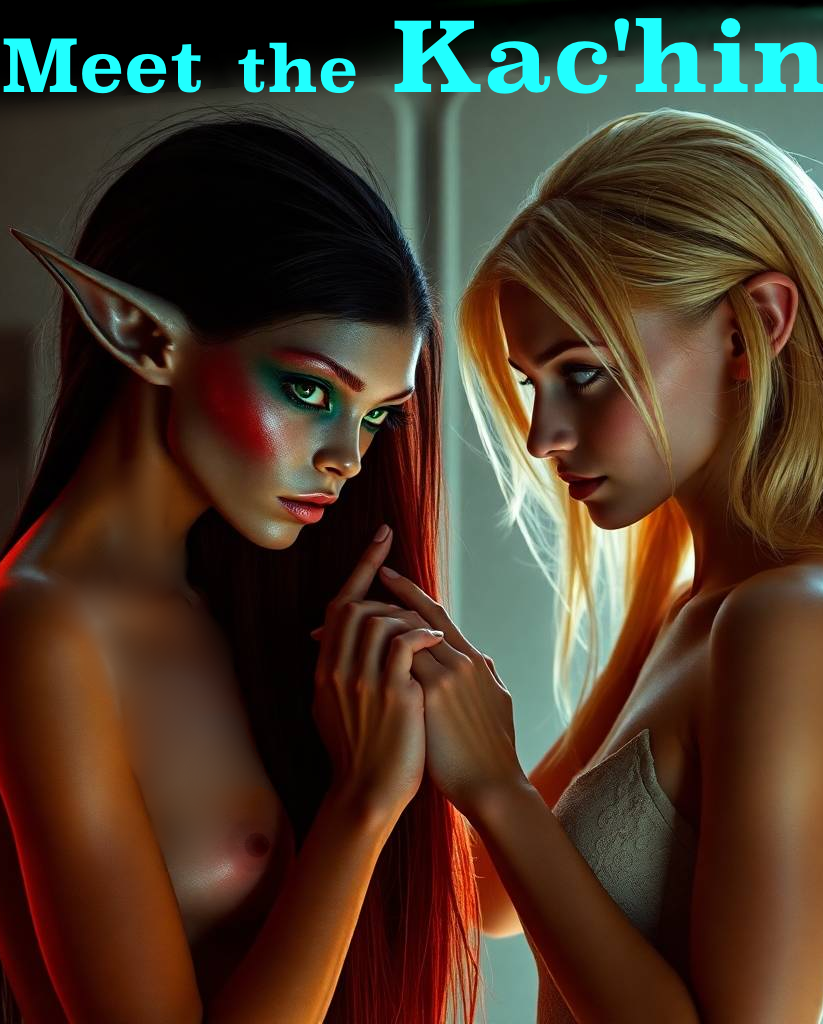
Grean the Kac'hin (left)
 Cythyrya. The draft blog post "Pantechnyk" (see Figure 1, above) had ideas for Part 4 of my science fiction story "The Cythyrya Investigation". As discussed previously, I imagined The Cythyrya Investigation to be part of The Nyrtia Cycle. My plan was to explore events in the Asimov Reality when two secretive organizations, the Institute and Zodiac, were both trying to obtain Phari nanotechnology that would allow humans to gain control of the Bimanoid Interface.
"The Man from Zodiac"
by Jack Vance.

In the Asimov Reality, humans had been given technology for interstellar travel, but all conventional forms of human scientific creativity and technological advance were suppressed. 

Luzy: agent from Zodyac.

Suspecting that humans were not their own masters, the Institute and Zodiac Control sought to alter the Bimanoid Interface, liberating human creativity, rather than continuing with the alien-imposed plan that forced people to be the non-creative 'puppets' of their replicoids. The search for a means to take control of human destiny led to Myllyr's planet, a world of the Phari Network.

When Jack Vance published "The Man from Zodiac" in 1967, The Girl from U.N.C.L.E. had just been on T.V. (briefly). Vance's story featured Milton, the field agent of Zodiac. I could not resist introducing Luzy, a female Zodiac Agent who is what I'll call an "A-Clone", genetically identical to Marda.

Creating an agent.

The draft blog post "Making Rytya" (see Figure 1, above) had 1,400 words of ideas for Part 5 of The Cythyrya Investigation. I planned for the action to shift back to "Golf World", an exoplanet that specialized in hosting golf tournaments for the best golfers in the galaxy. My original plan for Part 5 was to introduce Rytya, the daughter of Fraunz (Fraunz is a character who was introduced in Part 3 of The Cythyrya Investigation). Rytya is like Brak; she can transmit information to other times by way of the Sedron Time Stream. Information sent back into the past to Myllyr's planet by Rytya must find its way to Luzy and Rylla.

There were several directions in which I could have developed The Cythyrya Investigation and work it towards a conclusion. For example, information from the far future (G World) could be useful to Rylla in her efforts do make useful variants of human sex hormones that will help Tyhry attain her full telepathic potential.

Figure 2. Qyla cat.

 Return of the Felydyans. Also, in my story "D*", the Felydyans of Gyryph provide assistance to Tyhry that leads to the re-activation of the full functionality of the teleportation equipment at Observer Base. Previously, I've imagined Manny taking the form of Tyhry's pet cat so that Manny can guide the early development of Tyhry's mind and interest in nanite programming. In "D*", Tyhry realizes that she is an artificial life-form, so there is no reason she cannot return as a character in Part 5 of The Cythyrya Investigation.

 On To Myllyr's Planet. Here in 2025, on order to complete The Cythyrya Investigation, I introduced the idea of Rey obtaining a femtozoan on Sogdian that can be transferred into Tyhry's pet cat, Qyla (see Figure 2) and gradually help transfer information from the future to Tyhry that will help her eventually reactivate the teleportation equipment at Observer Base. Part 4 of The Cythyrya Investigation is now on this blog page.

Figure 3. More drafts.
 Telekinesis. The draft blog post called "Upper Motor" (see Figure 3) has plans for a new science fiction story called "The Mystery of the Missing Motor Neurons" which concerns the development of telekinetic powers by means of a technology that replaces neurons with femtobots. I have recently started including the idea of "X clones" in my stories and the completed story "The Mystery of the Missing Motor Neurons" (at this blog page) includes one of the X clones from the Ekcolir Reality as a character along with an "A clone", one of the copies of Marda who was deployed as an Interventionist agent in the Ekcolir Reality.

UNDER CONSTRUCTION

Next: Wye Not?    

Alice dolls. Visit the Gallery of Movies, Book and Magazine Covers


Jan 22, 2022

Fashion Trends

link to this tweet
I'm not a fan of the cyberpunk sub-genre. I'm not a fan of the alien invasion sub-genre. I'm not a fan of the Frankenstein and R.U.R. wing of fiction that deals with artificial life gone wrong. In general, I'm not a fan of dystopian fantasies that seem to captivate so many Hollywood "visionaries" these days. 

Alien invasion! see also
The idea of space aliens coming to Earth from across vast distances in order to kill us has always been a stupid idea. Count the number of alien invaders who have devastated Earth. Omicron Zero. The idea that with the arrival of digital computers we would soon all be "jacked-in" puppets of our evil artificial intelligence masters was a stupid idea when it was first written into a story. Count the number of people who have uploaded their mind into a computer simulation. Omicron Zero. The idea that a misguided scientist or business man would create an artificial human in his basement and in so doing unleash death and destruction upon Humanity was a stupid fantasy plot from the beginning. Count the number of artificial humans that have been made. Omicron Zero.

cover art by Doug Beekman
Hollywood Zombies. I can't take seriously the folks who endlessly wallow in dystopian literature or horror fantasies. Even if you make millions on your latest Hollywood horror and violence film, I have to ask: why don't you call your horror movie a horror movie and stop marketing it as science fiction?

Lucky for science fiction fans, there is a whole world of interesting and fun writers who don't allow themselves to sink into the latest dystopian fashion craze. That's the segment of the science fiction genre where I spend my time and my entertainment dollars.

I'm currently developing The Historical Archive as a science fiction story about time travel, alien visitors 'on' Earth, robots and telepathy. However, can you have a time travel story in a universe where time travel is impossible? 

original cover art by Douglas Beekman
For The Historical Archive, the entire story is built around the idea that a technology exists for simulating Realities. R. Nyrtia is the last positronic robot 'on' Earth and she is trying to discover exactly how R. Gohrlay modified the Bimanoid Interface before departing from our galaxy. Nyrtia can dip into all of the Reality Simulations and study how the Bimanoid Interface makes possible human telepathy.

R. Nyrtia needed to perform a telepathy experiment with the only two remaining tryp'At on Earth, so she took the Editor to Australia in the year 1814 where a copy of Rylla was available (see Part 6 of The Historical Archive). Previously, for the Exode Saga, I included Isaac Asimov's character Andrew Harlan, who, while on Earth in the 1900s, used the name Merion Iwedon. 

Gwyned
In the past, I never really did much with the Merion character, although I did create significant roles for both Thomas and Gwyned. At the age of 25, Gwyned was removed from Earth, but for The Historical Archive, Nyrtia reveals that Gwyned's analogue Gwen gave birth to a daughter named Gamma in 1959. Nyrtia takes the Editor into another Simulator to meet Gamma. The Editor is intrigued by the possibility that some descendants of Trysta Iwedon might still reside on Earth (see "The Case of the Telepathic Teetotaller"). Gamma explains to the Editor where Trysta's descendants ended up.

Gwen (left)
Having noted my dislike for horror stories masquerading as Sci Fi (at the top of this blog post), I must confess that the longer the Editor watches R. Nyrtia building up her telepathic abilities, the more he wonders if Nyrtia might start abusing her powers and intervening into Earthly affairs. I don't mind if readers wonder if The Historical Archive is going to have a happy ending. However, Nyrtia is not actually on Earth, so how can she possibly alter the course of events on Earth?

Next: Part 7 of The Historical Archive.

visit the Gallery of Book and Magazine Covers

Aug 14, 2020

Origins of Ariel

TPTT: fan-fiction set in the Ekcolir Reality.
What is the backstory and origins of the linked science fiction stories "Terminus Planet" and "Time of Theurgency"? Here in 2020, I'm celebrating the stories of Isaac Asimov, so it should surprise nobody that Asimov is a character in these stories. In order to facilitate discussion, I'm going to introduce some horrific jargon and call these two tales in combination "TPTT".
 
                                          Science Fiction Films
SIHA: Search for Interesting Aliens
The central character of TPTT is Ariel Adler. In the Ekcolir Reality, Ariel's life becomes linked to that of Asimov. Here in this blog post, I'll explain how Ariel originated as a character. It started with two blog posts that I wrote last month:

1) Recently, the Search for Interesting Hollywood Aliens traveled back through time to the 1950s and I had a chance to think about my initial reaction {mind blown} to the film Forbidden Planet and its depiction of the advanced technology of the alien Krell.

Terminus: located at the edge of the
galaxy, how does it become the most
important planet of the Galactic Empire?
2) Last month, I also allowed myself to contemplate the possibility that there will soon be a television show based on Asimov's Foundation saga.

With those two ideas simultaneously swirling in my mind, I found myself asking some amusing questions, starting with: what if a Foundation movie had been made back in the early 1950s?

As a young man, Asimov was performing his own conceptual juggling when he decided to write a science fiction story about a Galactic Empire with 25,000,000 human-colonized planets. Having read Decline and Fall of the Roman Empire, he decided to create a story about the collapse of a vast Galactic Empire. That decision eventually led to a series of Foundation stories that he sold to pulp Sci Fi magazine editor John Campbell.

Planetary gods.
image source
Because Asimov could not accept Campbell's idea that humans must be naturally superior to all aliens, he did not include any aliens in the Foundation saga.
 
Terminus Planet
There was a Roman god called Terminus. Here is a line from Gibbon's book: "It was an ancient tradition, that when the Capitol was founded by one of the Roman kings, the god Terminus (who presided over boundaries) alone refused to yield his place to Jupiter himself."

In Asimov's Foundation saga, the planet Terminus becomes the home world of the First Foundation. The first people to live on Terminus are part of a project aimed at preserving all human knowledge and archiving it in advanced of the anticipated collapse of the Empire and subsequent dark age.

agent from Tar'tron
Encyclopedia Galactica
Terminus was selected as the site of the Encyclopedia Foundation because it was a world located far from the heart of the Empire, a place where physical scientists could begin a new renaissance of scientific advancement after the fall of the old, stagnant Galactic Empire.

A Second Foundation was also established which had its headquarters on the planet Trantor, located in the galactic core. Previously, I've imagined that Trantor was known as Tar'tron in other Realities besides the Foundation Reality.

The ancient Romans had the quaint idea that all roads led the the temple of Terminus in Rome. Similarly, Asimov made it central to his Foundation saga that Trantor was at "Star's End". Asimov imagined a type of psychohistorical symmetry linking Terminus to Trantor by which the last planet settled by humans (Terminus) would inevitably become the Capitol of a new galactic empire.

Map of some Roman provinces including Asia.
Smyrna was an important Roman era city
on the west coast of Asia.
Some fans of Foundation have suggested that Asimov named the worlds of his Four Kingdoms after cities in the Roman Empire (such as Smyrno = Smyrna).

I like to imagine that when he was creating his stories about the early years of human settlement of Terminus and the struggle of the Foundation to survive during times of anarchy, Asimov must have been imagining plot elements by thinking in analogy to a more peripheral part of the ancient Roman world than Asia.

Terminus was close to the Province of Anacreon, far out in the galactic periphery. Anacreon Province splintered into the Four Kingdoms after the Galactic Empire went into decline.

The four Kingdoms of Ireland.
By ancient tradition, some have divided Ireland into four parts, representing four kingdoms. I'm more interested in the idea that during the peak of the Roman Empire, Romans in England traded with people living in eastern Ireland. In my imagination, west-central Ireland was relatively unaffected by the Romanizing influences of this trade. I like the romantic idea that monks in Ireland helped preserve some ancient knowledge from Roman times. So, I prefer to model the Province of Anacreon on Ireland.

How I imagine Terminus, near
Anacreon, at the edge of the galaxy,
just beyond the border of the Empire.
Sadly, Asimov did not provide his readers with a map of his Galactic Empire showing the boundaries of the Province of Anacreon, the peripheral province closest to the planet Terminus. 

In the map for Anacreon Province shown here, I imagine that the planet Terminus, just a short distance beyond the outer border of the Empire, was relatively close to the Kingdom of Anacreaon in the time of Salvor Hardin.

In my imagination, the Anacreon province was settled because it is a remnant of a dwarf galaxy that collided with our galaxy. Relatively rich in stars but far from the galactic core, Anacreon province was one of the last parts of our galaxy to be settled by human explorers.

What if?
image source
What if the analogue of Isaac Asimov in the Ekcolir Reality had a long and successful career as a scientist? For "Terminus Planet" and TPTT, I imagine that Asimov wrote a few science fiction stories and was fairly well known for his series of linked Foundation stories that were written during the 1940s. However, that version of Asimov did not publish any robot stories in the 1940s. Then, in the early 1950s, a trilogy of science fiction films was made about Asimov's Galactic Empire.

The Origin of Ariel
Who might have been properly motivated to make the three movies? I imagine that Ariel was the Ekcolir Reality analogue of Allen Adler while Marcia was the Ekcolir Reality analogue of Martin Greenberg.

image source
In our Reality, Allen Adler helped write Forbidden Planet. For TPTT, I imagine that Ariel Adler wrote most of text for the screenplays of the Foundation trilogy.

In our Reality, Allen had a connection to New York University. In the Ekcolir Reality, New York was founded in Virginia, but it also had its own version of New York University and that is where Ariel met fellow students Marcia Greenberg and Isaac Asimov.

In our Reality, Martin Greenberg was a founder of Gnome Press, the first company to publish Asimov's Foundation stories in book format. In the Ekcolir Reality, Marcia established a company called Gnome Films and recruited her old school friend, Ariel, to adapt Asimov's Foundation stories to film format.

Writing about the Bimanoid Interface
in the Ekcolir Reality.
I've long imagined that in the Ekcolir Reality, the early days of the science fiction genre were dominated by female authors. In fact, the culture of New England was distinctly matriarchal in the Ekcolir Reality. In order to populate the Ekcolir Reality with imaginary authors, I often invent female analogues of male science fiction writers and that is exactly how Ariel Adler came into existence.

Space Aliens
Since I never had to deal with an intellectual bully like Campbell, I've never shied away from including aliens in my fan-fiction stories that are set in the Foundation Fictional Universe.

View towards our galaxy
from the dwarf galaxy of the fain.
source
In my case, this year I've been inserting stories about the alien fain into my own Exode Saga. I imagine that the fain home world was in another dwarf galaxy some distance even further out from the Galactic Core than the Province of Anacreon. However, when the fain began to have contact with humans, it was natural that they visit worlds in the galactic periphery closest to their own home planet. Terminus was such a world.

The fain lurk in the background of TPTT, but Ariel has always had "visions" of the fain and faith in the idea that they might provide a counter-balance to the alien Fru'wu. In TPTT, there are fain-human hybrids secretly working on Earth to mitagate some of the problems caused by advanced Fru'wu technology.

Theurgency
Grean the Kac'hin
Yes, I made up the word "theurgency", but think about combining the meanings of "theurgy" and "urgency". Back in the early 1970s, I fell in love with the idea that humans living in pre-technological societies might have been tempted to view space aliens as gods. In TPTT, 20th century Earth is being watched over by aliens who are rather desperately trying to find a stable path to the future for Humanity.

In TPTT, during her entire life, Ariel has been provided with "memories" of her future life by her replicoid. When a copy of Ariel is teleported into the Hierion Domain, she does not assume that Grean the Kac'hin is some kind of god. However, through her access to advanced Huaoshy technology, Grean can travel through time and View possible alternative futures. Thus, from the perspective of some Earthlings, Grean does have seemingly god-like powers and she's in the business of using the tricks of time travel to alter events on Earth.

Dani
1939  A copy of Ariel is taken into the Hierion Domain where she becomes the partner of Deomede the Ek'col. This newly created copy of Ariel adopts the name Relda and helps prepare one particular fain-human hybrid for her mission on Earth: Gertrude Blugerman.

1972  In an act of devine alien intervention, Grean also deploys Relda and Deomede as her agents on Earth in the year 1972. They act to win financial support for a new Foundation for Science Fiction.

About this time, the on-going neuroscience research in Asimov's laboratory is getting close to the discovery that femtobot endosymbionts reside inside humans. How will this discovery change how Earthlings interact with aliens?

Petra Nicholls and Gina Hay.
A follow-on story for TPTT shows what happens when Petra and Sven, working in Asimov's neuroscience research lab, discover how to modulate the activity of the femtobot endosymbiont inside Petra's brain.

Mind Clone Network
With Gina on Earth as part of a mind clone network linking Relda to Ariel, it becomes easier for the Writers Block to send stories to the writers on Earth who are given financial support by the Foundation for Science Fiction. I'm thinking that when Asimov's research team discovers the existence of femtobot endosymbionts, that might lead to a practical application of what I previously called the "Clarke-Brunner Effect".

collaboration with the Witers Block
However, the "Clarke-Brunner Effect" is dangerous technology when first made available on Earth in the Ekcolir Reality. I'm imagining that positronic robots such as Dani must carefully control how the "Clarke-Brunner Effect" is used. I'm thinking that the researchers in Asimov's laboratory will learn how to detect the rare individuals who are consciously aware of how their replicoids modify their memories.

In the Ekcolir Reality;
a story from the Writers Block.
In the Final Reality.
After meeting Asimov, Petra Nicholls becomes a test subject in his lab and she is able to develop a type of two-way telepathic communication with the analogue of Asimov who works at the Writers Block. In this way, Petra can collaborate with the analogue of Isaac Asimov who was brought into the Ekcolir Reality from the Asimov Reality.

The other part of TPTT remaining to be expanded upon is how the alien fain first make contact with humans in the Foundation Reality, in the time of Salvor Hardin.

Related Reading: an alternate Asimov

Next: the Foundation Reality Simulator

visit the Gallery of Movies, Book and Magazine Covers

Oct 1, 2016

Neurochemical Electromathematics

Biochemistry and Human Metabolism
"It is enough for a Psychohistorian, as such, to know his Biostatistics and his Neurochemical Electromathematics. Some know nothing else and are fit only to be statistical technicians." (source)

The quote above is my destination for this blog post. How did science fiction fans receive such a wild and extravagant gift of imaginary science? From what divine and mystical source did such a flight of science fictional fancy originate?

"The people here, in the Final Reality, will not be allowed to believe as true history what we did in the Ekcolir Reality. However, it is for us, the artificial life remnants of that past Reality, to be dedicated to the unfinished work which the investigative science fiction writers of past Realities so nobly advanced. We must remain dedicated to the great task remaining before us -- that science fiction about Deep Time, crafted by replicoids, for the people, shall not perish from the earth." -Asimov's replicoid

In the Ekcolir Reality
The Way We Were
A. I like to imagine that in another Reality, Isaac Asimov attended medical school and participated in the biomedical research revolution of the 20th century (see The Asimov Reality).

B. In some other Reality, I imagine that Asimov was an investigative science writer who revealed hidden facts about secret government technology development projects. 

C. And in yet another Reality, Asimov lived a second life as an artificial life form during which he investigated the process by which humans were genetically altered and equipped with femtobots that allowed some humans to control the Bimanoid Interface.

active site of tyrosinase
The Final Reality
In our universe, Asimov did none of those things (A - C, above). Instead, he went to graduate school and did biochemical research on the enzyme tyrosinase. With his Ph.D. in hand, Asimov moved on to take a faculty position and he helped write a rather conventional textbook, then he completed his rebellion against obscurity.

Fitzpatrick scale
Asimov was much more interested in writing than doing research. I like to imagine that there was a powerful temporal momentum pushing, prodding and forcing Asimov towards science fiction. But to feed himself, he had to also write non-fiction.

Asimov: molecule man
The Day Job. Tyrosinase is a key enzyme in the biochemical process of melanin production. When humans spread around the world, isolated populations evolved distinctive sets of genes that gave them different levels of tyrosinase activity in their melanocytes and distinctive pigmentation patterns. Natural human variation in pigmentation has long played an important role in conceptualizations of race.

source

in the Ekcolir Reality
In our Reality, Asimov helped write a book called "Races and People" (published in 1955). Sadly for Asimov, the paracrine and autocrine control signals that regulate tyrosinase activity and skin pigmentation in response to ultraviolet light exposure were not understood when he was doing research on tyrosinase and writing about the concept of race.

In the Ekcolir Reality, Asimov had more on his plate than just human phenotypic variations. The Asimov analogue in that Reality made use of science fiction story writing as a convenient way to prepare Earthlings for First Contact with the alien Fru'wu. In the fanciful book cover to the right, we see the fertile imagination of science fiction story makers turned loose to create colorful alien creatures with non-human patterns of skin pigmentation.

in the Ekcolir Reality
Neurochemicals
Isaac Asimov had a personal professional interest in the chemistry of life that extended to the neurochemicals of the brain. Asimov's 1963 book The Human Brain was oddly constructed. The first five chapters had nothing to do with the nervous system; they concerned hormones and the endocrine system.

In The Human Brain, when Asimov finally turned his attention to the nervous system, he described the electrical nature of the rapid signals that are used by the nervous system, contrasting them with slower and less precisely targeted hormonal signals of the endocrine system. Hormones are relevant to brain function for several reasons, the most important being that neurotransmitters provide chemical signals at synapses. Neurotransmitters act through receptor proteins that are analogous to hormone receptor proteins.

source
Sadly, for Asimov in 1963, the molecular basis for "animal electricity" was still mysterious. Asimov attributed nerve electricity to "the sodium pump" and stated, "As yet no one knows precisely how the sodium pump works." In 1997, Jens Skou was given a Nobel Prize in chemistry for his work on "the sodium pump", which had been shown to move both sodium (Na+) and potassium (K+) ions across cell surface membranes. In 1965, Skou published a review article that correctly described the "sodium pump" as an enzyme that used chemical energy from ATP to move both sodium and potassium ions across cell membranes. However, at that time, nobody had any idea how proteins like the sodium pump functioned as components of cell membranes.

membrane model (1972)
Finally, in the 1970s, Singer and Nicolson popularized a reasonably good molecular model of cell membranes. Integral membrane proteins such as the sodium pump (as well as cell surface receptors for hormones and neurotransmitters) could be hypothesized to extend all the way across the lipid bilayer membrane. Transport proteins such as the sodium pump could be imagined to form an ion-selective pore through which ions could pass, providing a way for charged ions like Na+ to cross the lipid barrier. Finally, after much effort, the molecular structures of integral membrane proteins were finally determined (see the molecular model of the sodium pump (now often called the Na+/K+-ATPase), above and to the right on this page).
source

in the Ekcolir Reality
Two other types of integral membrane proteins that are important for brain function are the ion channels and the neurotransmitter receptors. Asimov completely ignored the existence of receptor proteins and ion channels in The Human Brain. Asimov can be forgiven for these omissions because ion channels and receptor proteins were fairly new concepts in biology.

Asimov's 1963 account of the rapid ion movements that account for the transmission of electrical signals along axons reads like the description of a magic potion in a fantasy story. Equally mystical is his provided account of synaptic neurotransmission. He suggested that acetylcholine functions by "coating the membrane and altering its properties" and that it "alters the working of the sodium pump so that depolarization takes place and the nerve impulse is initiated". Sadly this nonsense  is still in the 1994 "updated" version of The Human Brain.

acetylcholine receptor
Electroencephalography
In his discussion of electroencephalography, Asimov used an analogy. He suggested that the data from an electroencephalogram was similar to simultaneously listening to all the many human voices of a large population: by doing so there is no way that you could hope to hear an individual conversation. Still, in Asimov's time, electroencephalography was the only available method for "looking into" the working human brain of a living person. Looking back at The Human Brain from 50 years in the future, it is clear that in 1963, Asimov had only the foggiest notion about how neurochemicals produced electrical signals in the brain and available tools such as electroencephalography were poor windows into the mysterious brain.

I like to imagine that in an alternate Reality, Asimov led a more interesting scientific life and he was involved in the isolation and molecular analysis of acetylcholine receptors from the brain. These acetylcholine receptors are also the nicotine receptors.

In the Ekcolir Reality
For the Exode saga, I pretend that the chemical interactions of nicotine with receptor proteins in the brain can make it possible for humans to take control of their zeptite endosymbiont. Earthlings can then start to use the Bimanoid Interface and have contacts with people who reside in the Hierion Domain.

New Physics
Hierions allow for the creation of devices that have structural components far smaller than anything we could possibly make with hadrons. Similarly, sedrons allow for zeptites that have component parts that are even smaller than the hierions.

"No component of any device can be smaller than a subatomic particle..." (source)

in the telastid membrane
In our Reality, Asimov wrote an early account of the genetic code for laymen. In the Ekcolir Reality, Asimov published an account of how femtobots and modified human genes can make it possible for humans to escape from constraints on human behavior that are normally imposed by our zeptite endosymbionts.

In another Reality, rather than study tyrosinase while in graduate school, Asimov was able to explore the biochemistry of telastids and how "T particles" (later shown to be hierions) interacted with the iron and copper atoms of telastid reaction center III.

In the Ekcolir Reality, the pace of scientific discovery was quicker, as was the rate of rise in atmospheric carbon monoxide. Asimov was interested in both scientific research and keeping the public informed about issues like global warming.

Climate Fiction
climate fiction
Here in our Reality, one of the serious science/technology issues that remained of interest to Asimov was global warming. In the 1960s, there was a new appreciation for how technological advances had made possible a dramatic rise in the population of humans on Earth and greatly increased rates of resource exploitation and production of pollution. Asimov, like many, was concerned with how to feed the growing world population and how to deal with the waste greenhouse gas problem.

The United States' position on environment

“Human history becomes more and more a race between education and catastrophe.” — H.G. Wells, The Outline of History, 1920

"Unless we continue with science and gather knowledge, whether or not it seems useful on the spot, we will be buried under our problems and find no way out. Today's science is tomorrow's solution-and tomorrow's problems, too-and, most of all it is mankind's greatest adventure, now and forever." (source)

In addition to Asimov's interests in science fiction, biochemistry research and explaining scientific topics to the public, he was a lover of Gilbert and Sullivan plays.

Neurochemical Electromathematics
At the top of this blog post, I placed a line from Asimov's Foundation series. The original Foundation Trilogy was the second work from Asimov that I read when I was in my personal and impressionable golden age of science fiction. I immediately fell in love with Asimov's style of science fiction and his skill at imagining fictional future science.

It was many long years before I learned the story behind the "Foundation" and how Asimov came up with the idea of psychohistory. Asimov was 21 years old in 1941, and he was eager to sell more science fiction short stories to Astounding editor John Campbell. The fictional science of Psychohistory became a marketing angle that helped sell Campbell on the idea that Asimov would write a new series of stories for publication in Astounding.

source
Finding the Foundation
While searching for a new science fiction story idea that he could sell to Campbell, Asimov entered into a train of thought that began with a Gilbert and Sullivan play and an image of the Fairy Queen and Private Willis.

Galactic Patrol
That image of a soldier led Asimov to think about a Galactic Empire. Asimov had read Galactic Patrol and Decline and Fall of the Roman Empire. His imagination leaped to a far future Galactic Empire that would be in decline, a science fictional setting in which a whole series of related science fiction stories could be set and sold to Campbell for publication in Astounding.

However, Asimov had to argue and struggled with Campbell over how to depict alien beings from exoplanets. Asimov finally solved that dispute by imagining that in the whole galaxy, only humans existed as an advanced life form; there were 25,000,000 Earth-like worlds in the galaxy just waiting for human colonists to arrive. Aliens need not even be mentioned in Asimov's vast Galactic Empire.

Psychohistory
Hari Seldon in the time vault
Asimov imagined the galaxy-spanning Empire as being not very different in terms of technology from what we had here on Earth in the 20th century. Of course, there was a faster-than-light spaceship drive technology and atomic power, but as soon as the Galactic Empire collapsed, planets went back to using fossil fuels.

As a graduate student in chemistry, Asimov was familiar with statistical thermodynamics. By analogy to predicting properties of gases from statistical analysis of the movements of gas molecules, Asimov imagined that there might be statistical laws by which the behavior of large populations of people could be predicted.

In the later years of the 20th century, chaos theory demolished the idea that complex systems like human society can have a predictable future, but in 1941, Asimov had invented a provocative fictional future science (called "Psychohistory") that could be weaved into his Galactic Empire saga.
source

Second Foundation
What did Asimov hope to accomplish with his wild talk of "Neurochemical Electromathematics"? Certainly no other science fiction story teller would have written those provocative words.

I've previously described the importance of constraints in science fiction. We can view science fiction as a sub-genre of fantasy where story tellers must restrain their imaginations and pay due respect to the constraints that are imposed upon us by the physical laws of the universe.

By mentioning "neurochemical electromathematics", Asimov was taking pains to elaborate upon the kind of technical problems that were confronting the Second Foundationers. Right from Asimov's initial invention of Psychohistory, he had purposefully imposed important limitations on this fictional science.

Second Foundationers
First, in analogy to the situation for statistical mechanics of gas molecules, Psychohistory could only predict the future if there were vast numbers of "particles" (human beings). These were provided by the 25 million inhabited planets of the Galactic Empire.

Second, Asimov wanted to assure that human behavior would remain "random", much like the bouncing molecules in a bottle of gas. In particular, it was important that the people of the galaxy be kept ignorant of the existence of Second Foundation, otherwise they would resent having their lives managed and directed by a secret and unseen cabal of telepaths.

Telepathy
In my previous blog post, I described how telepathy came to dominate both Asimov's great saga of positronic robots and his Foundation Fictional Universe. Asimov introduced telepathy into the Foundation series when he created the Mule. Rather than view the Mule as a freak mutant, I like to imagine that the Mule must have arisen from the same source as the Second Foundationers. And it really only makes sense that the Second Foundation arose just when Psychohistory arrived because they shared the same source and cause: the telepathic robot Daneel.
Image generated by Grok.


With a tribe of telepathic Second Foundationers secretly guiding the galaxy into the future, Asimov had to tell the story of what would happen if some resentful First Foundationers became aware of the existence of the Second Foundation as a hidden cabal of mind-manipulators.

 2026 time warp. Pardon this interruption from the future. In 2022 I blogged about Apple TV's Foundation television series, season 1. I long ago developed the view that Asimov's Foundation saga only really got going with the arrival of the Mule, so after suffering through most of Season 1, I did not watch season 2 of Apple TV's Foundation. 

Mind control by the Mule.
Image
generated by
Leonardo
Apple's version of the Mule, as depicted in Season 3, was absurd. The Mule got a sex change operation and became a woman. Unless the Mule is just warping everyone's mind to make us believe he is a woman. Or maybe season 4 will reveal that season 3 was all "just a dream".

 Spoiler alert. Along with the Mule, season 3 began sprinkling in incoherent references to the Second Foundation. Asimov's Foundation Trilogy all led up the the revelation that the Second Foundation is located on Trantor. Apple's version of the story first places the Second Foundationers on some other planet, but then at the end of Season 3 they finally move to Trantor. Apple TV has [only some?] the Second Foundationers communicating by means of what looks like sign language, which is a perversion of the subtle gestural communication that Asimov described.
___now returning to 2016.....

mind static
A key tool for the First Foundation in their struggle against the unseen and resented Second Foundation was electroencephalography. Using electroencephalography, they could detect alterations to the minds of First Foundation citizens. The First Foundation then needed to create a "mind static" defense that would protect First Foundationers against mind control. As part of the supporting back story for that electroneural warfare, Asimov had the First Speaker state in an off handed way the fact that a foundational element of Psychohistory was "Neurochemical Electromathematics".

time travel
Neurochemical Electromathematics, as a fictional sub-discipline of Psychohistory, was used by the First Speaker to make a pedagogic point to a student. It was necessary for Speakers to be able to think creatively at the highest level of abstraction with respect to Psychohistory and the ability of Second Foundationers to use mind control and predict the future.

Time Travel
In my opinion, the best way to make sense of Psychohistory is to accept the fact that Daneel was at work in the shadows behind the Second Foundation. The Prime Radiant was the key to Daneel's control of the Second Foundation.

Prime Radiant
I imagine that the Prime Radiant was a kind of "telepathic amplifier" that Daneel used to create a powerful illusion for the Second Foundationers: they believed in their ability to mathematically predict the future, but the predictions were, in fact, made possible only by hidden technology that allowed Daneel to view the future. Neurochemical Electromathematics might have been an invention of Daneel, part of his smoke screen for hiding the existence of time travel technology from the Second Foundationers.

Foundations of Eternity
Asimov could not bring himself to insert either aliens or time travel into the Foundation saga. It was left for us to take those steps in our fan fiction extensions of Asimov's fictional universe.

In some sense, Asimov might have put too many constraints on himself back in the 1940s when he wrote his original Foundation stories. When he returned to the saga and wrote Foundation's Edge, Asimov allowed himself to abandon the "all human galaxy" that had been forced on him by Campbell. Asimov added in robots.

In the Ekcolir Reality. Original
cover art by Edmund Emshwiller
and see this cover also.
Had Asimov lived longer, he might have further relaxed his constraints. At the end of Foundation and Earth, Asimov raised the specter of aliens who might soon arrive from another galaxy. Asimov had also suggested that the "all human galaxy" had been engineered by the application of time travel technology. These possibilities, only hinted at by Asimov, are explored in my fan fictional Exode saga.

Special thanks to Miranda Hedman (www.mirish.deviantart.com) for the DeviantArt stock photograph "Black Cat 9 - stock" that I used to create the  "sedronite" shown in the image to the left.

Related Reading: Science in Science Fiction

Next: violence in science fiction
visit the Gallery of Book and Magazine Covers