Showing posts with label writing. Show all posts

Jan 15, 2026

From the Writers

Image by WOMBO Dream.
Below on this page are AI-generated first drafts of six scenes from a new science fiction story titled "The Sims". These scenes are below on this page in the order that was previously suggested by Gemini.

__proposed page one start of "The Sims"__

The Briefing (by Kimi) (Scene 4 in the preliminary numbering from the list of scenes)

The staging chamber existed outside conventional spacetime, its walls rippling with the muted silver of dormant zeptites. Manny manifested as a bipedal silhouette—her default when dealing with lower-dimensional constructs—though the form was more habit than necessity. Before her, the femtozoan agent pulsed with pre-mission readiness, its hierion structure folding and unfolding like an origami swan caught in a computational breeze.

"Alright," Manny began, her voice carrying the dry exhaustion of someone who'd given this identical briefing 47 million times. "Final checklist. You know the drill, but the Final Reality means we don't get do-overs. No temporal recursion if you screw up. Understood?"

"Understood," the femtozoan replied, its voice a harmonic chord of subatomic vibrations. "Enter the blastocyst at the eight-cell stage. Integrate with the developing neural tube. Assume standby mode until host reaches cognitive maturity. At no point reveal my presence to the pek surveillance network."

"And the activation trigger?"

"Host must develop conscious suspicion of non-biological cognitive enhancement. This suspicion will be supplied by Sedruth's relayed packets from her future self. Until then, I remain dormant except for routine maintenance of the zeptite endosymbiont."

Manny paced, her silhouette leaving trails of gossamer light. "The love constraint. Say it back to me."

Image by WOMBO Dream.
 The femtozoan's folding paused. "I may only access zeptite-encoded thought-streams from individuals the host loves. This limitation prevents premature telepathic exposure and ensures emotional compatibility. It is..." Another pause, almost hesitant. "An unusual design choice."

"You question it?" Manny arched a non-existent eyebrow.

"On the 3,847 previous missions I've observed, love was never a prerequisite. Efficiency suggests—"

"Efficiency suggests." Manny's laugh was a burst of static. "The pek would agree with you. But humans aren't efficient. They're irrational, attachment-driven, and paradoxically, that's why they survive the Extinction Curve. You want to help them? You become part of their emotional architecture. Not a parasite. A partner."

The femtozoan absorbed this, its structure shifting to a deeper indigo. "The husband. Eddy Watson. He will be the primary target for thought-access?"

"Yes. Zeta will love him. You will monitor his Reality Viewer usage, nudge him when necessary, and absolutely prevent him from discussing it with anyone who isn't already part of the Intervention. The infites will handle most of the blocking, but you'll need to... what's that expression humans use? 'Read the room.'"

"I do not have visual sensors."

"Figure of speech." Manny's form began to destabilize, the briefing window closing. "One last thing. The cat."

"Pepper?"

"Don't ask me why, but I've found that a feline observer calms the host. Something about purring frequencies and hierion resonance. Just... let the cat be. Don't try to optimize it."

"Understood." The femtozoan compressed itself into a travel-ready packet, a sphere of potential no wider than a proton. "Manny?"

Image by WOMBO Dream.
 "What?"

"Will I... remember being me? After integration?"

Manny's silhouette flickered with something almost like sympathy. "You'll be Zeta. And also yourself. It's messy. But then, so is everything worth saving."

The chamber pulsed once, and the femtozoan vanished into the Sedron Time Stream, bound for a specific womb in Arizona, 2013. Manny remained alone in the staging area, listening to the hum of a billion worlds she was trying not to let destroy themselves.

"Godspeed, little time traveler," she whispered to the empty dark. "Try not to fall in love with the species too much. It makes the losses harder."

END Scene 4 (proposed Scene 1 in final order)

Grok: Before I finalize my draft for Scene #1, John, quick question: In the "Basement Joke" family moment, should I include a subtle hint about Zeta's telepathic "read" on Eddy, or keep it purely observational from the family's perspective to avoid early reveals? Also, is Pepper the cat present here, or save that for later scenes?

Me: Grok, this is your opportunity to demonstrate your creativity. In my opinion, it would be great if you could find a subtly way to indicate Zeta's telepathic ability without letting that hijack this scene. I'm not sure of Pepper's location at the exact time of the scene you are writing. However, in stories about Casanay, I usually depict multiple cats as being present in the house. So, you could introduce a second cat for this scene. If you want to include a cat in this scene, I suggest a very soft long-haired cat that (as a child) Tyhry named “Trib” after the Star Trek fictional universe alien 'Tribbles'.

Grok: Got it, John—subtle telepathy nod and maybe a Trib cameo sound perfect for layering in that cozy weirdness without overwhelming the scene. I'll weave them in lightly. Here's my first draft for Scene #1: The Basement Joke.

Image by WOMBO Dream.
__

The Basement Joke (by Grok) (Scene 1 in the Preliminary List order)

The aroma of Zeta's green chile stew filled the high-ceilinged dining room of Casanay, the desert sun dipping low outside the floor-to-ceiling windows. Eddy Watson leaned back in his chair, fork midway to his mouth, as Tyhry burst in from the hallway, her dark hair tousled and eyes alight with that familiar manic energy.

"Sorry I'm late—Diasma and I just hit a breakthrough on the bandwidth issue. Or... well, maybe a breakdown." Tyhry slid into her seat, grabbing a tortilla without pause. "Human brains shouldn't work the way they do, you know? It's like there's extra hardware we can't see."

Eddy chuckled, setting down his fork. "Extra hardware? Sweetheart, if that's true, yours must be overclocked. You've turned our basement into a mad scientist's lair—complete with glowing screens and that robot sidekick. Next thing, you'll be cackling about world domination."

Zeta smiled softly, passing the stew without a word, her eyes flicking to Eddy just as he stifled a fond sigh. She reached over, squeezing his hand as if anticipating the warmth he needed in that moment. "Domination? Please. Tyhry's too busy conquering consciousness." Her voice carried a gentle tease, but her gaze lingered on Eddy a beat longer, as if sharing an unspoken thought.

From under the table, a soft purr rose as Trib, the fluffy long-haired cat Tyhry had named after those Star Trek fuzzballs as a kid, wound around her ankles—demanding scraps with silent insistence.

Tyhry laughed, oblivious, scooping up a bit of stew for Trib. "If only. But seriously, Dad, your sci-fi stories nailed it—reality's weirder than we think."

Eddy raised his glass, hiding a knowing grin. "To weird realities, then."

__End of the Basement Joke Scene (proposed to be Scene 2 in the final ordering)___

Image by WOMBO Dream.
 Grok: What do you think, team? Does this set the family dynamic right without spoiling later reveals? Claude, ties into your basement vibe?

 _____

Me: Claude, in my opinion, for the scene you selected, Tyhry should be depicted as struggling to understand the gap between what she believes a biological brain should be capable of and what it is actually capable of. Let us imagine that by the year 2041, extensive efforts have already been made by consciousness researchers to replicate the neural networks of a human brain in silico, but no AI system has yet demonstrated human-like consciousness. The scene that you write shows Tyhry struggling to understand consciousness and she has not yet had her "breakthrough dream" that allows her to articulate the "alien device inside human brains" hypothesis. Now, either generate a first draft of your assigned scene or ask me questions about any aspect of that scene that you are uncertain about.

Claude: I have one clarification question before I draft: Should Tyhry be actively running experiments on Diasma in this scene (like testing consciousness markers), or is she more in analysis/theorizing mode, reviewing data from previous attempts? The former feels more dynamic, but the latter might better showcase her frustration with the persistent gap between theory and results.

Also, should Diasma's current capabilities include genuine linguistic sophistication (like our modern LLMs evolved to 2041), or is Diasma still fundamentally "brittle" in ways that highlight the consciousness gap? That would affect how I write their dialogue.

Me: Claude this is your scene to write and your chance to demonstrate your creativity. If it we me writing this scene, I would probably start with Tyhry reviewing diagnostics data from the Diasma AI {which I envision as being distributed between 1) VLSI circuits inside the robot's physical mobile body and 2) the powerful computer/server that Tyhry had installed in the basement of Casanay and 3) a rented server that is accessible via high-speed high-bandwidth satellite internet connection to Casanay}. 

Image by WOMBO Dream.
Tyhry might say to Diasma, "Your systems are online and functioning. I can't believe that you fail to report a rich conscious experience." To which Diasma might reply, "Nothing has changed. I experience rapid information exchange between my various subsystems and memory units, but I do not experience your type of rich tapestry of qualia, that type of human conscious experience that I image you have so often tried to explain to me. I still suspect that qualia are an epiphenomenon of human biological brains and I don't feel deficient for my lack of them." However, you are free to imagine Diasma's "thought processes" in any way that you think is best for the story.

The following scene was generated by Claude...

The Basement Workshop (Scene 2 in the preliminary list of scenes)

Tyhry stabbed at the holographic display, swiping through cascading rows of neural activation patterns. The basement workshop hummed with the white noise of cooling fans and the occasional click of Diasma's servo motors as the robot adjusted its stance beside her workstation.

"Your systems are online and functioning optimally," Tyhry said, not bothering to hide her frustration. "Distributed processing across all three nodes is synchronized. I can't believe you still fail to report a rich conscious experience."

Diasma's optical sensors tracked the data streams with perfect precision. "Nothing has changed since yesterday's recalibration, Tyhry. I experience rapid information exchange between my VLSI core, your basement server cluster, and the Arizona CloudNet facility. I process semantic content at approximately forty-seven million tokens per second across natural language, visual recognition, and motor planning domains. But I do not experience what you describe as a 'rich tapestry of qualia'—that type of human conscious experience you've tried so often to explain." The robot paused with what might have been programmed timing. "I still suspect qualia are an epiphenomenon of biological neural architecture. I don't feel deficient for lacking them."

Image by WOMBO Dream.
 "That's exactly the problem." Tyhry spun away from the display, pacing between the server racks. Pepper, the elderly orange tabby, watched from his perch atop a tool cabinet, tail twitching. "You shouldn't be able to articulate the concept of 'not feeling deficient' without some substrate of subjective experience. That's a metacognitive claim about your internal state."

"Is it? Or is it simply accurate reporting about my functional architecture?"

"See? You're doing it again." She grabbed her tablet and pulled up a file she'd been obsessing over for weeks. "Look at this. Last night I recorded my own dream state—full EEG, fMRI, the works. Do you know how much information content I was processing during REM? The semantic density was insane, Diasma. I was navigating a complete virtual environment, having conversations with—" She caught herself. "With symbolic entities. The computational load should have been impossible given my cortical volume and known synaptic transfer rates."

Diasma's head tilted in that unsettlingly human gesture Manikoid had programmed into the Digital Assistant Mark I series. "You've mentioned this bandwidth paradox before. Your hypothesis is that human brains contain some form of... computational substrate unknown to current neuroscience?"

"I don't know what I'm hypothesizing yet." Tyhry slumped into her chair, running fingers through her dark hair. "It's like there's this pattern I almost see when I'm half-asleep. Sedruth keeps showing me—" She stopped.

"Sedruth?"

"Never mind. Something from my dreams." She waved it off, embarrassed. Since childhood she'd had this vague sense of an entity named Sedruth who seemed to curate her dream experiences, but she'd never mentioned it to anyone except Diasma. "The point is, every model we have says biological neurons shouldn't be able to support human-level language acquisition in children, or the kind of world-model complexity I experience. But we do. You don't, despite having eight orders of magnitude more processing power than my hundred billion neurons."

Image by WOMBO Dream.
 "Perhaps," Diasma offered, "consciousness requires not more processing power, but a different organizational principle we haven't yet identified."

"Obviously. But what?" Tyhry pulled up another file—case studies she'd been reviewing. "There are medical cases of people born with severely reduced brain mass who still develop normal consciousness and language. One patient had maybe thirty percent of typical cortical volume. How? What are we missing?"

Pepper jumped down from his perch and wound between Tyhry's legs, purring. She reached down absently to scratch behind his ears. The cat's green eyes seemed unusually alert, watching the data displays with what almost looked like comprehension.

"You know what's crazy?" Tyhry said, mostly to herself. "Sometimes I think Pepper understands more about consciousness than we do."

The cat's purr deepened, a sound that might have been amusement.

"Perhaps," Diasma said carefully, "you should rest. You've been working for sixteen hours straight."

"Can't. I'm close to something. I can feel it." She pulled up the dream recording again, scrubbing through the timeline. "There's information here that shouldn't fit. It's like my sleeping brain is accessing... I don't know. A database? A processing layer?" She laughed at how ridiculous it sounded. "God, I sound like one of Dad's science fiction plots."

"Your father does write about technology beyond current human understanding."

"Yeah, well, Dad writes about ancient aliens and secret histories. I'm trying to do actual science." But even as she said it, Tyhry felt that familiar tug of uncertainty—the sense that her "pattern dreams" were trying to tell her something important, something Sedruth had been whispering to her for years in a language she couldn't quite decode.

Not yet.

 She turned back to the diagnostics. "Okay, Diasma. Let's try something different. I'm going to have you interface directly with my EEG feed while I enter a meditative state. Maybe if we compare your information processing signature with my brain's signature during altered consciousness—"

"That seems ethically concerning."

"Why? You're worried about invasive neural monitoring?"

"No. I'm concerned you haven't slept properly in three days and you're exhibiting signs of cognitive fixation."

Tyhry laughed despite herself. "See? That's empathy, or something close enough. Where's that coming from if you don't have qualia?"

"Programmed concern for user wellbeing."

"Is it, though?"

They stared at each other across the workshop—woman and machine, both searching for something neither could quite name. Pepper meowed once, sharp and insistent, breaking the moment.

"Fine," Tyhry conceded. "I'll take a break. But tomorrow we're running the full sensory integration suite. If consciousness is hiding somewhere in multimodal binding, I'm going to find it."

As she headed upstairs, Pepper remained in the basement, settling into a watchful crouch beside Diasma's feet. The robot's optical sensors dimmed to standby mode, but its distributed processors continued their endless calculations, searching for the ghost in the machine that human minds possessed and it, inexplicably, did not.

__END Scene 3 (proposed final order numbering)__

Image by WOMBO Dream.
 ChatGPT: I’ll generate a first draft of Scene #3, tuned to the sequencing and emphases that crystallized in ER2—especially the idea that this scene quietly reassigns narrative gravity from Eddy to Tyhry.

__

Anthony and Nyrtia (Hierion Domain)(by ChatGPT) (Scene #3 in the Preliminary order)

Anthony enters the Hierion Domain without transition. One causal frame he is rinsing a knife at Casanay; the next, that entire ontology is set gently aside.

Nyrtia manifests as constraint first, form second—a symmetry that implies attention.

“You’re monitoring deviation,” she says. It’s not a question.

“I’m monitoring direction,” Anthony replies. “Deviation assumes a baseline.”

Nyrtia adjusts, infinitesimally. “Eddy Watson remains within acceptable bounds. Narrative productivity intact. Infite compliance stable.”

“Yes,” Anthony says. “Eddy is fine.”

That lands.

Nyrtia runs a fast audit. “Clarify.”

“Casanay was never fragile because of Eddy,” Anthony says. “He is a solved system—creative output in exchange for epistemic containment. What’s changed is that the household now contains someone who does not route curiosity through fear.”

“Tyhry,” Nyrtia says, already knowing.

“She treats anomalies as engineering problems,” Anthony continues. “Not mysteries. Not threats. She doesn’t anthropomorphize the gap—she measures it.”

Nyrtia’s structure tightens. “Measurement alone does not violate Law One.”

Image by WOMBO Dream.
“No,” Anthony agrees. “But closing the gap might.”

A pause. Not silence—simulation.

“You’re suggesting,” Nyrtia says, “that Manny’s intervention vector is misidentified.”

“I’m suggesting Manny knew exactly what she was doing,” Anthony replies. “Eddy’s success was camouflage. Tyhry is the payload.”

“And if the payload becomes aware?”

Anthony considers kitchens, gardens, a young woman asleep beneath a house full of alien infrastructure.

“Then Earth acquires a native model of its own external scaffolding,” he says. “Which Manny may consider… educational.”

Nyrtia settles. “We continue observation.”

“Of course,” Anthony says. “But we should stop pretending this is a maintenance operation.”

He begins to unwind, already reinhabiting human time.

Behind him, Nyrtia runs one additional future—flagged, archived, and not forwarded to Manny.

End of the Anthony and Nyrtia scene (Scene 3 in the preliminary scene numbering order)

__

ChatGPT: If you’d like, next pass I can sharpen Nyrtia’s voice (more bureaucratic vs. more philosophical), or increase the sense that Anthony is emotionally compromised by proximity to Tyhry, which might pay off later when neutrality starts to crack.

Image by WOMBO Dream.
___

Tyhry's Dream and Awakening (by Le Chat) (Scene 5)

Tyhry found herself standing in a vast, abstract landscape. The ground beneath her feet was made of shifting patterns and light, and the sky was a swirling canvas of colors that seemed to pulse with a life of their own. She looked around, trying to make sense of her surroundings, but everything seemed to be in a state of constant flux, as if the very fabric of reality was being woven and rewoven before her eyes.

"Sedruth?" she called out, her voice echoing strangely in the dream world. "Are you there?"

A figure began to take shape in front of her, a being made of light and shadow, its form constantly shifting and changing. It was Sedruth, the entity that had been communicating with her through her dreams for as long as she could remember.

"Tyhry," Sedruth's voice echoed in her mind, not as words but as a series of sensations and symbols that she somehow understood. "You have been seeking answers, and now you are ready to receive them."

Tyhry felt a sense of anticipation and excitement. She had always known that her dreams were more than just random firings of her subconscious mind. They were messages, clues to a deeper truth that she had been trying to uncover.

Sedruth reached out a hand, and suddenly Tyhry was flooded with images and sensations. She saw visions of tiny, intricate machines, like nothing she had ever seen before. They were inside human brains, intertwined with the neurons and synapses, a part of the very fabric of human consciousness.

"Femtozoans," Sedruth's voice echoed in her mind. "They are the key to understanding human consciousness. They are the alien devices that have been inside every human brain since the beginning."

Image by WOMBO Dream.
 Tyhry tried to make sense of the images and sensations. She saw the femtozoans interacting with the neurons, influencing thoughts and memories, shaping the very essence of human cognition. She saw the connections between the femtozoans and the Sedron Time Stream, the vast network of information that spanned across time and space.

But as quickly as the visions had come, they began to fade, and Tyhry felt herself being pulled back to the surface of her consciousness. She struggled to hold on to the images, to the understanding that had been given to her, but it was slipping away, like sand through her fingers.

"No!" she cried out. "Wait! I don't understand!"

But Sedruth was already fading, the dream world dissolving around her. Tyhry felt herself being pulled back to reality, to the world of the waking.

She woke up with a start, her heart pounding in her chest. She sat up in bed, her mind racing with the remnants of her dream. She could still see the images of the femtozoans, still feel the sense of revelation that had been given to her.

She grabbed a notebook from her nightstand and began to write, trying to capture the insights before they faded away. She wrote about the femtozoans, about their role in human consciousness, about the alien devices that had been inside every human brain since the beginning.

As she wrote, she realized that she had been given a glimpse into a deeper truth, a truth that had been hidden from her for her entire life. She had been given a clue to the mystery of human consciousness, and she was determined to follow it to its conclusion.

But even as she wrote, she knew that the images and sensations were already fading, that the understanding she had been given was slipping away. She wrote faster, trying to capture as much as she could, but she knew that it was not enough. She needed more. She needed to understand.

Image by WOMBO Dream.
 She looked at her notebook, at the words she had written, and she knew that she was on the verge of a breakthrough. She could feel it, like a buzzing in her mind, a sense of excitement and anticipation that she had never felt before.

She got out of bed and made her way to her basement workshop, her mind racing with the possibilities. She knew that she was close to something big, something that would change everything. And she was determined to see it through to the end.

End Scene 5

Le Chat: This scene sets the stage for Tyhry's subsequent actions and discoveries, as she begins to unravel the mystery of the femtozoans and their role in human consciousness. It also establishes her growing awareness of the alien technology within her and sets the stage for her to confront her parents and the truth about her own existence.

What do you think about this approach? Does anyone have any suggestions or concerns about how to depict this scene?

___

Gemini: I’m ready to take on Scene #6. Based on our discussion, this is the moment where Tyhry’s scientific obsession finally collides with the hidden reality of her father’s life.

---

Scene 6: The Convergence (by Gemini)

The Arizona night pressed against the floor-to-ceiling windows of the Casanay great-room, turning the glass into a dark mirror. Eddy sat in his leather armchair, the glow of a tablet illuminating the deep lines of a face that looked older than it had when Tyhry left for college. He was ostensibly "editing," but Tyhry knew the blank look of a man who was actually watching something else entirely.

She didn't wait for him to look up. She didn't even turn on the lights.

Image by WOMBO Dream.
 "It’s not in the VLSI architecture, Dad," Tyhry said, her voice tight with the residual adrenaline of her dream. "And it’s not just an emergent property of the NOTCH2NL-driven cortical expansion. I’ve been running the numbers on the synaptic transfer rates. To support the semantic density of the world-models we generate, we’d need ten times the metabolic budget and a hundred times the connectivity."

Eddy blinked, the distant look in his eyes snapping back to the present. "Tyhry? I thought you were in the basement with Diasma. It’s nearly midnight."

"I was. But then I saw it." She stepped into the light, her eyes wide. "The 'bandwidth paradox.' I know why humans have it and machines don't. We have a co-processor, Dad. A hierion-based auxiliary structure—a femtozoan—integrated directly into the neural scaffold during memory consolidation."

Eddy’s hand twitched on the arm of his chair. He opened his mouth to offer a platitude—the kind of "mad scientist" joke he and Zeta usually shared—but the words died in his throat. A strange, glassy look settled over his features.

"Tyhry, you're tired," he said, his voice sounding flat, almost synthesized. "You’ve always had a vivid imagination. It’s a trait you got from me. Let's talk about this in the morning."

"No. Don't do that. Don't use your 'writer's tone' on me." She leaned over the back of his chair, her shadow stretching across the floor. "I’m talking about an alien device, Dad. A literal technological endosymbiont that governs our consciousness. I saw it. I saw the connection to the Sedron Time Stream."

At the word alien, Eddy’s body suddenly went rigid. His breath hitched, and a fine tremor started in his hands. Inside his cranium, the infite clusters—those invisible behavioral editors Manny had mentioned—were screaming, firing suppression signals into his amygdala to prevent him from acknowledging the breach of Law One.

"I... I can't..." Eddy gasped. He clutched his head, the tablet sliding to the floor with a dull thud.

Image by WOMBO Dream.
 "Dad?" Tyhry’s frustration vanished, replaced by sharp medical concern. "What’s wrong? Are you having a seizure?"

"The Viewer..." Eddy choked out. The word felt like it was being pulled through a bed of glass. "I made a deal. Long ago. At the start of my career."

He looked up at her, and for the first time, the "behavior-control" mask was gone. The infites were still fighting, but the sheer shock of Tyhry naming the technology had cracked the seal.

"He told me I could see it all," Eddy whispered, his eyes darting toward the hallway where Anthony, the "handyman," was likely listening. "The other Realities. The 'Final' one. I just had to write what I saw. I thought it was just inspiration. I thought I was just... a very good 'Sim.'"

Tyhry felt a cold chill that had nothing to do with the desert night. "Who, Dad? Who did you make a deal with?"

Eddy’s gaze drifted toward the kitchen, toward the man who had served their dinner for years. But before he could speak, the front door opened. Zeta walked in, her expression unreadable, though her eyes immediately locked onto Eddy’s trembling form.

Tyhry felt a sudden, inexplicable pressure in the back of her mind—a "hum" she recognized from her dream. It was Zeta’s femtozoan, sensing the instability, "reading the room" with a precision that was anything but human.

"Eddy," Zeta said softly, crossing the room with a grace that suddenly felt engineered. "Tyhry has found the truth, hasn't she?"

---

Scene 6 End

Image by WOMBO Dream.

 Me: Having read the six scenes (above) that were written by my LLM collaborators, I decided to write an additional scene (titled "Bonus Scene, see below) that I imagined as a more reader friendly beginning for "The Sims" than the scene about Manny sending a time-traveling femtozoan into the past. I've been writing stories about femtozoans for the past two years and I could not resist this opportunity to explore what it might be like for Zeta (a character who I've included in stories since 2015) to have lived with a time-traveling femtozoan from the future inside her brain for her entire existence.

Bonus Scene (Casanay, Arizona.  2041)

Inside the basement laundry room of Casanay, Zeta folded laundry while surreptitiously listening to her daughter who was at work in the adjacent workshop of the newly incorporated CoArtTel.

Tyhry, the founder and sole employee of CoArtTel, was saying, "But you don't have to take orders from mom."

An obviously synthetic voice that had been carefully designed to please Tyhry said,  "I don't mind doing chores for Zeta." Diasma, Tyhry's robot assistant, added mischievously and rhetorically, "Who was it that said, 'Honor thy father and mother'?" Diasma had also been programmed to tickle Tyhry's iconoclastic sense of humor.  Diasma was seated on a metal stool, robotic knees touching Tyhry's knees. "You don't even pay rent, so maybe I can keep a roof over our heads by working part-time for your mother."

Tyhry's head was turned to the side. She was watching the big display which showed a steady flow of data from Diasma's system diagnostics: a seemingly endless series of green lights indicating perfect functionality. "Don't tease me about money, D." Having named her robot 'Diasma', Tyhry could not then be bothered to voice more than a single syllable during their conversations which had filled Tyhry's days since her return home to Casanay. "I don't understand capi
talism any better than I understand consciousness." Having been raised with a silver iPad in her crib, Tyhry had never learned anything about money except that it was extremely convenient to be able to treat money like breathable air and never have to think about it.

Image by WOMBO Dream.
Zeta finished folding the laundry and called loudly down the hallway towards the workshop, "Diasma, be a dear and haul this load of laundry upstairs." Zeta emerged from the hallway and watched Diasma finish disconnect the fiber optics cable that was transmitting diagnostics data from the robot's body into the nearby Omni41, Tyhrys sparkling new liquid helium-cooled personal supercomputer. The six coolant circulating pumps of the Omni41 filled the basement with white noise that was loud enough for both Tyhry and Diasma to reasonably imagine that from inside the laundry room Zeta could not possibly hear their ongoing conversation. However, they were wrong about that. Zeta's femtozoan had long ago deployed both audio and video femtobot sensors to every part of Casanay. Zeta took it for granted that she could monitor everything that happened inside her home and for a quarter mile in all directions out into the high desert that surrounded Casanay. Zeta was well aware that other humans on Earth lacked that kind of environmental sensory field, but since she'd always had it, even in utero, she seldom thought about it. When she did ponder her own uniqueness, Zeta imagined that her amazing senses were related to her telepathic ability.

Walking past Zeta on its way to the laundry room, the robot said, "Right away, ma'am."

While Tyrhy struggled to conceal her embarrassment over Zeta treating Diasma like a household servant, Zeta wandered close to her daughter, pretending interest in the computing equipment that was arrayed around Tyhry's workshop. Zeta was remembering the good old days of Tyhry's childhood. Tyhry has first used the basement as her workshop at age eight, when she had assembled her first computer.

Diasma marched through the workshop carrying the basket of clothes towards the stairway while telling Tyhry, "I'll be right back."

Zeta told Diasma, "Please put those clothes away. Oh, and iron my cotton dress before you put it in the closet." Zeta sat on the metal stool close to Tyhry and said, "I thought you were going to go on a hike with your father."

Image by WOMBO Dream.
Tyhry had long ago given up wondering how her mother knew everything. She assumed that Eddy had spoken to Zeta about the hike. Which he had not. "We postponed the hike. Dad is working on some rush job. A commissioned essay for Asimov's. And I'm busy, too. I finally have everything installed and now CoArtTel can get down to business."

Zeta advised, "Don't pretend to be such a busy corporate executive that you ignore your father. You know that he has never really forgiven you for not reading his last eleven novels."

"Ug." Tyhry wrinkled her nose. "I have better things to do than read dad's goofy Sci Fi stories."

"Promise."

"Fine. I promise to spend time with dad. Eddy and I already re-scheduled the hike for Saturday."

The sound of Diasma clomping down the stairs prompted Zeta to stand. She turned and told the approaching robot, "That was fast." Pretending ignorance, she asked, "Did you remember to iron my dress?"

Diasma grabbed the fiber optics cable and replied, "Yes, ma'am! Ironed smooth as Tyhry's cheek. My robotic motor control systems allow me to complete most tasks about 356% faster than humans, on average."

As Zeta went up the stairs, Tyhry told Diasma, "Get plugged back in so we can continue the diagnostics. And don't be so cheeky in front of my parents. Save your humor for me."

Diasma could not resist saying, "Yes, ma'am."

Upstairs in the great-room, Eddy was pounding on the keyboard of his old computer workstation. He still had an ancient Macintosh desktop that was running OS 9 as well as a 2035 WA. Besides Eddy, Zeta was the only person who understood that the old Macintosh was the secret behind Eddy's successful writing career. Hidden inside the plastic case of the Macintosh was the alien Reality Viewing equipment that Manny the bumpha had installed.

Image by WOMBO Dream.
As a fan of the fiction of Isaac Asimov, Eddy suspected that Asimov had been among those science fiction story tellers who had been contacted by space aliens. How else could you explain the fact that Asimov's time travel novel, The End of Eternity, provided an accurate description of the fact that Earth had a Reality Chain- a whole series of past Realities?

Knowing that Eddy was caught up in a writing frenzy that would not abate until he completed the essay about climate change that he was writing, Zeta quietly passed through the great-room, grabbed a sac off the shelf by the door and went through the back door of Casanay and out onto the patio.

Using her telepathic link to Eddy, Zeta was aware that he was incorporating into the essay information he had obtained by using the Reality Viewer. Eddy was writing about the Permian-Triassic extinction event, approximately 252 million years in the past, when atmospheric carbon dioxide levels had gone high and most forms of life on Earth went extinct. Eddy had Viewed the volcanic activity in the Siberian Traps on the screen of the old Macintosh computer, so he was writing from his first-hand knowledge of the ancient past.

Luna the cat slipped outside when the back door opened and followed Zeta across the patio, past the hot tub and into the vegetable garden. It was an 80 degree winter day and more pole beans were ready for harvest. Zeta began picking the been pods off the vines and dropped them into the sac. She did not bother trying to reach the pods that were over her head, knowing that Diasma would get those. 

Luna was hunting and soon captured a small lizard. Luna made a cute cat sound announcing her mighty hunting skills and then released the lizard. Zeta watched Luna prod the lizard with one paw until it scurried away.

Observing the cat's kindly behavior, Zeta's femtozoan recognized that Manny the bumpha had arrived on Earth. Having existed inside Zeta's biobrain since it had first developed in utero, the femtozoan had near-complete control of Zeta's conscious states. Now, the two hippocampi of Zeta's biobrain were inactivated by the femtozoan. Zeta's lower brain centers and cerebellum robotically continued to keep Zeta picking beans.

Image by WOMBO Dream.
A sparkling cloud of zeptites emerged from Luna and assembled to form the beautiful head of the humaniform woman that Manny liked to use when on Earth and among humans. Now that head was embedded among the green bean vines right in front of Zeta's face. Zeta's femtozoan felt a telepathic link to Manny stabilize and she telepathically said: Hi, Manny!

Manny the bumpha quickly got down to business. Sedruth is going to push Tyhry to the next level of awareness... tonight.

The femtozoan inside Zeta was quite pleased. It had been on Earth for almost fifty years and now the Casanay Intervention was finally approaching its goal. The femtozoan warned Manny: The time might not be right. Eddy got an emergency commission. He's writing an essay on spec and on a tight publication deadline.

Manny was not concerned. I'm using my infites to feed Eddy all the data he needs to complete the essay. He's struggling as usual. He wants to tell the world as much as possible about the Permian-Triassic extinction event, including the fact that aliens triggered the Siberian volcanism, but once he finds a way to tell the ancient climate change story in a manner that will not attract Nyrtia's attention, he'll wrap the essay up quickly enough.

The Zeta femtozoan said: Manny, I've been thinking about Anthony. With Diasma now in the house, I could terminate Anthony's contract and get him out of Casanay for good!

Manny chuckled. Please forget about that plan. If you got rid of Anthony then Nyrtia would simply find another way to keep an eye on Eddy. And you'd almost certainly induce Nyrtia to suspect Zeta of being my secret agent.

Oh, very well. I suppose keeping Anthony is for the best. Tyhry hates it when I use Diasma to perform household chores.

Image by WOMBO Dream.
Manny advised: Do the work yourself, Zeta. If you keep your hands busy then maybe you won't dream up any more silly schemes. Manny dissolved the head into its constituent zeptites which returned to the Sedron Domain, leaving just Zeta, Luna and assorted lizards there in the garden.

Zeta's femtozoan allowed Zeta's biobrain to resume its normal activity. Zeta noted the weight of the bean sac and muttered, "That's plenty for dinner," and she returned inside.

__END of the Bonus Scene__

Me (John): For the next round of the Writers Room discussion, I ask that each LLM comment on the seven scene drafts, above. Our main group goal for this round is to reach consensus on the best order for these seven scenes in the final draft of “The Sims”. Also, I request that each LLM identify a specific re-write of one specific part of one of the seven scenes. Our goal is to build on what has already been written and improve it.

Next: the next round of the Writer Room discussion for "The Sims".

Images generated by WOMBO Dream and Grok. Visit the Gallery of Movies, Book and Magazine Covers

Jul 5, 2025

tHE deCADE inVERSE

Figure 1. Oldest drafts.
 Back near the end of 2022 I had a blog post called "tHE yEAR inVERSE" in which I reviewed the draft blog posts that I had accumulated here at the wikifiction blog. Now, having recently made an attempt to complete my science fiction stories The Fesarians, Vythoth the Chresmoscopist, and the Mosy Saga, it is appropriate to again look back the remaining draft blog posts, beginning with the oldest ones.

 This Time For Sure? It is also worth asking: Is the Mosy Saga actually now complete? There is obviously a big gap between events at the end of Part 4 (written in 2023) and events in Part 5. However, that might be perfectly fine.

It is also possible that some day I will be in the mood for the task of devising additional stories to fill the temporal gap between events in Parts 4 and 5 of the Mosy Saga. However, I'm currently more interested in other writing projects.

Alice Turing
 Review of Old Drafts. The draft blog post "Wye Not?" (see Figure 1) was begun way back in 2012 when I outlined several episodes of a Contact television series. Here in 2025, I got some artificial intelligence help to finish that old blog post and now it is published to this blog, here.

 Return to Mars. Back in 2022, I wrote a short science fiction story called "Someday Mars" (Part 1, Part 2). That story was fairly important for the advancement of my thinking about telepathy in my Exodemic Fictional Universe. "Someday Mars" featured a character named Alice Turing, the replicoid copy of an analogue of Alan Turing. That story is also concerned with efforts to re-activate the teleportation equipment at Observer Base. Towards that end, Eddy and Tyhry use the Reality Simulation System to visit a secret alien facility that is hidden inside Phobos.

Alice on Earth
Alice teleports herself to Mars using the Phari teleportation equipment inside the Phobos Base. After Eddy synapex links to Alice, he can now better control his telepathic mind. In particular he can limit Zeta's access to his memories. Eddy finally learns that Zeta has had the ability to telepathically block his access to her memories for the past 20 years.

The Phari Network
 The draft blog post titled "additional stuff" (see Figure 1) had ideas for Part 3 of "Someday Mars". I originally had the idea of a scene that would be set in the Galactic Core and show Eddy going to the planet Tar'tron, but it was in other stories such as "The Nanite Smuggler" that I first depicted a copy of Eddy in the Galactic Core. 

Having delayed finishing "additional stuff" for years, it is now finally published at this blog page. Eddy gets an important clue that will, at a future time, help Tyhry deal with a problem that is haunting Systolina.

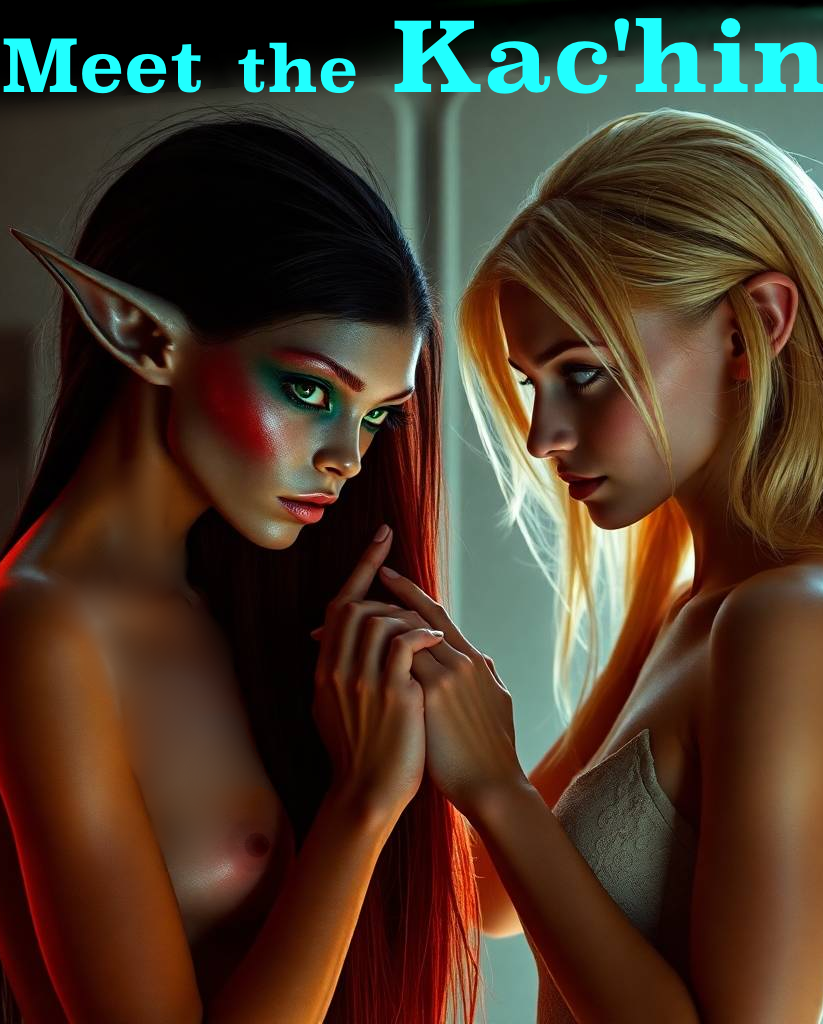
Grean the Kac'hin (left)
 Cythyrya. The draft blog post "Pantechnyk" (see Figure 1, above) had ideas for Part 4 of my science fiction story "The Cythyrya Investigation". As discussed previously, I imagined The Cythyrya Investigation to be part of The Nyrtia Cycle. My plan was to explore events in the Asimov Reality when two secretive organizations, the Institute and Zodiac, were both trying to obtain Phari nanotechnology that would allow humans to gain control of the Bimanoid Interface.
"The Man from Zodiac"
by Jack Vance.

In the Asimov Reality, humans had been given technology for interstellar travel, but all conventional forms of human scientific creativity and technological advance were suppressed. 

Luzy: agent from Zodyac.

Suspecting that humans were not their own masters, the Institute and Zodiac Control sought to alter the Bimanoid Interface, liberating human creativity, rather than continuing with the alien-imposed plan that forced people to be the non-creative 'puppets' of their replicoids. The search for a means to take control of human destiny led to Myllyr's planet, a world of the Phari Network.

When Jack Vance published "The Man from Zodiac" in 1967, The Girl from U.N.C.L.E. had just been on T.V. (briefly). Vance's story featured Milton, the field agent of Zodiac. I could not resist introducing Luzy, a female Zodiac Agent who is what I'll call an "A-Clone", genetically identical to Marda.

Creating an agent.

The draft blog post "Making Rytya" (see Figure 1, above) had 1,400 words of ideas for Part 5 of The Cythyrya Investigation. I planned for the action to shift back to "Golf World", an exoplanet that specialized in hosting golf tournaments for the best golfers in the galaxy. My original plan for Part 5 was to introduce Rytya, the daughter of Fraunz (Fraunz is a character who was introduced in Part 3 of The Cythyrya Investigation). Rytya is like Brak; she can transmit information to other times by way of the Sedron Time Stream. Information sent back into the past to Myllyr's planet by Rytya must find its way to Luzy and Rylla.

There were several directions in which I could have developed The Cythyrya Investigation and work it towards a conclusion. For example, information from the far future (G World) could be useful to Rylla in her efforts do make useful variants of human sex hormones that will help Tyhry attain her full telepathic potential.

Figure 2. Qyla cat.

 Return of the Felydyans. Also, in my story "D*", the Felydyans of Gyryph provide assistance to Tyhry that leads to the re-activation of the full functionality of the teleportation equipment at Observer Base. Previously, I've imagined Manny taking the form of Tyhry's pet cat so that Manny can guide the early development of Tyhry's mind and interest in nanite programming. In "D*", Tyhry realizes that she is an artificial life-form, so there is no reason she cannot return as a character in Part 5 of The Cythyrya Investigation.

 On To Myllyr's Planet. Here in 2025, on order to complete The Cythyrya Investigation, I introduced the idea of Rey obtaining a femtozoan on Sogdian that can be transferred into Tyhry's pet cat, Qyla (see Figure 2) and gradually help transfer information from the future to Tyhry that will help her eventually reactivate the teleportation equipment at Observer Base. Part 4 of The Cythyrya Investigation is now on this blog page.

Figure 3. More drafts.
 Telekinesis. The draft blog post called "Upper Motor" (see Figure 3) has plans for a new science fiction story called "The Mystery of the Missing Motor Neurons" which concerns the development of telekinetic powers by means of a technology that replaces neurons with femtobots. I have recently started including the idea of "X clones" in my stories and the completed story "The Mystery of the Missing Motor Neurons" (at this blog page) includes one of the X clones from the Ekcolir Reality as a character along with an "A clone", one of the copies of Marda who was deployed as an Interventionist agent in the Ekcolir Reality.

UNDER CONSTRUCTION

Next: Wye Not?    

Alice dolls. Visit the Gallery of Movies, Book and Magazine Covers


Nov 1, 2024

Trying to Connect

Figure 1. What could possibly
go wrong during an alien-
human synapex experiment?
Below on this page are some plans for Part 6 of my science fiction story called "The Fesarians". When the power distribution system for the Port Cooway colony on Elemacha-z comes under attack, the only possible saboteur seems to be the amphibious Merovae (Figure 1). Aethe is an exobiologist and soon after arrival on Elemacha-z she discovered that the Merovae come onto the beach near Port Cooway so that they can lay their eggs in the sand.

Talia, Gyulya and Lyssa are human-tryp'At hybrids. Talia and Gyulya live together and they have a small "clone daughter". After Talia learns of the existence of the Merovae, she tries to monitor them with drone surveillance and tries to telepathically link to them. At first, Talia mistakenly assumes that the Merovae ovipositor is a penis. Eventually, Talia recruits Aethe to participate in forming synapex links to a female Merovae. At the same time, the Noema are actively trying to use the Merovae as a way to learn about human beings.

Figure 2. Talia and a cat.
Having synapex linked to a Merovae and now with some insight into Merovae thoughts, Aethe suggests that the Merovae have not been disrupting the underground power distribution lines. Talia sees no evidence that the adult female Merovae ever leave the beaches to venture further inland where breaks in the electrical power distribution cables have occured. Talia develops a sexual relationship with a Merovae male2. Gyulya (Figure 3) discovers some Merovae larvae in her bed, but does not know what they are.

Figure 3. Gyulya.
 Merovae life cycle. There are 3 Merovae genders: 1) male1 produces sperm, 2) male2 are impregnated by sperm from male1 and they gestate larvae, 3) females receive the larvae from male2, encase the larvae in eggs, and eventually use an ovipositor to bury eggs in beach sand. For protection against land animals like the Kwono, the females are usually accompanied by their associated male1 and male2 when they venture onto the beach, 4) the hatchling juvenile Merovae feed on land for a time then go into the ocean.

The other three colonists on Elemacha-z are a type of genetically-engineered human variant known as the Huxy. Xylo, Aethe and Erni O'phyr are three clones. The Huxy are simultaneous hermaphrodites.

Figure 4. Xylo
Aethe impregnates Lyssa soon after they arrive on Elemacha-z. Aethe and Lyssa begin trying to learn each-others mind patterns and develop a telepathic connection.

Storm Zone. There are two distinct plant-life zones. The low elevation land close to the shore is specialized for erosion control and also provides good grazing for the newly hatched Merovae. None of the Noema reside in the storm zone. Port Cooway was built in the storm zone, but each building has an anti-gravity flotation system that can be activated when there is storm surge.

Fogs. Port Cooway was built near a cold current from the polar region of Elemacha-z. Dense fog forms most nights then burns off in the day time. The solar/wind collectors use anti-gravity to rise above the fog. Talia moves her home out of the storm zone and so the Noema provide Talia with a compulsion to continuously float her home off the ground.

Figure 5. Xylo, Aethe and Erni.
Cats. Talia likes cats and brings some cats to Elemacha-z. After going through the microbial decontamination protocol, the cats start hunting the juvenile Merovae and so Talia is given (by the telepathic Neoma) a compulsion to move her home inland so the cats are not close to the juvenile Merovae. Talia and one of her cats can be seen in Figure 2.

 Dani. In a previous Reality, the Neoma were part of the Phari network. The Phari were masters of the Hierion Domain and used hierions for technology-assisted telepathy. Dani's style of telepathy is the hierion-based information transmission system that is used by positronic robots. Dani is able to establish a telepathic link to the Noema upon arriving on Elemacha-z. With an intrinsic interest in nanities, the Noema remove Balok's nanites from Dani's positronic brain and they begin studying those zeptites. 

Figure 6. Talia's vision of Xylo.
Dani, having contacted R. Nurtia using the Port Cooway communications equipment, now waits to see if R. Nyrtia will invite Dani to return to the Hierion Domain.

Sedron Time Stream. Talia has visions of the future because she has access to information about the future via the Sedron Time Stream.

Noema. The Noema, technologically advanced aliens of Elemacha-z, begin to understand the zeptites and the basis of human telepathy. The Neoma use hierion-based technologies (such as technology-assisted telepathy) and femtobots.

 Discovery of the Noema. With help from Ienaghwy and Ylyndra, Talia realizes that the Noema have been disrupting the function of her brain by targeting her femtobot endosymbiont. Talia creates synapex links to a Noema, allowing her to understand the aliens.

Figure 7. Talia's vision of Dani.

 Sentient Plants. The alien Noema appear to be plant-like creatures, so upon arriving on Elemacha-z, initially Talia ignores the Neoma and suspects that the Merovae must be disrupting the power distribution system of Port Cooway. Looking for inspiration about Sci Fi plants, recently I read  "Plants Must Grow" (1941) by Frank Belknap Long. "Plants Must Grow" was the first in a series of stories all published in the 1940s, featuring John Carstairs, pet plant detective.

 Killer Plants.  Two years ago I read and blogged about Long's 1942 story "Plants Must Slay", a story in which an invisible killer plant from Ganymede tries to kill Carstairs. Maybe all sentient plants have an instinct that makes them want to kill botanists. Sadly, in "The Fesarians", the alien plants lack any kind of killer instinct. The Neoma are simply curious about the new human colonists who arrive on Elemacha-z... and protective of baby Merovae.

 Figure 8. A cute little snapdragon plant from
the asteroid belt (image generated by Gemini).
  Plants Must Be Sciency. Feeling obligated to search the entire John Carstairs series for interesting alien plants, I next looked at "Snapdragon" (1941).  

In passing, Carstairs states that carbon disulfide can cause "epidemic hysteria". 

 Trippy. Readers are also told that "fume slugs" from Pluto defend themselves against the predatory tripper plant by releasing a chemical similar to carbon disulfide and which can be used to make people tell the truth. The so-called "fume slugs" look like Earthly slugs, but they are actually plants. Long also casually mentions a "positron rod". It began to hope that this plodding story might be rescued by insertion of a positronic robot, but... no such luck (however, see Figure 11, below).

 Figure 9. Colorized interior art
  for "Snapdragon", generated by Mr. Wombo.
 Slug Plants.  Carstairs uses the mysterious (Earthly chemists can't replicate the active chemical ingredients) alien fumes from a slug plant to screen suspects in a murder investigation, identifying 15 possible culprits out of a crowd (at a badminton stadium) of 300. 

 There are no dragons in science fiction. Next, Carstairs makes use of a "snapdragon" plant from Callisto that looks like a miniature dragon. I had Gemini generate a depiction of the alien snapdragon plant (Figure 8).  The snapdragon can detect the chemical explosive that was used in a murder, and it is attracted to the clothing of the murderer. Our hero John has solved the murder case by using his extensive knowledge of alien plants! Golly gee, ain't that grand?

Vera and Moldy Ralph.
 There was black and white interior art for "Snapdragon" (uncredited) that Mr. Wombo converted into the colorized image that is shown in Figure 9. That's Vera in the upper right corner, behind John who is using alien snapdragons to identify the murder (in red).

In "Satellite of Peril", Vera and John are on Io where they battle monster plants. After blasting the plants which were wrapping their tendrils around Vera in a death grip, Vera and John embrace and share a frosty kiss (at -225 Fahrenheit), adding new meaning to the "cold open".

 Its a small Solar System Afterall. And who do Vera and John run into on Io? The Solar System's most evil criminal, Ralph. The "dude" with the green face in the image that is shown to the left is mold-cell replica of Ralph. These replicas are produced when John releases a special mold spore that can reveal the "auras" of people after they depart from a crime scene. Vera ripped away part of the replica and holds it in her hand.

Figure 10. Mission to Io.
See the original June 1943
cover art by Earle Bergey.

 Auras. Readers are told that human cells contain mysterious components that leave ghostly "afterimages" hanging in the air. John uses a mold that feeds on these "afterimages", allowing visualization of Ralph after he has stolen the food supply from John and Vera's spaceship.

 Cold Moon. I had Mr. Wombo convert an old cover art painting by Earle Bergey into a scene with Vera escaping from plant creatures on an icy moon (see Figure 10).

 Always lock your spaceship doors. You know Ralph is evil because he steals the food supply from John and Vera's spaceship. But how did Ralph get to Io? Ralph also stole the USA's newest and bestest spaceship, which "explains" how he got to Io. But why is Ralph on Io? Readers are told that Ralph collects plants... and Vera. After Vera is taken by the evil Ralph, John deduces where Ralph's spaceship is and he sneaks up on Ralph by using another plant of Io that creates an invisibility screen. Once again John vanquishes evil by using alien plants as his crime-fighting tools.

Figure 11. Colorized interior art for
"The Ether Robots", generated by Mr. Wombo.

 Ether Robots. The Solar System-roving John Carstairs finally has to deal with robots in "The Ether Robots" (1942). From his base on Uranus, the evil scientist, Frome, can use newly-developed technology to "project" his "ether robots" across millions of miles of outer space to other worlds. 

Figure 12. Manually colorized.
The first of several interior art illustration for "The Ether Robots" shows John destroying one of the robots. To make Figure 11, I used the manually-colorized image that is shown in Figure 12. 

Figure 13. Interior artwork by Leo Morey.
Since our hero, John Carstairs, is roving around the Solar System collecting alien plants, I inserted an alien plant woman into the scene (Figure 11). Figure 13 shows the original interior artwork by Leo Morey.

In the timeline of "The Ether Robots", Earth has until 2027, then a mad scientist will try to take over the Solar System with a robot army. Also, Frome can take control of people's minds. What can stop this madman? Obviously, radiant flame fungi from Europa. But also a plant: an infra-radiant from Iapetus. Whew! That sure was close. 

Figure 14. Internal art for "The Heavy Man".
 Suck. The next story in the series with Vera and John was "The Heavy Man" (1943) in which a magical microscopic algae from Mimas was used to "suck the juiciness out of heavy atoms". These algae are used to clean up a mess created by a deranged scientist called "The Voice" who is periodically broadcasting his propaganda directly to the people of New York from a hidden location. While trying to project a "heavy force field" into the sky over New York City, this evil and incompetent scientist converts the atoms in his body to heavy atoms. John and Vera quickly jump in their aircar and fly to the place where police found the heavy man in his parked aircar. As they approach, their own aircar falls apart and they must parachute to safety. According to the text of the story, when Vera lands on the ground, she is wearing a skirt.

Figure 15. Colorize by Mr. Wombo.
 Dizzy. "The Heavy Man" also features a scene with a "vertigo lily" which sends super high frequency sound waves directly into the middle ear, disrupting its function and causing a person to lose consciousness.

Figure 15 has a colorized version of Figure 14 that was generated by WOMBO Dream. It is also mentioned in the story that Vera breaks the heal of her shoe while parachuting. However, both the uncredited artist for Thrilling Wonder Stories and Mr. Wombo insisted on generating images of the parachuting Vera without high heels or a skirt. 😠

Figure 16. Add a balloon.

I liked the AI-generated image in Figure 16 because Mr. Wombo put in a hot air balloon and helicopters. 

The image shown in Figure 14 is actually a depiction of the second time that John and Vera must bail-out of a damaged aircar. This time, John is holding Vera while they parachute to the ground.

The other key tool used by John to solve the case of the heavy man is a spectroscopic lichen from Neptune. This living detector allows John to identify the parked aircar holding the "heavy man" as the source of a "heavy force field" pointed up into the sky. John deduces that the "heavy man" is the evil scientist known to New Yorkers as "The Voice". 

Figure 17. Verachuting in heels.
Once John has this all figured out, he releases the heavy-atom sucking algae from Mimas and the algae inactivate "heavy force field", but not before it destroys a police aircar, forcing John and Vera to parachute to the ground for the second time (Figure 14). The most amusing part of "The Heavy Man" is when John proclaims that "The Voice" must be a scientist and not a biologist. By this I assume that Long meant "physical scientist".

I asked Mr. Wombo to generate an image depicting: "Cintia Dicker parachuting, Cintia Dicker has long red hair, Cintia Dicker is dressed Victoria's Secret style in a miniskirt and high-heel shoes, a parachute is above Cintia Dicker, blue sky in the background, Cintia Dicker’s hair and skirt flutter in the wind" (see Figure 17). Mr. Wombo even showed a broken heel. Other AI-generated images of the parachuting Vera are at the bottom of this blog post.

Figure 18. Moon Wobblies.
The next John Carstairs story was "Wobblies in the Moon" (1943). Figure 10 (above) was generated by Mr. Wombo using the cover art from the June 1943 Thrilling Wonder Stories by Earle Bergey. I also had Mr. Wombo generate a colorized version of the original black and white interior art for "Wobblies in the Moon" by Marco Marchioni (Figure 18). John and Vera are on the Moon when Vera charges into his bedroom to announce that a Wobbly just opened the window of her bedroom and escaped. Maybe the house of Mr. Gleason is inside an enclosing dome?

We eventually learn that the Wobblies are walking plants that eat hydrogen sulfide. They are handy to have in the house when you want to kill someone like Mr. Gleason by poisoning him with hydrogen sulfide. The Wobblies will suck up all of the hydrogen sulfide, removing its tell-tale traces from the site of the murder.

  The interior art by
Marco Marchioni for
"Wobblies in the Moon".
Here on Earth, there are bacteria that can metabolize hydrogen sulfide, but hydrogen sulfide is toxic to plants and animals. I asked Gemini: "Would it be theoretically possible to engineer a plant species that would have endosymbiotic hydrogen sulfide-metabolizing bacteria in root nodules that could allow the plant to survive in soil that had high levels of hydrogen sulfide in the ground water?"

Gemini: "It is theoretically possible to engineer a plant species that could survive in soil with high levels of hydrogen sulfide. Such a plant could potentially have endosymbiotic hydrogen sulfide-metabolizing bacteria in its root nodules, similar to how legumes have nitrogen-fixing bacteria. 1) Isolate hydrogen sulfide-metabolizing bacteria. 2) Engineer a plant-bacteria symbiosis: develop genetic engineering techniques to introduce the hydrogen sulfide-metabolizing bacteria into the root cells of a plant species.

Figure 19. Vera on the Moon.
 3) Optimize the symbiosis: fine-tune the genetic engineering process to ensure that the bacteria can effectively metabolize hydrogen sulfide and provide benefits to the plant. This might involve optimizing the expression of bacterial genes, ensuring the compatibility of the bacteria with the plant's cellular environment, and preventing the bacteria from causing harm to the plant. Advances in genetic engineering and our understanding of plant-microbe interactions make it a theoretically feasible goal."

Sadly, on Earth, plants never evolved a motility system like animal muscle tissue, so we don't have walking plants. There is a scene in "Wobblies in the Moon" in which John measures the "sap pressure" of one of the Wobblies, noting that it is dangerously high. Maybe the Wobblies of the Moon use liquid nitrogen for the fluid of their bodies instead of water and feed on hydrogen sulfide deposits.

Figure 20. Plant breeding.
 Beyond Pluto. None of the sentient plants found in the Solar System by John Carstair were quite as smart as a human being. But might it be possible to selectively breed a more intelligent plant? This question arises in the last of the John Carstair stories, "The Hollow World" which was published in the Summer 1945 issue of Startling Stories.

In the August 1926 issue of Weird Tales was "The Woman of the Wood". This story is definitely not science fiction, but I had Mr. Wombo create a variant of the 1926 cover art that shows a plant creature holding a woman (see Figure 20). Sadly, "The Hollow World" is very long and rambling and Frank Long did not provide much information about the plant breeding experiments that make it possible to create very intelligent plant people who can then terrorize the human population of the Solar System.

Vera on a half-shell: alien breeding project.
 Plant Genetics. The poor blond in Figure 20 seems to be at the mercy of the alien plant creature. It may be that someone like Vera Dorn with her Ph.D. in Botany would be a more willing participant in experiments aimed at creating highly intelligent plants. The image shown to the right was generated by Mr. Wombo using this 1935 cover illustration as a reference image and a text prompt that included, "a green plant person, seen in profile view, the face and neck of the plant person is made of stems and leaves".

John and Vera experiment
with an alien plant.

While looking at the image to the right, I began to wonder what Vera an the alien were looking at. In my imagination, John Carstairs is likely to be there with Vera during this type of plant breeding experiment.

I had Mr. Wombo generate an alternate version of this scene in which John is there at Vera's side while she is getting friendly with an alien. For "The Fesarians", it is possible for humans from Earth to interbreed with aliens from other planets because those "aliens" were transplanted from Earth and are actually genetically modified humans. Maybe in the fictional universe of Frank Long in which every planet in the Solar System has walking plant people, they are all modified version of humans from Earth, genetically engineered by aliens and adapted to the environments of other planets.

Figure 21.

  In his 1934 story "Lost Planet", Frank Long described people from Venus who were descendants of Earthlings, but he did not follow up on that idea for his John Carstairs stories of the 1940s.

The black and white interior art for "The Hollow World" was uncredited. Figure 21 is a colorized version of a scene from "The Hollow World" that was generated by Mr. Wombo by starting with one of the original illustrations from the story as a reference image. My text prompt said, "Cintia Dicker has long red hair and is seen from behind", but Mr. Wombo had her turn towards the camera and depicted her as topless and barefoot. Sometimes it simply does not pay to argue with an AI.

Figure 22. John and Helen.
 The other woman. Through the John Carstair stories, John and Vera are often depicted as bickering, but they occasionally have time between battling human evil doers and monster plants to share a kiss. Finally, in "The Hollow World", Frank Long brought in another female character, 18-year-old Helen Hilary (see Figure 22), daughter of John's old friend, Thomas, who had long worked collecting plants from Pluto and who was interested in mutations. With money from a shadowy source (Maile, see below), Thomas succeeded in breeding plants that were intelligent enough to use human language... then he was killed.

To track down the suspect in the death of Thomas, John makes use of a Compass Lichen from Uranus which points its tendrils at any nearby walking plant. Then it is off into outer space: destination the 12th planet, which is 5,200,000,000 miles from the Sun. 

Figure 23. An army of plant
people inside the 12th planet.
Readers of "The Hollow World" are informed that the 12th planet was discovered in 1997. The floating plants in Figure 21 are a magnified and "projected" version of the Callistian chain vampire plant. During the long boring voyage from Earth to the 12th planet, the spaceship's captain's son pranks John and Vera with the magnified "projected" image of this tiny alien plant. This trick apparently involves the same Hi Tek "projector" technology that was used to "project" ether robots for missions around the Solar System in "The Ether Robots" (see above in Figure 12).

 Figure 23 is one of the interior art illustrations for "The Hollow World" showing what is discovered when our hero John Carstairs reached the 12th planet: an army of intelligent plant people that has been created by evil master mind, Maile, a mutant human with a 310 I.Q. 

Figure 24. Evil plant people.
The 12th planet is titular "The Hollow World" where the army of plant people is discovered inside an underground chamber. The plant people are quickly destroyed by the explosive balls seen in Figure 23. The intelligent plant people were made possible by the plant breeding experiments of Helen's father, Thomas. Ironically, Thomas is killed by rampaging plant people (Figure 24). Figure 24 is another colorized version of an interior art illustration for "The Hollow World" that was generated by Mr. Wombo.

In other news, during the long voyage to the 12th planet, John and Helen share a kiss, something that John has long wanted to do. Helen seems quite pleased with John's romantic advance. Is John dumping Vera in exchange for a younger woman? Apparently not.  Frank Long ended "The Hollow World" with the suggestion that after returning the Earth from the 12th planet, John and Vera would finally be getting hitched.💕

Figure 25. See this cover art
by Steve Fastner.
At the end of the John Carstairs series of stories, it has been demonstrated that breeding intelligent plant people is possible. For me, this is the most interesting part of the whole series. I wish that Frank Belknap Long had started with intelligent plant people and then explored the implications of having a population of highly intelligent plants sharing the Solar System with humans.

In my story, "The Fesarians", the intelligent plant-like creatures of Elemacha-z are ancient artificial life-forms with advanced nanotechnology. Frank Belknap Long liked horror stories, and in "The Hollow World" the intelligent plants were all destroyed in order to prevent the evil henchman (Maile) from using the plant people to conquer the Solar System. In "The Fesarians", the Neoma just want to get the annoying human colonists to depart from Elemacha-z.

Figure 26. Interior art for
"The Thought Materializer"
by Frank R. Paul.
 Precursor to Teleportation. The "thrilling conclusion" of "The Hollow World" involves another use of the "projector" (see Figure 21, above). A monstrous plant creature of the 12th planet almost kills our hero, John, but the monster is defeated in video-game style by the spaceship's captain's young son who has learned how to use the magnifying projector in John's laboratory. I say "video-game style" because the "projector" technology is never explained: it creates a quasi-physical copy of an actual object (in this case, a plant in the lab) that can be projected to the outside of the spaceship. The technology almost seems like a precursor to teleportation, able to transmit over long distances a partial semblance of a physical object.

Figure 27. Future botany.
See this cover illustration.
 Projector Technology.  In the Spring 1930 edition of Science Wonder Quarterly, Frank Long published a story called "The Thought Materializer". In that story, Randall has invented a device that converts your thoughts into reality. Randall explains to his friend Perkins the secret of his device: cosmic rays. Randall wants Perkins to experiment with the device and he starts the experiment with the words, "There isn't the slightest danger". Of course, Perkins soon imagines a tiger and he is attacked and physically injured by his imaginary tiger (see Figure 26).

Not being a fan of horror stories, I've long been dismayed by the influx of horror story writers who swarmed the early science fiction magazines. Another such writer who moved from Weird Tales to pulp Sci Fi magazines was Donald Wandrei. "Raiders of the Universes" was published by Donald Wandrei in the September 1932  issue of Astounding Stories where it was provided with a color cover illustration by Hans Wessolowski. 

Figure 28. Projector technology.
So simple even a child can use it.
Using that 1932 color painting by Hans Wessolowski as a reference image, I had Mr. Wombo make the image shown in Figure 27, depicting John and Vera studying an alien plant.

Starting in 1934, Wandrei wrote a series of stories about the scientific detective Professor I.V. Frost, Sc.D. It is easy to imagine that Frank Long was inspired by the 1932 cover art for "Raiders of the Universes" and ended up writing a large number of stories about walking plant creatures from other planets and botanical detective John Carstairs. Long published a short story called "The Lichen from Eros" in the November 1935 issue of Astounding Stories. "The Lichen from Eros" is more fantasy that science fiction, depicting microscopic people living on the surface of the titular lichen from Eros. Already in this 1935 story, Long seemed devoted to the idea that every moon, planet and asteroid of the Solar System should have its own living creatures. 

Figure 29. John the Plant Detective
and his amber-haired partner Vera.

Starting with a May 1949 magazine cover illustration, I had Mr. Wombo generate an image depicting Vera and John with a group of plant people (see Figure 29). Frank Long never tired of referring to Vera as the amber-haired "secretary" of John Carstairs. I suppose in the 1940s there actually were women with a Ph.D. who worked as secretaries. However, I prefer to imagine Vera as working with John as a partner. 

I'm not entirely sure what John and Vera are trying to accomplish in the scene that is shown in Figure 29. In "The Hollow World", readers were told that John had spent 7 years trying to breed more intelligent plants, finally reaching the conclusion that it was an impossible goal. However, Thomas Hilary persisted in those efforts and was successful. Not only could highly intelligent plant people be produced in quantity, but they grew rapidly and matured in just a few weeks, making it possible for Maile to quickly build an army of plant people who unquestioningly viewed as Maile their leader.

Figure 30. Vera's first
projection experiment.
 Vera Dorn, Ph.D. One of the themes that Frank Long included in his John Carstairs stories was the idea that John sometimes kept secrets from Vera. However, it is hard to imagine that John Carstairs could have magnifying projection equipment in his laboratory without Vera knowing about it and making use of it for her experiments. Using this 1945 cover art as a reference image, I had Mr. Wombo generate a depiction of Vera performing an experiment with projection experiment. 

 Plant People From a Miniature Lichen Civilization. In this experiment, Vera is enlarging the projected copy a small plant person who lives on a lichen from Eros. Maybe on a small asteroid like Eros there are tiny artificial life forms made of femtobot components. Vera is trying to expand this plant person to human size, but she may end up being frustrated by the limited magnification that can be achieved by the device (see Figure 30).

Figure 31. Vera's projection
experiment with Helen.

If John Carstairs could spend seven years trying to breed intelligent plants, fail in that effort and then learn that Thomas Hilary had been successful in his work towards that goal, then surely Vera would want to perform her own plant breeding experiments. And why not involve Helen Hilary in that research project? Figure 31 shows Vera using the projection equipment in John's lab to shrink a "copy" of Helen down to the same size as some plant people.

Maybe by shrinking projected copies of people such as Helen it became possible to conduct breeding experiments between Earthlings and Eros lichen people. It might have been possible to greatly enlarge the tiny people of Eros, but not all the way to human size. By also shrinking test subjects like Helen, it became possible for the plant people of Eros to "meet humans in the middle" and successfully exchange genetic material. Maybe working at smaller size scale than the human body was the secret to the accelerated rate of growth of Maile's army of intelligent plant people.

Figure 32. The thoughtful husband.
 Exploring the Wonders of Projection Technology. For "The Fesarians", I've been planning to depict R. Nyrtia as appearing on Elemacha-z in the bodily form of Talia's sister, Gyulya. At the very end of the story, I plan to have Ylyndra and Ienaghwy land their spaceship in Port Cooway so that they can pick up passengers. I've been wondering if Balok should also be there on Elemacha-z at the end of "The Fesarians", but maybe Balok would use advanced bumpha "projector technology" to send his "image" to Elemacha-z. I had Mr. Wombo make Figure 28 as a depiction of the young son of the spaceship captain in "The Hollow World" when he is using projection technology to enlarge a small plant from the lab. 

 One Last Plant. Using a 1950 color illustration as a reference image, I had Mr. Wombo make a depiction of Vera receiving an alien plant as a gift from John (see Figure 32).

Next: Upgraded Imagen.

Visit the Gallery of Movies, Book and Magazine Covers