Showing posts with label H. G. Wells. Show all posts

Sep 25, 2016

Scientific Romance

1920s television in the Ekcolir Reality (source).
This year, I've been celebrating several science fiction-related anniversaries (200, 100, 50) and now it is time for 150.

Herbert George Wells
I've previously imagined the analogue of Herbert Wells (a woman named Hafren Wells) as a science fiction story teller in the Ekcolir Reality, a Reality where science fiction was almost exclusively of the "hard" variety, written by authors with training as scientists. In this blog post, I'm going to pretend that much of the life of Herbert Wells was a warped reflection due to Temporal Momentum in the wake of past events in the life of Hafren Wells.

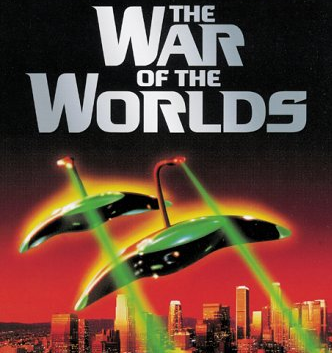
Here in this Reality, I can't remember which movie I saw first, War of the Worlds or The Time Machine. As a budding science nerdling, I despised both those movies.

War of the Worlds
My distaste for alien invasion movies has never waned. In the case of time travel, I eventually read Asimov's time travel novel, The End of Eternity, and thankfully that was able to wash the bad taste of the Eloi and the Morlocks out of my mouth.

No Sale
Here in 2016, our planet Earth must seem a much smaller and less mysterious place than it was for people living in the 1890s. Even as a boy in the early 1970s, knowing the physical basis of genes, mutations and evolution, I found the vision of future human evolution provided to us by Herbert Wells in The Time Machine to be implausible. In many ways, Wells reminds me of Isaac Asimov; his non-fiction (example) reveals him to be scientifically literate, but he was trapped in a pre-modern scientific age and his science fantasies unfortunately leave me cold. Wells is sadly beyond my Sci Fi even horizon.

The Shape of Things to Come
Bitching and Moaning. Why should a man in the 1890s, who had published "seventeen papers upon physical optics" be able to build his Time Machine in a back room of his home, yet nobody else in the future ever replicated his achievement and began traveling through time?

The formula for stories of "scientific romance" was to pretend that there might be some scientific/technical basis for a magic trick, then the author could tell some adventure story that was thus made possible. To this day, people with no training in science probably view technological advances as magic tricks (see Clarke's 3rd law). As a fan of "hard science fiction", if asked to provide a modern accounting of the "scientific romance" stories of H. G. Wells I would suggest that they be categorized as part of the larger domain of "technofantasy".
source

Global Warming
source
In his description of the future (as seen by the Time Traveler in The Time Machine), Wells told of the continued expansion of urban civilization in the London area with the construction of large buildings. Then, traveling further into the future, there was an end to winters in southern England. "I saw great and splendid architecture rising about me, more massive than any buildings of our own time, and yet, as it seemed, built of glimmer and mist. I saw a richer green flow up the hill-side, and remain there, without any wintry intermission."

In the imagined future of Wells, why does the Earth get warmer? There is no indication that he had any concept of green house gas-induced warming (see the discussion here). What little science we find in the stories of Wells is pretty thin gruel for a science nerd like me.

Fanta-Sea
A credible human invalid.
Since I find it impossible to take seriously the science elements of stories written by H. G. Wells, I'm going to focus attention on his skill as a fantasy writer. It is through his brand of free-wheeling and fun fantasy that I believe Wells had a profound influence on many science fiction writers such as Isaac Asimov and Jack Vance.

in the Final Reality
"...if she comes to earth at all, she must come among nice people....."

In his story The Sea Lady, Wells told of a strange visitor to the Earth. By "the Earth", Wells was making a distinction between the ocean and the continents, or, more precisely, the coast of England. The only thing strange about this visitor was that she happened to be a mermaid.

In the Ekcolir Reality
Assassination by Subtraction
The timeline of Earth's history was somewhat different in the Ekcolir Reality. Of particular importance for Hafren Wells, the pace of scientific advancement was quicker and there were more opportunities for women in science.

The Dead Widowers previously described for me some of the advanced technologies that were used during the American Civil War in the Ekcolir Reality. By the late 1800s, the ability of methane and carbon dioxide to cause an atmospheric greenhouse effect was already widely recognized by the world's scientific community.

hepatitis B virions
Hafren grew up reading the works of Jade Verne (the analogue of Jules Verne in the Ekcolir Reality). Hafren was terribly discouraged when Jade died in 1892, suffering from the effects of a hepatitis B viral infection. In the early 1900s of the Ekcolir Reality, electron microscopy was used to visualize the hepatitis B virus.

Report from Deep Time
In the Ekcolir Reality. This reconstructed
cover image was made by Zeta using
'Browncoat 38' by Jessica Truscott
Discussions with Zeta and Yōd have helped me understand some of the old information about Deep Time that was collected by Angela and provided to me by way of the infites that I received from Ivory.

According to Zeta, in the year 1902 of the Ekcolir Reality (all dates are transformed to comply with our calendar; our year 1902 was actually in the 23rd century of the Etruscan calendar), Hafren Wells published The C-Laser, which told of the Jade Verne's return from the dead.

As told by Hafren, it was an artificial life replica of Jade Verne (with all of her memories) that came back to Earth. Wells set the story in the year 1917, not long after the discovery of the Hierion Mass Equation. The "C-Laser" was actually a carbon dioxide laser that was used as part of a communications system that allowed the Jade replica to communicate with a group of scientists at the Chantique Becquerel Institute for Nuclear Physics.

In the Ekcolir Reality. This reconstructed
cover image was made by Zeta using
'Browncoat 37' by Jessica Truscott
As told in The C-Laser, the challenge for establishing communications with the Jade replica arose because that replica was composed of hierions. The Jade replica was too small to be seen, but she could communicate with humans by producing tiny engraved messages on metal chips.

According to information left to me by Ivory, since in the Ekcolir Reality the Becquerel Institute for Nuclear Physics had been destroyed in an explosion and fire in 1899, there was a cult following among readers of The C-Laser who believed that the Jade Verne replica was actually from a previous Realty (the one I call the Asimov Reality). Apparently Hafren Wells raised the possibility in The C-Laser that there were alternate Realities and in one of those alternate universes, contact was (or would be) made between humans and nanoscopic life forms in 1917.

In the Asimov Reality. This reconstructed
cover image was made by Zeta using
'Browncoat 27' by Jessica Truscott
Mentioned by name in The C-Laser was a book that Hafren attributed to Jade Verne called Journey to Proxima Centauri. Written in 1864, Journey to Proxima Centauri told of an alien creature that built a teleportation device on Earth. That alien creature seems to have been what I call a 'Grendel'.

As told by Hafren in The C-Laser, after Jade's death in 1892 she (or Jade's replica) was teleported to a distant planet. Only upon returning to Earth in 1917 (in violation of a kind of quarantine) did the Jade replica realize that she was 12 orders of magnitude smaller than the humans of Earth.

In the Asimov Reality
According to Zeta, there was an earlier analogue of The Sea Lady in the Asimov Reality: a book called The Lost Sea. In that story, a population of Neanderthals survived in 'Grenland' until the rapid sea level rise at the end of the last ice age. Yōd believes that there was a special relationship between those Neanderthals and a group of aquatic beings who seem to correspond with what I call the Grendels. The Lost Sea was a time travel story and the main character was apparently a thinly disguised Jade Verne who went back in time 10,000 years to meet the last remaining Neanderthals and Grendels on Earth.

Next: Investigating the origins of telepathic robots
visit the Gallery of Book and Magazine Covers

Sep 24, 2016

Sci Fi Event Horizon

Here in 2016, I have been celebrating several science fiction milestones. Recently I celebrated the 75th anniversary of Isaac Asimov's robot story, 'Reason'. Shown in the image to the right on this page, I am working on a new blog post called 'Scientific Romance' that is a subjective and very personal look back at the first 150 years of the Wells Era.

Retrofuturism
I've also recently blogged about 1) the fact that we are now at a point in time 200 years after the publication of Frankenstein and 2) 100 years into the Vance Era and 3) we are now also 50 years into the Star Trek Era. With all this gazing into the past, I want to explicitly explore the idea that science fiction stories are ephemeral products of their time and they all come with an expiration date.
 
Language Barriers
'Runaround' (first published in 1942)
One problem (that is not unique to science fiction) is the transient nature of languages. Each generation of readers falls in love with the literary works that are written in their time. Then, slowly, times change, language itself changes and eventually new generations of readers can no longer understand those wonderful old stories that were written in earlier times.

Science fiction often has additional related problems. Some science fiction stories are set in a future time. Then, when readers of an old story find themselves living in those future times, they can feel disappointment that the imagined future of the old story failed to align with reality.

That's no moon!
Historical Example. Many early science fiction stories failed to "write into the future" the ubiquitous radio communications technology that we now take for granted here in the 21st century. Asimov's robot stories from the 1940s provide a case in point. In 'Runaround', the story takes place in about the year 2015, but in Asimov's imagined future, radio communication techniques have hardly advanced beyond the state of the art in 1940.

source
Right at the start of 'Runaround', Asimov sets the scene by explicitly commenting on how rapidly robot technology is developing in the early 21st century. However, only 12 hours into their mission on Mercury, robot trouble-shooters Gregory Powell and Mike Donovan are confronted with a problem arising from a glitchy robot, a new model of robot that they brought with them from Earth and who was sent out on the surface of the planet to get a desperately needed bucket full of selenium. This task should have been easy for the robot, a device that was designed to survive the super hot conditions of Mercury where there are pools of pure liquid selenium.

source
However, after the robot reached the nearest selenium pool (17 miles away), it began endlessly circling the pool. The base of operations on Mercury and this robot (called 'Speedy', serial number SPD-13) rely on antiquated equipment that does not allow for radio communications with robots who have gone more than two miles into the "sunside" of the planet.

source
For readers here in 2016, Asimov's story quickly gets itself into trouble from a technical perspective. Around 1965, astronomers realized that Mercury does not have a "sunside" that is gravitationally locked so as to always face the sun. Personally, I find this fact about Mercury's orbital dynamics to be an annoying feature of our Solar System, similar in nature to the terrible idea that there is an upper limit to the speed of travel through the universe. For the purposes of science fiction story telling, I prefer an imaginary Solar System in which Mercury does have a "sunside" and I prefer a fictional universe in which it is possible to both travel and send communications signals through the universe at faster-than-light speeds.

The Future!
In 'Runaround', Asimov imagined that the antiquated radio equipment available to Donovan and Powell does function in a low-bandwidth mode that allows them to track the positions of robots like Speedy who are sent out to complete tasks on the sunside. However, verbal communications are not possible with poor Speedy, so Donovan and Powell can only watch helplessly while Speedy marches in an endless loop around the selenium pool. Sadly, they had brought to Mercury new "ultrawave" equipment that would improve communications with robots working on the sunside, but they will need a few weeks to set up that new ultrawave equipment.

For younger readers here in the 21st century, Asimov's story and these technical constraints might be nearly incomprehensible and unbelievable. They are likely to ask: you went all the way to Mercury, but you could not bring along the kilo of selenium that you would need for the photo-cell banks? It will take you weeks to install and start using the new ultrawave equipment? And, of course, Asimov imagined humanoid robots who would speak English. He did not imagine a future like our 2016 with the type of non-speaking, non-humanoid radio-controlled robots that are actually out there exploring the Solar System.

source
Out of Touch
Not only are Donovan and Powell severely limited in their ability to communicate with Speedy, but they are depicted as being cut off from communicating with Earth. This kind of communications deficiency for spacemen was also part of Asimov's story 'Reason'. While on their mission at a solar power station in space, Donovan and Powell never send or receive radio messages from Earth or spacecraft.

Lucky for me, none of the many "flaws" in Asimov's robot stories ruin them for me. 'Runabout' is a "hard science fiction" romp, a kind of thought experiment for exploring the potential implications of the Laws of Robotics. Asimov's language from the 1940s still feels alive and it is not cluttered with too many dead and dying words.

L-Tube
cover art by Chris Moore?
In Asimov's youth, electronic devices were powered by vacuum tubes. When he wrote 'Reason', he imagined that a solar power station would be built around an L-tube. It does not matter what an L-tube is, but readers who were born in the transistor age might not have the same appreciation for 'Reason' as someone who has actually worked with glowing vacuum tubes. Still, all of science fiction from the late 1920s on is still accessible to me as a reader in 2016. I worry that some aspects of Asimov's old stories are gradually becoming incomprehensible to younger science fiction fans.

cover art by Robert Schulz
Proto-Science Fiction
For me, proto-science fiction (such as the 'Scientific Romance' stories of H. G. Wells) is slipping away beyond the science fiction event horizon. Wells was writing for an audience that could be amazed by scientific advances and new technologies, but that was just an industrial age extension of the same sense of wonder that had for centuries before been stimulated by magic and pre-science-age fantasy.

When H. G. Wells wrote about a time machine, he made absolutely no effort to explain how it worked or how one man, working alone, built it in his back room. There was no science behind the time travel in The Time Machine.

cover art by Stephen Youll
In my view, it is not useful to view old stories such as Frankenstein or The Time Machine as science fiction because they were not written for a scientifically literate audience. I suppose reader interests change through the centuries, but it is almost impossible for me to imagine the reader of 200 years ago; someone who could be content to plow through a 3,500 word account of Victor Frankenstein's uneventful trip across Europe. Of course, I grew up reading Doc Smith's stories about travel to the stars and I'm thankful that styles in story writing have changed: Smith could move readers between galaxies in just a few short paragraphs.

Les Robots
Flowery stories written in the English language of 200 years ago have become almost unreadable for me. In Frankenstein, among the hundreds of exclamation marks and 19 cries of "alas" I suppose we can be thankful that Mary Shelley used moderation and only 13 of these are cries of "Alas!" Stories by H. G. Wells are in a gray zone where it is clear that he was writing for a different kind of audience than what Asimov had in mind. And Asimov was actually trained as a scientist, which is a huge plus for a science nerd like me.

H. G. Wells in an alternate Reality
I'll continue my look back at the stories of H. G. Wells in my next blog post. Fair Warning: I view Wells as more of a political fiction writer than a science fiction writer. I don't think it is sensible to look back at an old story like The Time Machine and say, "Golly, Gee! A time machine! This must be science fiction!" However, I do think that Wells was an important influence on both of my favorite science fiction writers; Asimov and Jack Vance. And I can't resist having fun by imagining what might have been, in some alternate Reality, where Wells actually did write science fiction stories.
visit the Gallery of Book and Magazine Covers

May 13, 2014

Platinum and its Privilages

Alien Invasion!
It all started innocently enough. Human history is replete with invasions and destructive wars. With time, we Earth folk looked up and contemplated the possibility of life on other worlds.

Inevitably, someone like Herbert Wells would have to provide us with a template for the Alien Invasion story.

1) In a Wellsian invasion of Earth, the aliens are vastly superior to us: "the creatures who inhabit this earth, must be to them at least as alien and lowly as are the monkeys and lemurs to us".

Save the monkeys!
2) Blow things up.  Have you ever gone into a forest and seen a monkey? If so, I'm sure that you quickly activated your heat ray and vaporized that region of the forest.

3) Happy ending! Of course, no matter how intelligent and evolutionarily advanced the aliens are, no matter how carefully their invasion was planned, no matter how great their military technologies surpass our own, we lowly and bumbling Earthlings will repulse the evil alien invaders. Hurrah!

Aliens from planet Metaluna need Earth's uranium
At some point in the 20th century you could no longer get readers to believe that evil aliens might soon arrive from Mars. We had graduated from the era of chemical energy and entered the atomic age.

steam punk Cape Canaveral (source)
After the dawn of the atomic age, alien invasion would no longer come by means of projectile-like spacecraft launched by chemical explosions in giant canons, but rather in the form of self-propelled spaceships using far greater energies derived from subatomic forces.

For the Exode Saga, even greater energies are found among the hierions and the sedrons. Who has time for boring space voyages when you can just use a transgalactic teleporter?

Interstellar Invasion
By 1920s the world was ready for Edward Smith to take the alien invasion idea into the interstellar depths. In his Skylark series, Smith used the idea that a mysterious metal (X), once it had been isolated from a batch of "platinum residues", could efficiently act as a kind of nuclear catalyst to liberate all of the energy available in atomic nuclei.

For his story Triplanetary, which would eventually be fit into his Lensman saga, Smith again included the importance of metal and in his new story: his alien Nevians were in need of metal (iron).

Of course, by the time I read the Lensman Saga, Smith had jazzed up Triplanetary with a back story about the ancient Arisians as told in several new introductory chapters. Even Atlantis got thrown into the story!

source
I've long been amused by the excuses given in science fiction stories for why aliens travel across vast interstellar distances to come torment we Earthlings. One of my favorites is "they came to mine gold".

For Foundations of Eternity, I imagined that platinum is a natural source of valuable sedrons. So, you might say that sedrons are my version of Smith's mysterious substance "X". Maybe we could all just agree to use the name "handwavium" as our imaginary materials that we need as science fiction plot devices. But no, it is too much fun for each generation and each author to imagine and exploit yet another future technology.

In Smith's fictional universe, no matter how biologically and technologically advanced as the Arisians are, they cannot defeat their Evil adversaries, so they must evolve two human lineages leading to Kimball Kinnison and Clarissa MacDougall. Their children will be able to do what the Arisians never could: defeat the Bad Guys. We humans are so special. Ta da!

Earth's defensive technology
by Nihil-Novi-Sub-Sole
available under CC BY-NC-ND 3.0
You could call Thomas my equivalent of the children of the Lens. As the son of an Asterothrope and an Ek'col, Thomas becomes a "proof  of concept" for a new way to efficiently introducing important gene combinations into the human population of Earth. The Exode Trilogy ends with the hope that such genetic engineering might allow Humanity to survive and reach the stars.

While it is true that the pek have mined Earth for sedronic matter, that is not why they came to Earth. Imagine hiking through a wilderness and coming upon some ripe fruit. Just because you might eat some of the fruit, that act of consumption does not imply that you went on the hike in order to get fruit.

Planes of Existence
I was baffled at age 12 when I read about Smith's Evil Alien Eddorians being "forced into the next plane of existence". Smith insisted that the planet Eddore did not originate in "normal space-time". However, through their "visualization of the Cosmic All", the Arisians had been able to foresee the arrival of Eddore in our universe.

As imagined by Smith, the Evil Alien Eddorians were sexless shapeshifters. Relentlessly seeking POWER (not the atomic kind), the Eddorians "were intolerant, domineering, rapacious, insatiable, cold, callous, and brutal".

The Space Opera formula requires a brilliant hero who can battle Evil Aliens...and win the girl.

If  so, then the Exode Trilogy isn't Space Opera, because there are no Evil Aliens. The image to the right is a pulpish reimagining of Thomas Iwedon's novel Miners of Earth. In the fantasy world depicted here, the Hollywood union standards for alien invaders are upheld.

In this fanciful Space Opera version of  Miners of Earth, the only humans shown are the two gold brick-toting slave ladies (1) in the lower panel. Of course, the rest of the human species is busy: they are out mining precious metals for their masters, the pek.

The pek (2) Overseer is performing a test on the gold and determining how many precious sedrons are present. The pek are not interested in the metal itself, only a rare sedronic contaminant.

In the upper panel, a scene that is taking place within the Hierion Domain (see below), an individual of the Huaoshy "species" (3, Thomas' equivalent of the Eddorians), a Sedron Lord, views events on Earth. Also shown is an imagined Kac'hin (4), a humanoid, but somewhat alien in appearance.

The Hierion Domain
E. E. Smith included "hyper-spatial tubes" as one of the imaginary technologies in the Lensman Saga. Of course, Smith lived in the Age of Tubes and his stories are full of an impressive array of tube-based plot devices. Smith used tubes of various types to accomplish many tasks, just as I use trendy plot devices like nanites at every turn of a story that is written from my position here in the Age of the Transistor.

I've previously written the Sedronic Domain into the Exode Trilogy. In honor of Smith's flamboyant imagination, Thomas includes the Hierion Domain in his novel Miners of Earth. When Malin and Mary finally reach their destination in South Africa, they are not loaded into a spacecraft and taken off into space, but rather they cross from our Hadronic Domain into a Hierion Tube!

More magazine and book covers.
Within the Hierion Domain there is a vast network of artificial habitats that can be fruitfully compared to Asimov's Eternity on steroids. Maybe Lendhalen and Klyz are places that exist within the Hierion Domain. Maybe the Kac'hin population of Izhiun's home world could easily conceal itself within the Hierion Domain.

I imagine that the temporal bubble of Eternity is R. Gohrlay's version of a synthetic habitat in the Hierion Domain. The Huaoshy have guided thousands of Genesaunt species through their use of the Hierion Domain as a convenient stepping stone towards the Sedronic Domain.

I've wondered how the Nereid Interventionists could maintain a hidden base of operations on Earth. Maybe that base was in the Hierion Domain, accessible from the headquarters of Space Energy Missions.

Hierion Tube (gif by Abel M'Vada)
Why is the Observer Base located on the Moon never observed by Earthlings? Why are the comings and goings of Observers and Overseers never seen? Observer Base is located inside the Hierion Domain. Travel between the Moon and Earth is accomplished by means of a Hierion Tube.

The Huaoshy allow Genesaunts to use hierion-based technologies, but they reserve sedronic technology for themselves (see the Sedron Monopoly). The Huaoshy eventually create for themselves a new existence as artificial life forms in the Sedronic Domain.

Their control over sedronic technologies and the Sedronic Domain gives the Huaoshy god-like powers. However, they are constrained in their actions by a set of self-imposed ethical rules that govern their interactions with biological organisms in the Hadronic Domain.

Adulthood
The Huaoshy think of themselves as the responsible adults of the universe. They've seen thousands of Earth-like words where human-like species have come and gone, species that destroyed themselves with their self-inflicted technological excesses. They use the pek to guide the evolution of hadronic lifeforms towards forms that can merge into the vast galaxy-spanning Genesaunt Civilization and that can eventually transform their biological existence and  transcend into the Sedronic Domain.

I've previously blogged about Childhood's End, a story that I have still never read. In Childhood's End, Clarke explored the consequences of Humanity being inevitably absorbed into some non-material group mind, this being accomplished in a hundred years or so.

In the Exode Trilogy, I imagine a far slower type of interaction between the alien Huaoshy and we Earthlings in which the human species is first created by the pek and then is slated for replacement. On Earth, we invasion-obsessed humans are quick to imagine that it is our fate to be replaced by the Prelands, a primate species crafted by the pek to be more suitable for transcendence into the Sedronic Domain.

The Huaoshy have about as much interest in primitive creatures like we Earthlings as we might have in a patch of algae on a random rock at the beach. We Earthlings only come to the attention of the Huaoshy because of a strange trick of fate.

It is technically incorrect to say that the pek created the human species. It is more accurate to say that the pek created the conditions under which the human species could come into existence. The "trick of fate" was that some humans, particularly the Neanderthals evolved a capacity for telepathy. That telepathic communications ability was limited to an unconscious brain system that supported social cohesion.

It is also an over-simplification to say that the pek alone were responsible for the existence of our species. The Nereid Interventionists worked long and hard to slip interesting gene combinations into the human gene pool. After R. Gohrlay kicked the pek out of Observer Base on the Moon, the Nereids became aggressive in their support of development of a  technological civilization on Earth. The full extent of their actions to allow the rise of human civilization is uncertain. [but see this late 2014 update]

Before the revolution sparked by R. Gohrlay, the pek had gently suppressed all cohesive advancement towards civilization by the people of Earth. It might be that the Nereids and R. Gohrlay's tribe of telepathic positronic robots collaborated to keep the pek from interfering in events on Earth. That might have been all it took for civilization to arise. Alternatively, did the Nereids actively provide Earthlings with assorted "cultural hints" that significantly accelerated the pace of technological advance?

I am currently cut off from any contact with Angela and Ivory. Without more help from them, I might never be able to sort out these kinds of questions. Even the sensation of telepathic contact with Ivory that I had been imagining is now gone. I do not fear alien invasion. I fear that we have been abandoned by the aliens and even our fellow humans who could escape from this planet.

Dr. Arroway
Life Looks for Life
Carl Sagan's fictional account of first contact (Contact) depicted aliens as largely indifferent to the existence of humans. The aliens who Dr. Arroway communicated with were much more technologically advanced than we primitive humans and they were concerned with their own affairs within a galactic community. This strikes me as more likely than aliens who feel compelled to travel vast distances to Earth just to participate in a Wellsian invasion.

click image to enlarge
Sagan imagined nothing as paltry as the human species having been created by aliens, rather, he had Arroway discover evidence that our universe had been created and intelligently designed. In the Exode Trilogy, I draw the line at having the Huaoshy merely modifying the dimensional structure of the universe. Ah, the power of platinum!

Next: in my next blog post I further explore the Hierion Domain.

visit the Gallery of Book and Magazine Covers
by Earl Norem
by FRANK R. PAUL
Image credits: Check out other online art by Norem, Paul and Youll!
by Stephen Youll