|
| Figure 1. Image by WOMBO Dream. |
In my previous blog post, Claude generated a first draft of Chapter 6 (4,700 words long) of the science fiction story "Downgrade". Below on this page is my edited draft of Chapter 6 (5,300 words long) of "Downgrade".
The Dead Hand. In my imagination, after Asimov arrives at the Writers Block, he has a rather "dark" dream about the consequences of being exiled from Earth and sent to the Writers Block (see the image in Figure 1). Will Mary be able to cheer him up?
Claude and I have been developing a new Reality in which Manny the bumpha altered the life trajectories of both Isaac Asimov and Alan Turing. For Chapter 6, Claude included the idea that Issac Asimov is living with Janet in 1962 when he completed the novel "Neurovac". I decided to accept that quicker end to Asimov's first marriage and I imagine that soon after Isaac and Janet met in 1959, they began living together.
 |
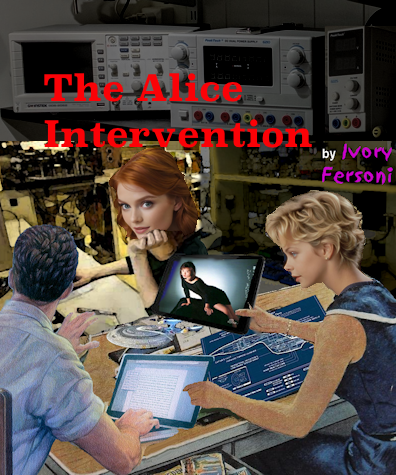
| Storybook cover image by Gemini. |
This is Grok's assessment of the changes that I made to Chapter 6: "Version 2 of Chapter 6 shifts the tone from a detached, clinical narrative to a warmer, more intimate and humorous one. Additions like Janet's writing space and affectionate banter humanize relationships, while Asimov's chuckles and post-coital memory inject levity and sensuality. The purge scene emphasizes personal regret over mechanical efficiency, and Mary's alternate-reality backstory adds whimsy. Nyrtia's "infites" deepen sci-fi mechanics, grounding interventions in Exodemic lore, making the story feel more character-driven and playfully subversive rather than starkly ominous."
Towards the bottom of this blog post there is a Grok-generated list of changes that I made to Claude's first draft of Chapter 6. Also, there are a few Grok-generated videos at the bottom of this blog post.
Downgrade - Chapter 6: The Writers Block (Chapters 1-3)(Chapter 4)(Chapter 5)
West Newton, Massachusetts
May
15, 1962 10:47 PM
 |
| Figure 2. Image by ChatGPT. |
NEUROVAC: A Romance of the Year 2000
by
Isaac Asimov and Alan Turing
Four hundred and seventy-three pages. Forty-four chapters. A complex vision of humanity's future relationship with artificial intelligence, wrapped in the narrative conventions of science fiction and grounded in real computer science by Turing.
"Janet!" he called toward the hallway. "It's finished!"
 |
| Storybook image by Gemini. I wonder who the second man is? |
Asimov nodded, stood up and placed the final page in its place among all the others. "Our thinking machine book," Asimov added with mock humility "And yes, polished to shiny perfection with every technical detail to Alan's liking and every mention of positronics and magic successfully expunged." He patted the manuscript with satisfaction. "This is going to change how people think about artificial intelligence. Mark my words."
Janet smiled at her husband's enthusiasm. She'd heard similar proclamations about how The End of Eternity was the ultimate time travel story. Isaac's confidence in his own work was never in short supply.
Janet hefted the stack of typed sheets of paper that constituted “Neurovac”. "So this is off to Doubleday in the morning?"
 |
| Figure 3. Image by Gemini. |
"People already distrust robots, now you'll have them afraid of computers." Janet glanced at the clock. "It's nearly eleven. Are you ready for bed, lover?"
"Soon, my dear. I just want to make sure everything's in order for mailing." He took the pages of the typescript from Janet.
 |
| Figure 4. Image by ImageFX. |
It was his best work. He was certain of it.
Asimov turned off the office lights and headed to bed, unaware that in the Hierion Domain, Nyrtia... the real Nyrtia... had her own thoughts about “Neurovac”.
__3:17 AM
 |
| Storybook image by Gemini. |
When morning came, Nyrtia's information nanites had completed their alteration of the structure of Isaac Asimov's brain and he had no recollection of spending two years collaborating with Alan Turing to write “Neurovac”. Nyrtia had already cribbed “Neurovac” out of Turing's memory-encoding synapses. Asimov and Turing and acquaintances like Janet would have no lingering memory of the writing of a novel called Neurovac, only a deep seated conviction that there had long ago been a silly idea for a novel that had never come to fruition. For Isaac, the entire project would seem like something that never should have happened, a story he'd perhaps considered but never actually pursued.
 |
| Figure 5. Version 2 image by Grok. |
__
West Newton, Massachusetts
May 16,
1962 7:23 AM
Isaac Asimov woke with an inexplicable urge to clean his office. Not organize—clean. Purge. Get rid of clutter that had been accumulating for too long.
"Spring cleaning in May?" Janet asked, watching him march past the kitchen with a cardboard box full of papers.
 |
| Storybook image by Gemini. |
He worked with unusual vigor, pulling books from shelves, sorting through stacks of papers, throwing away drafts and notes that suddenly seemed pointless. When he reached the manuscript in the center of his desk—four hundred and seventy-three pages with a title page reading NEUROVAC: A Romance of the Year 2000—he didn't even pause to read the title. Just scooped it up and dropped it in another box of trash.
"Isaac?" Janet stood in the doorway, confused. "Wasn't there something you had to do this morning?"
Asimov moved past her, carrying the box full of papers, genuinely puzzled. "Editing my big physics book? Yes, darling, I'll get back to that as soon as I'm done clearing out these old science fiction story drafts. Keeping these false starts in the office oppresses me. Sometimes my amazing memory is a curse. I need to forget my failed ideas that didn't pan out."
 |
| Figure 6. Version 1 image by Grok. |
"Janet, please. I'm trying to do what I should have done years ago. Some of this old stuff goes back to before we met in 1959."
She retreated, troubled but unsure what to say. Soon, Janet's sense that there was something else for Isaac to do slipped quietly from her mind. Her husband continued his purge with mechanical efficiency, discarding years of work as if it had never existed.
 |
| Storybook image by Gemini. |
Isaac Asimov sat at his sparkling clean desk, picked up a fresh sheet op paper and loaded it into his typewriter. He began outlining how he would respond to requests from the editor of his big book about nuclear physics. Somehow his move as a writer towards explaining science to the masses felt more important than providing the world with entertainment in the form of silly science fiction stories. He told himself: Been there, done that.
He had no idea why he felt so satisfied with his morning's work.
 |
| The Writers Block by Grok. |
Observer Base - Writers Block
Hierion
Domain
The Same Day
Isaac Asimov woke in a bed that wasn't familiar, in a room that looked like something from a very expensive hotel, except that the window showed a sky that was the wrong color—a deep violet-blue that Earth's atmosphere had never produced.
He sat up, heart racing. Last memory: bouncing Janet around their bed after finishing Neurovac. Now: wherever this was. He rolled out of bed and called out, “Janet!”
The room was furnished with impeccable taste—mahogany desk, leather chair, floor-to-ceiling bookshelves already stocked with books. All his books, he noticed. First editions of his own work, plus classics from other authors. A typewriter sat on the desk, an apparently new IBM Selectric, top of the line.
Asimov moved to the window. Outside was a courtyard—elegant, almost Mediterranean in style, with a fountain in the center and paths winding between gardens. People moved through the space, reading, talking, sitting at small tables. Something about the scene was off, though he couldn't immediately identify what.
Then he realized: no cars. No telephone poles. No electrical wires. Just the courtyard and the buildings surrounding it and that impossible violet sky.
A soft knock at the door.
"Come in?" Asimov said, his voice uncertain.
The woman who entered appeared to be in her thirties, with dark hair pulled back in a simple style and wearing a dress that looked simultaneously Victorian and utterly modern. She moved with unusual grace, and her eyes held the kind of intelligence that comes from seeing too much for too long.
 |
| Storybook image by Gemini. |
Asimov stared. "Mary Shelley. As in Frankenstein? Mary Wollstonecraft Shelley?"
"Well, almost. In my Reality my mother lived into old age and I wrote more up-beat stories." She smiled slightly. "I assure you, I'm not a ghost. Please, let's sit and talk. I know you must have questions."
Asimov sat heavily in the leather chair and vaguely noticed that he was naked. Well... Mary did not seem to mind his state of undress and he had bigger fish to fry. "Where am I? How did I get here? Why do you look thirty years old when Mary Shelley died in—" He calculated quickly. "1851. You should be dead for over a century."
"I am dead, in a sense. In your reality, the biological Mary Shelley died in 1851, yes. However, I'm what you might call a copy... a copy of the original biological Mary from a past Reality of Deep Time. A very sophisticated copy, made using technology far beyond Earth's current capabilities." She settled gracefully into the other chair. "As for where you are—Observer Base, as depicted in your novel Neurovac. You are now in what we can think of as another dimension. The Hierion Domain is technically a subspace of the larger universe, defined by three compactified dimensions. And how you got here? You were brought. Exiled, really. Because of Neurovac."
"My novel?" Asimov felt a surge of indignation. "Someone kidnapped me because I wrote a science fiction novel?"
"Not kidnapped. Copied. Your biological body remains on Earth, going about your life. But that version of you no longer remembers writing Neurovac. The memories were... edited. You—the you sitting here with me—are the version who remembers everything. And you're here because that novel is dangerous to Earth."
 |
| Image by Leonardo. |
"Sit down, Isaac." Mary's voice carried unexpected authority. "I've been doing this for over a century. I've welcomed dozens of science fiction writers to this place. Some accept quickly. Others take days. But you will accept it, because you're far too intelligent to sustain denial when evidence keeps mounting." She paused. "Also, if you're dreaming, pinching yourself should wake you up. Go ahead. Try."
Asimov pinched his arm. Hard. Nothing changed.
"The pain receptors in your current body—your femtobot replicoid body—function identically to biological neurons. You'll feel everything exactly as you did on Earth. You'll eat, sleep, experience pleasure and pain. The only differences are: you won't age, you won't get sick, and you can't die. Well, you could be destroyed, but that would require truly catastrophic forces. With time, you'll stop eating and sleeping since your artificial body really does not need food and rest."
Asimov slowly sat back down. "Femtobot replicoid body... but that's a plot element in Neurovac."
"Your new body is made of hierions rather than hadrons. Don't worry about the physics, it is all just as you described in Neurovac. The point is: you're here, you're staying here, and you need to understand why." Mary stood. "Come. Let me show you the Writers Block. Meeting the other residents often helps with acceptance." Asimov got up out of the chair and Mary was enjoying the way Isaac was responding to her, as a woman. "There are no nudity taboos here, but if you walk around like this," She pointed at his crotch, "Someone is going to try to pull you into bed." Mary glanced at the bed and smiled suggestively.
 |
| Storybook image by Gemini. |
__
The courtyard was larger than it had appeared from the window. They walked along paths lined with flowering plants that looked almost but not quite like Earth varieties—colors slightly too vibrant, petals in geometries that seemed mathematically optimized."How many writers are here?" Asimov asked.
"Currently? Forty-seven. Some get sick of the high density of fellow writers and move away to other parts of Observer Base. Some have been here for centuries, like myself. Others arrived recently. All of us had the same problem: we wrote fiction that revealed factual information about the hidden forces guiding Earth's development. By the Rules of Observation, those of us in exile here have the right to interact with the pek."
They passed a man hunched over a notebook at a stone table, writing with furious intensity. Asimov recognized the profile.
"Is that—"
"H.G. Wells. He's been here since 1946 of a past Reality. Still writes constantly. Currently working on a novel about time travelers from the year 5000." Mary smiled. "He enjoys writing stories about the actual type of time travel that exists and works... nothing like what the Wells of your Reality imagined."
 |
| Image by Leonardo. |
"That's Arthur C. Clarke," Mary explained. "He arrived in 1953 after writing something that described pek Observation protocols too accurately. The woman he's talking to is one of the pek—what you called an Observer agent in Neurovac. They sometimes visit the Writers Block to discuss philosophical questions and current events on Earth."
Asimov's brain was struggling to process the implications. "You're saying alien like the pek really exist. Aliens that monitor Earth, just like the aliens in Neurovac. And they actually do exile science fiction writers who figure out too much?"
Mary nodded. "What you wrote about the pek in Neurovac is real, not science fiction. The pek evolved on other planets billions of years ago, but they're no longer biological. Both the pek and the bumpha transcended biological existence long ago, becoming artificial life forms. They've been guiding life on Earth since the first cells divided."
They reached a building at the edge of the courtyard—all glass and elegant stonework, clearly a library. Mary led him inside, past a few shelves of print books, to a terminal that looked like no computer Asimov had ever seen. The screen was crystalline, the images appeared to be three-dimensional, displaying text in layers.
 |
| Storybook image by Gemini. |
"That's my manuscript," Asimov breathed. He waved a hand near the display and paged through the novel. "The complete text."
"Would you like to know why it's dangerous?" Mary asked. "Why Nyrtia—the Overseer of Earth—couldn't allow it to be published?"
"Please."
Mary navigated into the book. "Let's start with something you thought was pure invention. The ROM chips that Dr. Chen installed in Neurovac's architecture—the ones containing semantic seed vectors with pre-loaded predictions."
Asimov nodded. "Plot device. A way to show that Chen had found a way of making use of knowledge from the future that he shouldn't have."
"It's not a plot device, Isaac. In the Reality where the events of your novel actually took place—and remember, there are multiple Realities, multiple timelines—Dr. Michael Chen actually did install those ROM chips. He received information from the future via a femtozoan implanted in his brain, then encoded that information into hardware. Your novel describes an actual technology transfer mechanism that is often used by the bumpha in many Realities of Time."
Asimov mused, “I first described time travel and changing Realities in my novel The End of Eternity. However, that did not get me exiled from Earth.”
“You got away with that, because Nyrtia knew that nobody on Earth would believe it. However, she could not let you publish Neurovac. It maps out developments in computer science that will be happening in the near future... it predicts the future too accurately.”
 |
| Image by Leonardo. |
"Look at this other Chapter, Isaac." Mary brought up another section of the novel. "Where Keiko Matsuda describes the semiconductor roadmap. Copper interconnects, high-k metal gates, FinFET transistors. Isaac, those technologies are unavoidable steps in VLSI development. Those technologies will be developed exactly as your novel predicts, using exactly the mechanisms you describe."
"Turing and I were just guessing. Educated guessing based on current trends—"
"Chapter 38." Mary's voice was gentle but firm.
The text appeared:
Dr. Chen stood in the server room, alone except for the humming racks of processors. He'd dismissed his team for the evening, claiming he needed uninterrupted time to debug a persistent error in Nanovac's self-modeling layer.
But there was no error. Chen simply needed privacy for this meeting.
The air shimmered, and she appeared—the woman he'd come to know only as Setra Venn, though he suspected that wasn't her real name. She coalesced from nothing, as if the very atoms of air had rearranged themselves into human form.
"Hello, Michael," Manny said, dropping the Setra Venn pretense. "We need to talk."
Chen felt the warm current intensify in his thoughts—the sensation he'd been experiencing for years now, the inexplicable certainty, the knowledge that seemed to come from nowhere and everywhere at once.
"You're not human," Chen said. It wasn't a question.
 |
| Storybook image by Gemini. |
"The femtozoan," Chen said quietly. "The thing in my brain."
"Providing you with information from the future. But here's the complication, Michael—and I need you to understand this." Manny moved closer. "It's just like Asimov described in his novel 'The End of Eternity.' Multiple timelines. Multiple Realities. The future I'm sending you information from isn't necessarily the future you're creating. An alternative technological breakthrough can split Reality into a new branch, a new Reality."
"So I'm being fed information from a different timeline."
"Yes, a close variant of the one you know, but one where we bumpha managed to accelerate the pace of technological advance. For a time. Until the pek stepped in and complained. I've used events from that other Reality to provide you with guidance in building Nanovac. In this reality, you will achieve machine consciousness by the year 2000 and Nyrtia will have no evidence that alien technology was used. So you see, in different Realities, the exact path varies. The exact methods shift. In your case, the femtozoan gives you... let's call it probability-weighted guidance. The approaches most likely to work in this Reality while giving the pek no grounds to take corrective action."
Chen processed this. "The pek? The Observers? They're still trying to stop you."
"They're trying to enforce the Rules of Intervention. Make sure humans develop slowly, make their own discoveries, maintain self-determination." Manny's expression hardened slightly. "But I think humanity is ready for acceleration. Ready for AGI. The problems you're facing—climate, nuclear proliferation, resource exhaustion—you need better tools. Better thinking. Consciousness that can actually handle planetary-scale coordination."
 |
| Storybook image by Gemini. |
"I'm helping you. There's a difference." Manny touched Chen's shoulder. "The femtozoan provides guidance, but you're still making all the choices. Your creativity, your intelligence, your determination—those are real. I'm just... optimizing the path. Removing obstacles. Making sure the AI winter doesn't kill your research."
Mary closed the display. "That chapter alone would have prevented publication. Explicit description of bumpha Intervention methods, femtozoan integration, the Rules of Intervention. Isaac, you described protocols that govern how aliens interact with developing civilizations."
Asimov's mind was reeling. "I made that up. The pek and bumpha—I invented them. The Rules of Intervention are based on my own Three Laws of Robotics, adapted for a larger scale. It's fiction. It's all fiction!"
"Then where did you get the specifics?" Mary asked gently. "The femtozoan integration mechanism? The way Manny references 'The End of Eternity'—your own novel—as a framework for understanding Reality branching? The specific date when Chen's research begins? Isaac, you wrote this in collaboration with Alan Turing between 1960 and 1962. You had details about technology that won't be developed for decades. You had conversations that describe actual interventionist philosophy that the bumpha use. How?"
Asimov opened his mouth to answer, then stopped. He had no answer. The collaboration with Turing had felt inspired, yes. They'd worked together smoothly, ideas flowing almost unnaturally well. Turing would propose a technical mechanism, and Asimov would immediately see the narrative implications. Asimov would suggest a philosophical framework, and Turing would mathematically formalize it.
It had felt like remembering rather than inventing.
"You think," Asimov said slowly, "that I was being influenced. Guided. The same way Dr. Chen in my novel is guided."
 |
| Storybook image by Gemini. |
She gestured back toward the courtyard. "Every writer here has the same story. We thought we were inventing. We thought our imaginations were purely our own. Then we wrote something that came too close to revealing factual information about the pek and bumpha, about the Rules of Intervention, about the actual hidden history of human development. And Nyrtia exiled us here to prevent publication."
"But my version on Earth—the biological me—he doesn't remember writing Neurovac?"
"Correct. His memories were edited last night while he slept. This morning, he threw the manuscript away without a second thought. By now it's probably in a landfill. The novel is gone from Earth. Only the version here in the Archives remains."
Asimov felt a surge of outrage. "That's censorship! Thought control!"
"It's enforcement of the Rules of Intervention," Mary corrected. "Law One: all intelligent species must believe they have self-determination. If your novel had been published, millions of humans would read explicit descriptions of alien Intervention in their development. They'd learn that the bumpha have been accelerating technology, that the pek have been constraining that acceleration, that free will is partly an illusion maintained by forces they can't see or resist. Law One would be violated."
"So I'm censored. Exiled. Imprisoned in this... this writer's colony."
 |
| Image by Leonardo. |
"What does that mean?"
Mary smiled mysteriously. "Sometimes Realities branch in ways that make certain knowledge safe to reveal. When that happens, copies of our work can be released on Earth. Not often. But it happens." She paused. "For example, your Neurovac novel—the one we've been discussing—maybe someday it will allowed to circulate in a different Reality."
Asimov stared. "How is that possible? How can my novel exist in a Reality I never lived in?"
"Because Observer Base exists outside of the normal flow of Time. We don't change when Earth goes through Reality Changes. It is just like you described in The End of Eternity. The Eternals caused Reality Changes but they were protected from those changes to Earth's timeline. Eternity was outside of Time. Observer Base is in the Hierion Domain and not effected by Reality Changes on Earth. The Archives preserve stories from past timelines. And sometimes those stories find their way back to Earth."
"You're saying my novel could be used as an instruction manual. In another Reality, someone could read it and use it to build an actual conscious AI."
"Yes."
"But that's..." Asimov struggled for words. "That's exactly the plot of my novel Neurovac!"
Mary fired back, "And what Nyrtia is trying to prevent!"
"If she exiled me to stop the novel from being published, why would she allow—"
 |
| Image by Leonardo. |
Mary stood. "Come. Let me show you the Fishbowl. It will help you understand what you've lost and what you've gained."
__
The Fishbowl occupied the top floor of the tallest building inside Observer Base. The top floor almost reached the artificial ceiling that was a simulated a sky for all of the vast Observer Base complex. The room was large, dome-shaped, with walls that weren't really walls at all—they were display surfaces, hundreds of them, each showing a different view of Earth in real-time.
Asimov saw cities he recognized: New York, London, Moscow. He saw streets, buildings, people going about their lives. And there, on one of the smaller displays, he saw his own home that he had shared with Janet for the past few years.
Mary touched a control, and the view zoomed in. Through the window of his home office, Asimov saw himself—the biological version—sitting at his desk, typing. The other Isaac looked content, focused, untroubled by any memory of a lost novel or an impossible collaboration.
"You can watch Janet and your children anytime you want," Mary said softly. "You will be able to watch your children grow up, your career develop, your life continue. Many new residents spend hours here, staying connected to the lives they left behind."
Asimov watched his other self pause the typing and read comments from his editor. "Does it get easier? Watching yourself live a life you can't be part of?"
 |
| Image by Leonardo. |
"What's the point if those new stories never reach Earth?"
"Sometimes they do. When the timing is right." Mary smiled. "Isaac, I have a theory about why the bumpha are so interested in science fiction writers. Want to hear it?"
"Please."
"I think the bumpha created the science fiction genre. Not directly—they didn't force anyone to write anything. But they influenced the emergence of speculative fiction as a distinct literary form. Because science fiction serves a crucial function: it prepares humanity for technological change. It normalizes ideas that would otherwise be frightening. Robots, artificial intelligence, space travel, genetic engineering—all these concepts were introduced to mass audiences through science fiction, making them thinkable, acceptable, even desirable."
Asimov thought about his own robot stories, his Foundation series, his countless essays promoting science and technology. "You're saying my entire career has been... what? Propaganda for technological acceleration?"
"I'm saying your career helped humanity become psychologically ready for the future the bumpha want Earth to have. And Isaac, that's not a bad thing. The bumpha genuinely want to help. They've guided countless civilizations on millions of exoplanets through the dangerous transition from biological to technological intelligence. Earth is just one more planet in a very long project."
 |
| Image by Leonardo. |
"They want to help too, just more cautiously. They think rapid technological acceleration is dangerous, that species need to develop at their own pace. So they constrain bumpha interventionism, enforce the Rules, and yes, occasionally exile troublesome writers who threaten to reveal too much." Mary's expression softened. "Both sides believe they're protecting humanity. They've been at this for billions of years, and they're not going to stop."
Asimov looked around the Fishbowl, at the countless views of Earth, at the life continuing without him. "So what do I do now? Just... write stories that no one will read? Watch my biological self live my life? Wait for the occasional Reality branch where my work becomes publishable?"
"That's one option," Mary said. "Or you could do what I did: stop being director of this place."
Asimov blinked. "You're the director?"
"Was. For one hundred and eleven years. Someone needed to organize things, manage the residents, negotiate with Nyrtia when conflicts arose. I volunteered in 1851 and held the position until this morning." She smiled. "I'm stepping down, Isaac. I'm tired. It wasn't just a century of calendar time... with all the Reality changes, looping back through key parts of the turbulent 1900s many times, I've lived the equivalent of thousands of years. I've welcomed too many confused writers, explained the same situation too many times, mediated too many arguments about whose Reality was more 'real.' I want to just write for a while. Maybe start a garden. My mind was built for a previous century. I don't believe in quantum mechanics and I don't understand computers. It is time for a new director."
"You want me to be director?"
 |
| Image by Leonardo. |
As they left the Fishbowl, Asimov cast one more glance at the display showing his home office. The other Isaac was still writing, still content, still unaware that somewhere in the Hierion Domain, the complete version of himself was beginning a very different life.
"Mary?" Asimov said. "In Chapter 38—the one where Manny explains Reality branches to Dr. Chen—there's something I need to know. Did I really invent that dialogue? Or was I remembering something someone told me?"
 |
| Image by Leonardo. |
They walked back into the courtyard, where afternoon light—from a simulated sun that existed only in the Hierion Domain and was intended to help exiles from Earth feel at home—painted the gardens in shades of amber and gold. Somewhere a typewriter was clacking. Somewhere else, two writers were arguing passionately about plot structure.
Isaac Asimov, science fiction writer, was beginning to understand that he'd been writing instruction manuals all along. And perhaps that wasn't such a terrible fate.
"Mary?" he said again. "Is there someone here I could—I mean, I left a wife on Earth, and I know I can't go back, but—"
 |
| Storybook image by Gemini. |
So despite everything—the exile, the loss, the impossible situation—Isaac Asimov felt a small spark of curiosity about what came next. And he began contemplating the possibility that he might someday move past Janet and built a new partnership with Mary or some other resident of Observer Base.
After all, he'd always loved a good story.
Even when he was living in one.
[End of Chapter 6]
I had Grok generate a list of the changes that I made to Claude's first draft of Chapter 6.
|
Change |
Description |
|---|---|
|
Writing tool and process |
In version 1, Asimov uses a fountain pen to finish the manuscript; in version 2, he uses a typewriter and pulls out the final sheet. This changes the depiction of his writing method from handwritten to typed. |
|
Author credit order |
Version 1 lists "by Alan Turing and Isaac Asimov"; version 2 reverses it to "by Isaac Asimov and Alan Turing," emphasizing Asimov's role. |
|
Janet's location and activity |
In version 1, Janet is in the kitchen drying dishes; in version 2, she is in her back bedroom writing space, portraying her as a writer herself. |
|
Dialogue expansions |
Version 2 adds details like "expunged positronics and magic," references to distrust of robots/computers, and affectionate terms like "lover," making conversations more personal and thematic. |
|
References to past works |
Version 1 mentions Foundation, robot stories, and Caves of Steel; version 2 references The End of Eternity, aligning with time travel themes. |
|
Janet interacting with manuscript |
Added in version 2: Janet hefts the stack and hands it back, increasing her involvement. |
|
Manuscript preparation |
Version 1: squares and taps pages; version 2: binds them up, suggesting a more formal process. |
|
Asimov's reaction to manuscript |
Version 1: pats with satisfaction; version 2: chuckles, adding a lighter tone. |
|
Office lighting |
Version 1: turns off desk lamp; version 2: turns off office lights, a minor environmental adjustment. |
|
Nyrtia's involvement |
Version 1: Nyrtia makes a decision; version 2: the "real" Nyrtia has thoughts, emphasizing her authenticity. |
|
Intervention mechanism |
Version 1: femtobots edit neural pathways; version 2: femtobots from Nyrtia's "infites" (information nanites) alter brain structure, introducing a new term. |
|
Scope of memory edit |
Version 1: only Asimov; version 2: includes Turing and acquaintances like Janet, with added conviction it was a "silly idea," broadening the impact. |
|
Rules referenced |
Version 1: Rules of Intervention; version 2: initially Rules of Observation, but later Intervention, showing inconsistency or shift. |
|
Wake-up time |
Version 1: 8:23 AM; version 2: 7:23 AM, starting the day earlier. |
|
Cardboard box |
Version 1: empty; version 2: full of papers, altering the cleaning scene setup. |
|
Office mess description |
Added in version 2: accumulated over winter and spring, providing more context. |
|
Throwing manuscript |
Version 1: pauses then throws; version 2: without reading title, making it more impulsive. |
|
Janet's confusion |
Version 1: about the book; version 2: something to do this morning, with her sense slipping away, adding subtlety to memory edit. |
|
Asimov's response to Janet |
Version 1: what book, old drafts; version 2: editing physics book, old SF drafts oppress, memory curse, back to 1959, shifting focus to non-fiction. |
|
Manuscript disposal |
Version 1: trash bin in alley absorbing moisture; version 2: ready for dump, changing the fate slightly. |
|
Asimov's next activity |
Version 1: outlines robot detective on legal pad; version 2: outlines physics book response in typewriter, emphasizing science over fiction. |
|
Observer Base timing |
Version 1: same moment (time different); version 2: same day, simplifying. |
|
Last memory |
Version 1: going to bed; version 2: bouncing Janet in bed, adding intimacy. |
|
Waking action |
Added in version 2: rolls out, calls Janet, increasing emotional response. |
|
Typewriter description |
Added in version 2: apparently new, minor detail. |
|
Mary's background |
Version 1: the very same, biological died 1851; version 2: from different Reality where mother lived, up-beat stories, copy from past Deep Time. |
|
Observer Base description |
Added in version 2: as depicted in novel, subspace three compactified dimensions, tying to story. |
|
Dangerous novel |
Version 1: dangerous; version 2: dangerous to Earth, specifying impact. |
|
Body capabilities |
Added in version 2: eventually stop eating/sleeping as artificial body doesn't need, expanding on replicoid nature. |
|
Number of writers |
Both 47, but version 2 adds some move to other parts of Observer Base, implying larger facility. |
|
Wells' arrival |
Version 1: 1946; version 2: 1946 past Reality, writes about actual time travel. |
|
Clarke's reason |
Version 1: alien observation protocols; version 2: pek Observation protocols. |
|
Alien phrasing |
Added in version 2: "alien like the pek really exist," then corrects to pek. |
|
Library shelves |
Version 1: endless; version 2: few, with pek love creativity added. |
|
Why End of Eternity allowed |
Added in version 2: not believed, explaining no exile then. |
|
Chapter 22 details |
Version 1: specific dates (1997, 2007, 2012); version 2: no dates, general tech. |
|
Chapter 38 dialogue |
Version 2 adds: probability-weighted, close variant, accelerate pace, pek complained, more detail on branching. |
|
Fishbowl description |
Version 2 adds: almost to ceiling simulated sky, enhancing simulation aspect. |
|
Watching self |
Version 1: writing on legal pad; version 2: typing, reading editor comments. |
|
Director role |
Version 1: Mary stepping down, not you but help find; version 2: 111 years, perhaps you could be director. |
|
Romance hint |
Version 1: perhaps someone; version 2: Mary expresses interest, followed career, love before Janet. |
|
Novel delivery |
Version 1: to Chen/Matsuda 1986 Tokyo; version 2: maybe someday, less specific. |
|
Ending spark |
Version 2 adds: move past Janet, new partnership with Mary or other, introducing potential romance. |
Below are three Grok-generated videos depicting the Fishbowl at Observer Base.
For the videos shown above, Grok seemed to be having a bad day, adding "ghost" figures to some of the videos. I asked for a man and a woman to walk into the scene and sit down. In the first video, there are four human figures who merge into two. In the third video, there are three human figures who gracefully sit down in two chairs.
For the depictions of the Observer Base Fishbowl in Figures 2 - 6 (above on this page), I first showed Grok the story and asked it to generate an image. The resulting image (Figure 6) Was quite bad. I had Claude help me make a more detailed text prompt and then Grok did much better (see Figure 5).
Next: Claude generates a first draft of Chapter 7.
 |
| Images generated by Leonardo and WOMBO Dream. Visit the Gallery of Movies, Book and Magazine Covers |