Showing posts with label mutants. Show all posts

Oct 1, 2021

In My World

The World She Wanted
Two of my favorite science fiction story tellers are Jack Vance and Isaac Asimov. Sometimes both of them would shift out of science fiction mode and write a fantasy story in which no effort was made to provide a fictional scientific account of what was happening. This is problematical for me because I suffer from "fantasy blindness". Fantasy stories make me uncomfortable because I don't know what the rules are.

Look at the cover art by Milton Luros shown in the image to the right. In a science fiction story, this might be an illustration of using some kind of advanced technology to pass between two cities located on two different worlds (long-range teleportation) or possibly the same city existing in two different ages (time travel). A third option, and the one suggested by Philip K. Dick in "The World She Wanted" is that Allison Holmes is moving between two "parallel" universes.
Rumfuddle
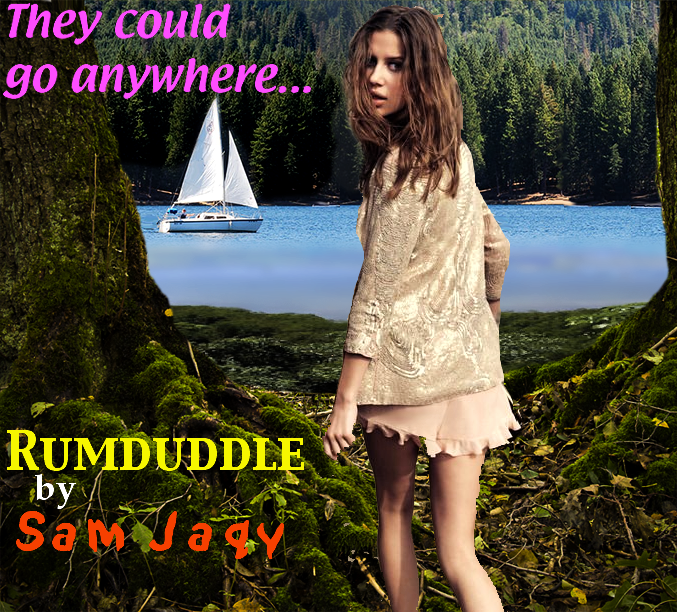
Back in 2017 when I was commenting on The Gods Themselves by Isaac Asimov (1972), I discussed the popularity of science fiction stories about "multiple" or "alternative" universes. Jack Vance wrote his own multiverse story "Rumfuddle" (1973).

In the image shown to the left, I imagine an alternative version of Vance's story ("Rumduddle") that was published by Vance's analogue in the Ekcolir Reality. Philip K. Dick's story, "The World She Wanted", is a multiverse story that was published 20 years earlier, in 1953. Was Dick ahead of scientists in writing about a multiverse or was he simply making a magical fantasy story?

image source

For The Gods Themselves, Asimov depicted his multiple universes as natural phenomena and you needed advanced technology (a "pionizer") to move anything between two alternate universes. A fanciful depiction of a poionizer is in the image to the right. There is no magic in The Gods Themselves and no problem classifying that story as being science fiction. Was Dick's story "The World She Wanted" a science fiction tale or did he turn his back on science?

The Power of Positive Just Thinking. Philip K. Dick depicted Allison Holmes as being like a goddess. When she decides that it would be fun to visit a casino and gamble, suddenly a casino appears and she gets to have her gambling spree. Strangely, when she is in a bar and wants a martini, she asks for one and waits for it to be served to her. We are not supposed to understand the basis of Allison's amazing ability to (sometimes) make things happen, just accept her claim: "This happens to be my world." 

interior art for "The World She Wanted"
 My World. That's how she puts it to Larry, a dude that she meets in a bar. Allison tells Larry that they are going to get married because that will make her happy and he better get used to the idea. Larry is not happy to hear Allison's theory that he is nothing more than her toy, a mere component in a world that Allison controls from top to bottom. Reluctant to play along with Allison and simply enjoy the situation (she wins a huge amount of money gambling), Larry starts to complain: what about me? Allison explains that "the Great Designer" has made millions of worlds, including one world for each person that is their own personal world. Because Allison is cute, Larry agrees to tag along with her for a while.

the magical Allison
Larry asks Allison how she knows that this is her world. She claims that she simply figured it out, but she also mentions that it was already pretty clear what was going on when she was a little girl. Nothing really bad ever happened to her. Larry asks her why there is evil in the world if "the Great Designer" made this the best of all possible worlds for Allison's personal happiness. She has an answer for that: "the Great Designer" allows the many different worlds to "overlap", so many of the features of Allison's world have "leaked in" from other parallel universes. 

In the end, Larry decides that he can't live in Allison's version of the world. Just by thinking about it, he makes her leave his world and she slips off into another world of her own, which Larry briefly glimpses as she passes through the "portal" that connects the two universes.

image source
Manny the Bumpha
Magic
It is possible that Dick tried to make his magical fantasy story seem to be science fiction by including one line in which Allison mentions that while growing up and figuring out that this was her world, she learned about "scientific speculations of the existence of a Creator". Having just written Old Time Gaming, that one line in "The World She Wanted" resonated with me.

For the Exode Saga, I imagine that Grean the Kac'hin uses advanced Huaoshy technology to shape Earth into "the best of all possible worlds". Using time travel technology, Grean can engineer the course of human history and Grean gets "behind the scenes" help from Many Sails, the bumpha. As depicted in Old Time Gaming, everything always works out well for Rylla because Manny is looking out for her. In the Exode Saga, I always take pains to create a fictional science explanation for what happens and the alien Huaoshy essentially created we humans.

Vance the world-thinker
"The World She Wanted" reminds me of Vance's 1945 story "The World-Thinker". In that story, Vance imagined an alien who could create entire planets full of people just by thinking about them. Story tellers who are constantly creating strange new societies for the imaginary planets in their stories can't resist imagining scenarios in which entire worlds can be thought into existence.

Dianetics. I've previously blogged about the science fiction origins of Dianetics. Hubbard used a fantasy story about a dream world ("The Masters of Sleep") as his launching platform for Dianetics. I would not be surprised if Philip Dick was inspired to write "The World She Wanted" by the fantasy stories that were published by Hubbard during the time when he invented the fake "science" of Dianetics.

In the Asimov Reality
 Infinite Mutation. Supposedly, Philip Dick took at least one zoology course in college. I have to wonder if he was ever interested in science. I suspect he wrote stories for science fiction magazines only because he had little luck selling his fiction elsewhere. Another story published by Dick in 1953 was "The Infinites" (Planet Stories, May). 

For "The Infinites", we are whisked off through space to an asteroid that is located "half-way across the galaxy" and which has a thick Earth-like atmosphere. I recently commented on "The Hierophants" by Margaret St. Clair, one of many science fiction stories that reveal one fact: their authors did not know the difference between a planet and an asteroid. I suspect that Philip Dick did not care about the differences between planets and asteroids.

interior art for "The Infinites"
Continuing to provide readers with the background and setting of his story, the next casual space age concept from Philip Dick is the idea that Earthlings are trying to "map and prospect every bit of rock in the galaxy". When I see statements like this in science fiction stories, I begin to suspect that the author does not know what a galaxy is.

Bacteria in Space. For "The Infinites", Dick adopted the idea that space is full of bacteria. Spacemen need to take care because some of the bacteria drifting through space will "eat" the hull of spaceships. In Dick's imagined galaxy, every planet, nay, every asteroid has life because through the wonders of panspermia, bacteria falling from the sky will seed "every bit of rock in the galaxy" with life.

The Man Who Evolved
Dick for 100. I've previously blogged about absurd science fiction versions of evolution. For many writers, mere mention of the word "mutation" is enough scientific content to float their science fiction story. What about Philip Dick and the zoology class he took in college... can he write an interesting story about evolution or is he going to invent some kind of magical mutation?

Here in 2021, Earthlings are struggling to find another world besides Earth that has life. Spaceship C-57-D X-43y finds the first asteroid ever in the whole galaxy where there is no life.

original cover art by Harry Parkhurst
What is going on? Fortunately, X-43y carries some laboratory guinea pigs that can be used to test for the mysterious force that prevents anything from surviving on this lifeless asteroid.

Spaceship X-43y is a small exploration ship with only three crew members. However, when Captain Eller calls down to the science lab, he has to pick up "the com" and dial the right number. 

Accelerated evolution. X-43y is hit by a blast of radiation coming from the center of the asteroid and all on board begin to evolve at a fast rate. This plot seems lifted right out of the 1937 story "A Million Years Ahead" by Edmond Hamilton. Dick assures his readers that the X-43y has shields that protect against actual cosmic rays, but the radiation from the asteroid is "very close to cosmic ray patterns".

energy beings
Within a few days, through the wonders of radiation-induced "mutation and alteration in cell growth" the three crew members turn into "monsters" with enormous bald heads. This is particularly hard on the one crew member who is female because, you know, she's a girl. How will she live now without her former pretty head of hair? To answer this chilling question, tune in next week for the next episode of Pigs in Space!

The crew of X-43y is saved by the guinea pigs. The humans have undergone radiation-induced accelerated evolution and with their huge brains they develop telepathic powers. Like the humans, the guinea pigs also "evolve" into a super-advanced new form of life that is composed of "pure energy". I've previously complained about the many "energy beings" that stroll through bad science fiction stories. 

brain in a box: the dis-embodied Sargon

Before the transformed pigs Infinites sail off to the Q continuum, they restore the humans (actually only two of the three) to their original physical form. The entire story arc of "The Infinites" reminds me of the Star Trek episode "Return to Tomorrow".

I despise stories in which a great technological breakthrough occurs once, never to be repeated. Such is the plot of "The Infinites". We never learn how accelerated evolution was possible... nor are we meant to. The story is not really science fiction even-though Dick stuffed it full of old Sci Fi plot elements. I can't really complain; I'm sure Dick was trying the best he could to earn a living and he was 10 years too early for Star Trek.

interior art by Herman Vestal
Speaking of pigs, Philip Dick also published a story called "Beyond Lies the Wub" in Asteroid Planet Stories. A spaceship from Earth is having trouble with its food supply, so it takes on board some animals from Mars: food to be eaten on the return space flight to Earth. One of the creatures is a telepathic "wub", who likes to discuss literature and philosophy. The Captain of the spaceship is intent on eating the wub. In the end, the wub gets the last laugh. It transfers its mind into the Captain and gets to enjoy eating itself.

In the Asimov Reality.
original cover art by Allen Anderson
I enjoy stories about mind transfer, as long as there is some fictional science account of how a mind can jump from one body to the other. "Beyond Lies the Wub" was particularly hard to enjoy because there was no attempt made to explain Dick's depiction of Mars as a planet rich with animal life and the Captain's disgusting insistence on killing and eating the mild-mannered and highly intelligent wub.

In "Beyond Lies the Wub", the alien's mind "simply" integrates into that of the Captain, who continues living as if nothing had happened. In any case, I'm thankful that the magazine editor and/or Dick terminated the story quickly. We can look upon this as a kind of sick joke story that I'd love to see a vegetarian review.

art by Margaret Brundage (see)
But then why?
If I don't enjoy the style of story that was written by Philip Dick, then why do I read them? I love the idea that some science fiction story writers have been selected by lurking and unseen space aliens and their stories used to provide we Earthlings with hints about alien technologies. 

I'm currently writing a new story about aliens using Empedocles as a tool for accelerating scientific advancement on Earth. In the case of Philip Dick, I like to pretend that there was an aborted attempt to use him as a conduit for transmitting information about advanced technologies to Earth (see "The Qua Intervention").

interior art by Leo Morey
Mr. Spaceship. I can't resist commenting on one more early Philip Dick story, "Mr. Spaceship", first published on the January 1953 issue of Imagination. I love the idea of thinking machines and I can usually enjoy stories about all sorts of artificial lifeforms. In the Exode Saga, one of the characters is Many Sails, a sentient spaceship. Many Sails is composed of zeptites and can slip in and out of the Sedron Domain, but sometimes "she" takes onboard biological organisms as passengers and during those times she can adopt the form of a conventional spacecraft. For "Mr. Spaceship", Philip Dick imagined placing a human brain (that of professor Michael Thomas) inside a steel rocket ship and allowing the brain to take control!

image source
Rockets and Rayguns. I can't stop myself from comparing Dick's 1953 story  "Mr. Spaceship" to the 1931 story "The Jameson Satellite" by Neil R. Jones which (discussed here) helped to inspire Isaac Asimov's interest in robots. The "Jameson satellite" was a rocket ship designed by Professor Jameson to place him into orbit 65,000 miles above Earth where he would be preserved until long after the demise of the human species. The plan for Jameson's "funeral rocket" involved a Super-Duper™ "radium ray" that would repulse all approaching meteoroids.

After 40,000,000 years, a Zorome spacecraft finds Jameson's dead body and using their advanced technology, the alien Zoromes revive the dead Professor, "transplanting his brain into one of our machines". The re-animated brain of Professor Jameson goes on to have great adventures among the stars as a cyborg.

Mike's brain

In the case of "Mr. Spaceship" and Professor Thomas, Earthlings are at war with pesky aliens. The aliens use biomechanical weapons and are winning the war. As a counter strategy, it is decided to equip a spaceship with a human brain because, well... what could go wrong? However, Professor Thomas is a pacifist and rather than fight the aliens, he takes two of his former students off into interstellar space where they will be able to found a new branch of Humanity that does not reflexively fight wars.

In the Asimov Reality.

One of the interesting features of "Mr. Spaceship" is that it was planned that the brain of Professor Thomas would not remain conscious after being hooked into the navigation control system of the spaceship. Dick made little effort to go into details about how a human brain was built into a spaceship. 

Before having his brain placed inside the spaceship, Professor Thomas asks to know exactly what he is getting into. Philip Dick tells us that Professor Thomas got to look at the "theoretical diagrams" for the spaceship. Does that mean blueprints or engineering plans? Who knows? All we are told is that once the brain was placed inside a vat of liquid deep inside the spaceship, electrical charges at the surface of the brain were detected and used to control the spaceship's movements. Look ma, no hands!

In the Asimov Reality
Philip Dick also assured his readers that this futuristic spacecraft of his imagination used "jet turbines" to fly off of the surface of Earth and into outer space. Then, out past the Moon, the spaceship continues to maneuver using "blasts of the turbine jets". I wonder if Philip Dick knew that there is no air in outer space.

It would be interesting to know exactly what Philip Dick expected an unconscious human brain to be able to do, however the story makes it clear that the "unconscious" brain is expected to solve the complex equations required to guide a the spaceship through gravitational fields. "Mr. Spaceship" must have a sensory system, but this gets no mention by Dick. "Mr. Spaceship" was equipped with a microphone so that people could give verbal orders to Professor Thomas' brain. However, the "big surprise" in the story is that the disembodied brain of Professor Thomas is fully conscious. 

In the Asimov Reality
Soon enough, the brain of Professor Thomas "speaks" through the ship's electronic speaker, revealing that the brain is still conscious. During the test flight of "Mr. Spaceship", the ship goes "out of control" and stops taking orders. An attempt is made to reason with Professor Thomas' brain and get it to return control of the spaceship to the ordinary human pilot who is onboard. "Mr. Spaceship" reluctantly lets its passengers transfer to another spaceship then heads off into space at high speed.

We don't have to wonder why Earth is doing so poorly in the war against the Evil Aliens™. The next day, "Mr. Spaceship" returns to the Moon and tricks everyone in the Space Force. Unrecognized, "Mr. Spaceship" (there are now standing Space Force orders to destroy the runaway "Mr. Spaceship") picks up two of his former students and takes them away into interstellar space; a new Adam and Eve for starting a new pacifist off-shoot of Humanity.

My favorite line from "Mr. Spaceship".
I have to conclude that Philip Dick was blissfully ignorant of science and unconcerned about technical details in his science fantasy stories. Dick's style reminds me of Ray Bradbury who had the grace to admit that he wrote fantasy, not science fiction.

at war with the alien Yucconae
from Proxima Centauri
At the end of the story, "Mr. Spaceship" expresses optimism that as a cyborg, he can live for 100 years and nurture the first generations of a new human civilization on some distant world, getting them off on a good solid pacifist footing. Since Professor Thomas' brain is safely floating in a vat of liquid (similar story in 1936) at the center of the spaceship, it/he need worry about nothing... not even a supply of oxygen and glucose to keep the brain cells alive.

Last month (see this blog post) I mentioned that in the June 1952 edition of Startling Stories was an editorial trying to refute a claim that dreams of space travel were merely symptoms of a people running away from our troubles on Earth. Philip Dick's "Mr. Spaceship" provides a good example of a science fiction story that is all about running away from Earth's troubles.

interior art by Julian Krupa
Magazines such as Imagination seem to have been good places for Philip Dick to publish short stories.  William Hamling was looking for entertaining stories that did not require much thinking by the reader... or any large degree of scientific knowledge in the head of the author. 

I read the first published story by Hamling, "War with Jupiter" (published in Amazing Stories), a silly bit of military science fiction. Set 5,000 years in the future, it reads like a re-write of World War I in a space setting.

In that same issue of Amazing Stories was "The Weapon Too Dreadful to Use" by Isaac Asimov, his second published story. Under the editorial control of Raymond A. Palmer, Amazing Stories went in one direction while Astounding went in another. As a budding scientist, Asimov eventually became a better fit for Astounding.

In the Asimov Reality.
original cover art by Robert Fuqua
In the early days of the science fiction genre, astronomy was advancing and it was becoming doubtful that every planet in the Solar System had an intelligent species that could engage in World War I-style combat with Earthlings. Asimov quickly out-grew the urge to write stories about wars with space aliens and he later regretted depicting the surface of Venus as being like a jungle on Earth. In 1953, Philip Dick was still ready for war with aliens, but it is amusing that in "Mr. Spaceship" he could not even be bothered to provide a reason for the war between humans and the Yucconae. "Mr. Spaceship" reads like it was written in two parts and I have to wonder if it was started years before it was eventually finished.

In the case of "The Weapon Too Dreadful to Use", the young Asimov had a good reason for the war between Venus and Earth (the Venusians don't like Earthlings taking over their planet). 


irresistible Sci Fi plot elements
From my perspective (not interested in military science fiction), the first part of Asimov's story ("The Ancient Ruin", which takes place on Venus before the war) is the best part of the story. I'm a sucker for "ancient archeology" stories like Assignment Nor'Dyren. 

In part 2 of "The Weapon Too Dreadful to Use", Asimov descended into a dreary lecture on mind-body dualism and the fantastic Venusian technology that "has the power of disconnecting mind from brain". "The Weapon Too Dreadful to Use" concludes with one of the most despicable plot elements in science fiction: with the fantastic Venusian technology that wins the war being thrown away, never to be discovered again.

Isaac Asimov went on to earn a Ph.D. and he learned how to write interesting hard science fiction stories. I'm going to have to continue my search through Philip Dick's writings in order to learn how he matured as a writer of science fiction. John Fekete's view was that "Dick's reputation properly rests on the middle decade of his work, 1962-72". In my next blog post, I'll comment on some stories that were published by Philip Dick in that later time period.

Related Reading: "Living Space",  brain in a box and The Golden Man

Next: more stories by Philip Dick

interior art by Julian Krupa


Aug 8, 2021

Calling All Tourists

My Great Scientist at the campus of London.
 This is the third in a series of blog posts about my search for science fiction elements in the computer game Civilization VI. In the previous post, I had complained about my inability to obtain a Great Scientist, but I did finally obtain Erwin Schrödinger (see the image to the right →). Apparently the word "scientist" was not used until 1833 and that was about the game year when I got my one and only scientist. Early in the game, I was trying to accumulate science points because I expected computer technology to be important for my goal of attracting international tourists to England.

The 50 foot scientist.

Earthly "culture" in 1958
In case you are wondering, the other giant man standing there in the middle of London's commercial district (in the center of the image, above) is a spy, protecting the English Empire's vast gold reserves from foreign spies.

The year before I was born, the film Attack of the 50 Foot Woman came to the big screen. Seeing apparently gigantic (mutant?) human figures walking around in London and the rest of the English Empire adds a science fiction feel to Civilization VI. I wish the game designers had arranged to allow Great People like Erwin and naturalists (see below) to remain on the map after they provide their bonuses. 

Rather than stay on the map and provide some eye-candy during the game, the Great People and naturalists simply evaporate into thin air when their bonus has been given to a civilization. 🙁 

game mod allows naturalists on mountains
Teleportation. While playing Civilization VI, it looks like the human figures beam in to the game, perform their mission and then teleport away. This reminds me of my favorite Star Trek episode, "Assignment: Earth".

Besides waiting thousands of years to obtain a Great Scientist, the two other "big events" that I was rather impatiently anticipating during the long slow development of England from its founding in 4,000 BCE were 1) the arrival of naturalists and 2) the ability to build a British Museum. 

One of my goals was to build as many National Parks as I possibly could in an effort to attract more tourists to England. The image shown to the right illustrates a Civilization VI game modification that allows naturalist units to move onto mountain tiles.

Figure 1: Delhi National Park, east of the city Delhi
My goal of making multiple National Parks was what motivated me to develop my own religion. You need 1,600 "faith points" to buy your first naturalist unit and 1,800 points for your second naturalist. One of the most annoying parts of Civilization VI is the never-ending escalation in prices during the game.

I did not even notice the location of Delhi National Park (see Figure 1 to the left ←) until I got my first naturalist. In fact, my builder unit was just about ready to build a sawmill in the forest and a farm on that wheat resource. One of the rules for National Parks is that there can't be any improvements on the four map tiles of the Park.

Figure 2: future location of a National Park
I was paying particular attention to mountains that could be included in a National Park (see the example shown in the image to the right). I completely over-looked the flat land and river east of Delhi (Figure 1, above). The yellow dotted line along part of the boundary of Delhi National Park is the border of Macedonia. With any luck, this Park will attract plenty of Macedonian tourists! The only tourists who count towards winning a cultural victory in Civilization VI are international tourists. 

What I believed were two potential National Park Locations are shown in Figure 3, below. However, you can't turn four mountain tiles into a park because of the absurd game rule that naturalists can't climb mountains, a fact that I learned the hard way after spending $500 gold to purchase two of the mountain tiles in an effort to prevent them from being absorbed into Macedonia's expanding territory.

Figure 3: Mountains are "appeal" rated as "breathtaking", so many National Parks include mountains.

My second National Park was Pantanal National Park near London (see image below).

A naturalist is standing on the road that passes through the northern most tile of the Pantanal Natural Wonder.

a Park headquarters on hills
Before I understood the silly restriction that prevents naturalist units from moving onto mountain tiles, I wondered if a diamond of four mountain map tiles was not suitable as a National Park because there was no flat land for the park headquarters. Or, I wondered, maybe all my construction projects along the northeast side of these mountains prevented formation of a National Park. Upon building Pantanal National Park, I saw that it did not include any headquarters buildings and apparently not even a sign to inform visitors that they have entered the Park (see the image below).

Pantanal National Park seems to have no park headquarters, just a boundary fence.

The Colossus of Eastport.
In Civilization VI, there are little animations that continually run on some of the map tiles. For example, mining equipment can be seen at work on a tile where you have constructed a mine. 

Don't just stand there! Some of the features on the map are actually statues. For example, I built the Colossus wonder next to the seaport of my city Eastport (see the image to the right). I wish the naturalists who found National Parks could remain on the map and be seen interacting with tourists, otherwise, a park like Delhi National Park can look very empty. I had to send in one of my Apostles just to have something there on the endless grasslands of the park (see the image, below).

A hiker explores the vast, empty prairie of Delhi National Park

She's pissed. I earned a big red -96 for my war with India.

The cities of Delhi and Hyderabad were both originally part of India, but I captured them during a war (see the previous post in this series).

I was worried that by going to war relatively late in the game, after I obtained iron, the other nations of the world would be upset and not allow open border agreements with me, which would reduce tourism. I tried sending gifts to the other leaders, but doing so seemed to have no (or very little) effect on their unhappiness. 

Indian war casualties
Everyone except Alexander the Macedonian persistently denounced me as a warmonger, even hundreds of years after the end of my war against Gandhi. Ultimately, I learned that for tourism, it makes almost no difference if a foreign leader is mad at you and there are no open boarders. The tourists will still visit your attractions.

My war against India was good in the long run because it allowed me to stop continually struggling against the Hindu missionaries who constantly tried to convert my people to Hinduism. No longer having to create apostle units, I could save "faith" points towards obtaining a naturalist. Another benefit of the war against India was that it seemed to turn Alexander of Macedonia into my best buddy. 

Of great importance for my cultural victory strategy, the 150-year-long war against Gandhi produced many archeological sites which later provided most of the ancient artifacts that ended up in my museums where they generated huge amounts of culture points and were a major draw for international tourists.

England is Suzerain of Zanzibar.
By exploring the world with a scout, a caravel and a quadrireme I found all 12 of the City-states. Currently, in 1850, I am Suzerain of Zanzibar which means I get two special resources (cloves and cinnamon). Also, the sugar resource does not seem to be present in Australia.

artifact from the time of the England-India war
 British Museum. When I captured the Indian cities of Agra and Delhi, they both had a theater district that had already been built by Gandhi. I constructed museums in both of those cities, expecting that they would each hold six ancient artifacts. However, as shown below in Figure 4, both of those museums only hold three ancient artifacts.

I did not keep track of when I transitioned between the different eras during the game. I got the industrialization technology shortly before the start of the war in about 1550, so apparently I was in the Industrial Era during the war. One of the first few "ancient" artifacts that ended up in a museum in 1848 is shown to the left: an old newspaper found near Agra.

Figure 4. The collected artifacts at the museum in Delhi were automatically called "themed".

Figure 5. Foreign trade routes boost tourism by 25%.
Theater districts that I build do hold six artifacts (see the 6 ancient artifact "slots" for the museum in OrangePearls, in the image above). However, one part of the British Museum special benefits did apply to the museum in Delhi: the three artifacts were automatically called "themed" which nicely doubles the tourism benefits.

Gambling. Civilization VI is more like gambling than playing a game. Players never know what rules govern the computerized civilizations or determine the types of ancient artifacts that are found in the field. 

artifact from the defeated Indians
In Civilization VI, the players are forced to pretend that museum curators would be too stupid to control which artifacts are placed in their displays. This leads to the annoying task of trying to sort the artifacts by era and nation of origin after the museum displays are full. I'm grateful that the British Museum perks remove the need for that annoying task of artifact sorting.

In the past, I've mostly used trade routes to help provide productivity and food to my smaller, rapidly growing cities. You get a boost in the number of international tourists by sending a trader to each of the other nations in the game (see Figure 5, above). I was able to make a trade route to the capital city of each nation except Brazil, which may have had its capital at a location too far away from my cities. One of the benefits from building the Colossus is getting an additional trade unit.

another Indian artifact
As mentioned in my previous blog post, in 1440 AD there were three international tourists visiting England and 62 domestic tourists. The England-Indian war was from 1550 to 1700 AD. Not much had changed for tourists after three centuries: by 1760 AD, there were 6 international and 146 domestic tourists in England (see below). At that point in time, I was tied for third place
war artifact
in the race to attract international tourists. 

The archeological museum in Delhi opened in 1802, but then I had to train my first archeologist and did not get any ancient artifacts until the 1830s (see image to the right). This closely matches the historical timeline for the real British Museum. The Agra museum opened a few turns after the one in Delhi.

Tourism in 1760 AD. All international tourists in the England Empire were visiting London's palace ( 1 ), Stonehenge wonder ( 2 ) or the Holy Site ( 3 ) for the AllTogetherNow religion.

first dig
  The first archeological dig site (run by my first archeologist, Sigeberht) was right next to Delhi (see the image to the right). At some archeological sites you get a choice between two different artifacts from two civilizations; in this case I could get an Indian artifact or an English artifact. Other times, there is no choice. I was eager to explore this site, because it was blocking a forest resource from being developed with a sawmill, which would have provided additional benefits to Delhi.

Tourism in 1810. A few international tourists were visiting other English cities besides London (upper right). Eight of the eleven international tourists were visiting cultural sites in London. One international tourist was at the Delhi National Park. Due to my high culture, I had a growing lead in number of domestic tourists (171).

I built the Hermitage wonder in London.
When I got the technology for radio in 1802 there was a small surge in tourism. In 1810 I began making trade routes to foreign cities and in 1814 I completed the Hermitage wonder in London. 

The most dramatic and rapid increase in tourism (100% boost) came in 1840 when I got computer technology (maybe a Babbage Engine). My tourism points rate (this rate is different than the number of domestic tourists) increased from 139 in 1840 to 292 in 1844. I'm not sure how computers could realistically have such a quick effect, so let's call this a crazy science fiction element in Civ VI.

From third place in 1775 to first place in 1850 (below).
I was worried that when I changed governments from Monarchy to Democracy there might be a conflict with the governments of the other world civilizations, but I added some new cultural policies and only got one complaint from one other nation about my new form of government. By 1850 I was in first place in the race for international tourists (see below).

Tourism in the eastern English Empire in 1850 was still strongest in London. There was one visitor in Eastport (right) and one at the Pantanal National Park and one at Oxford University.

Tourism in the western part of the English Empire in 1850. Yellow: the City-state of Muscat. There is 1 international tourist at the Colosseum (far left of the image, above). Only one tourist at the archeological museum in Delhi (lower right) and two tourists at a nearby Wonder. By 1850, some city centers like the one in Agra were starting to attract tourists simply because of the existence of their ancient walls.

the first antiquity I obtained
It was a long (5,850 years) slog to finally reach first place in the race for tourists. I obtained my first antiquity in 1834 (an Indian map, see the image to the left) and it started earning "culture points" in the Delhi museum (see the image below, Figure 6). 

I still have not received any Great Writers or Great Artists. To earn more culture from works of art, I'll have to learn how to spend my cash for patronage of the arts. The image below shows the theater district of Delhi (pink buildings) and three archeological dig sites (their map hexes are outlined in white in Figure 6).

Figure 6. My first archeologist in Delhi.
There are still many archeological sites remaining to be visited by my archeologists, so my current focus is on archeology. Now that I've moved into first place, is there anything that can stop me from winning the game?

Cleopatra is getting restless.
 I've seen mention of using military attacks to stop another player from winning a cultural victory. So far, I've kept Alexander of Macedonia on my good side, but I would not be surprised if someone attacked me and tried to disrupt my civilization's progress. I've already caught several spies trying to steal money from me and I have casus belli to start a war with Egypt. However, my preference would be to fight no more wars during this game.

I'll be extending this series of blog posts about computer game science fiction as my current Civ VI game continues and tourism in England expands...

Related Reading: the first post in this series

Next: Universal Game Robots

Images by Wombo Dream. Visit the Gallery of Movies, Book and Magazine Covers